Coffee guides

Every guide, by what you are trying to do.

The same guides the corners hold, grouped by the job a reader arrives with.

Choosing it

45 guides

You have a budget and no machine yet.

Buying Guide

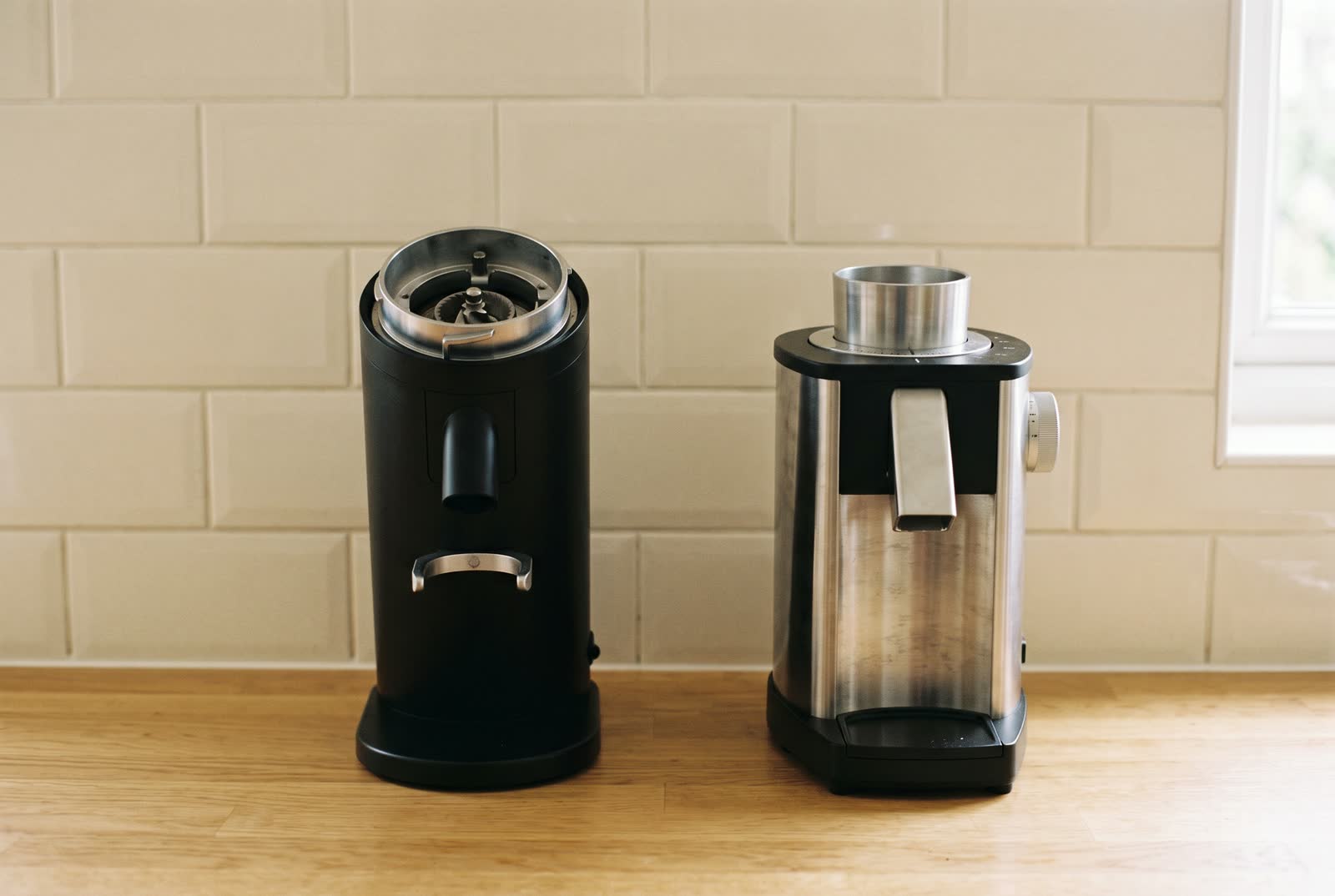
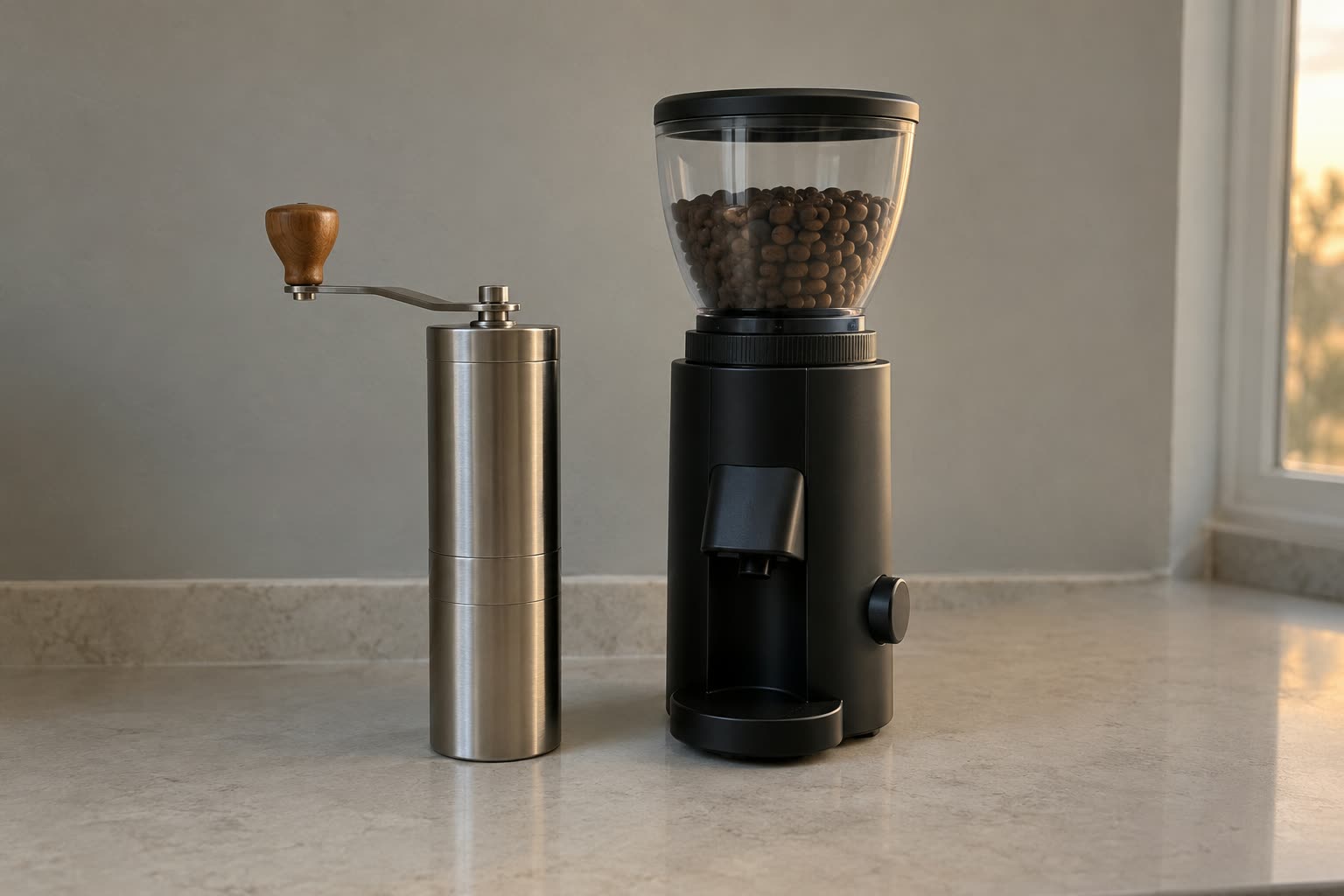
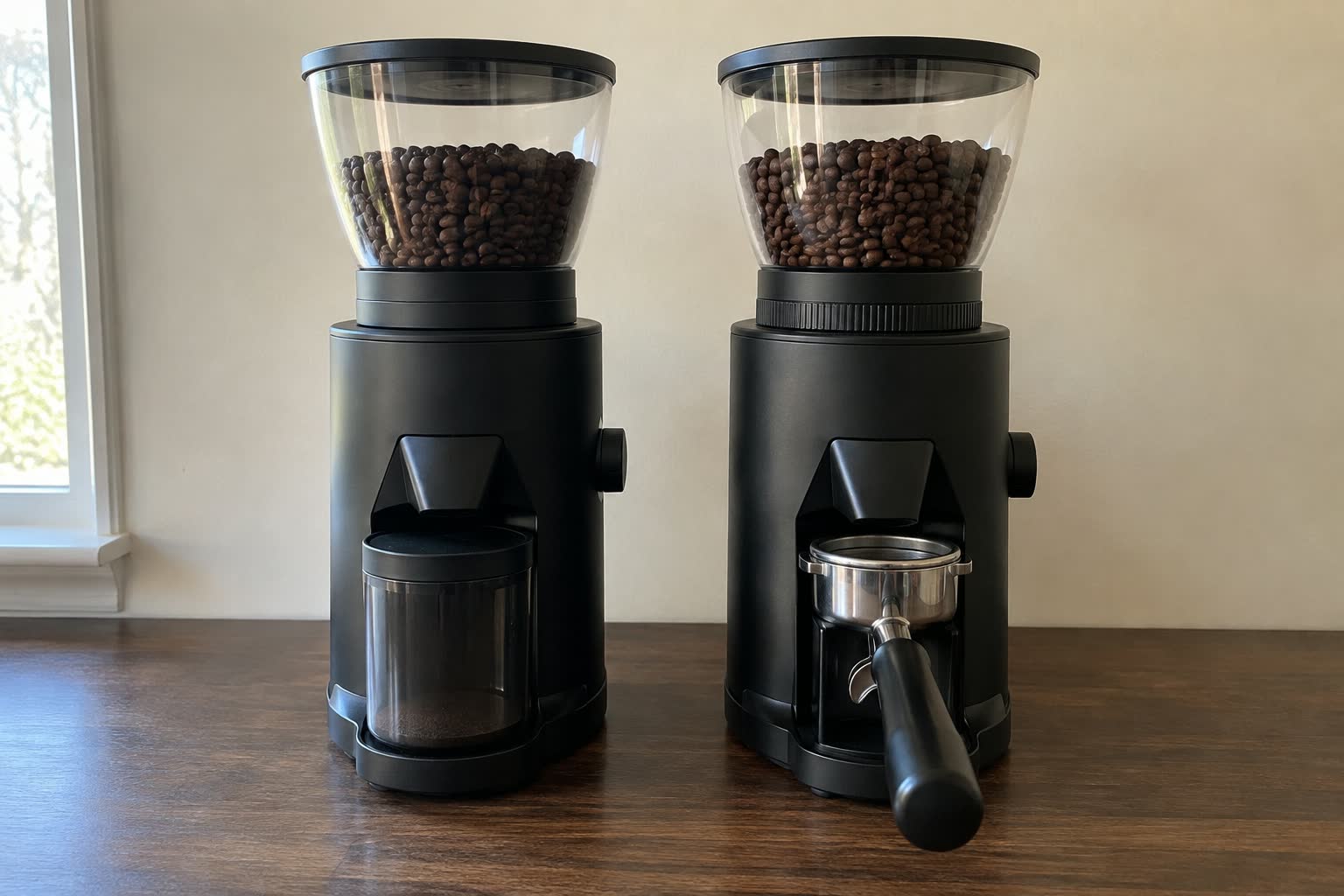
Coffee Grinder Watts: What Makers Print Beside the Number

No maker states a minimum wattage. Five grinders from 70 W to 200 W set side by side from the makers' pages and manuals: burrs, RPM, grams per second, run limits and warranty.

Coffee Grinder Watts: What Makers Print Beside the Number
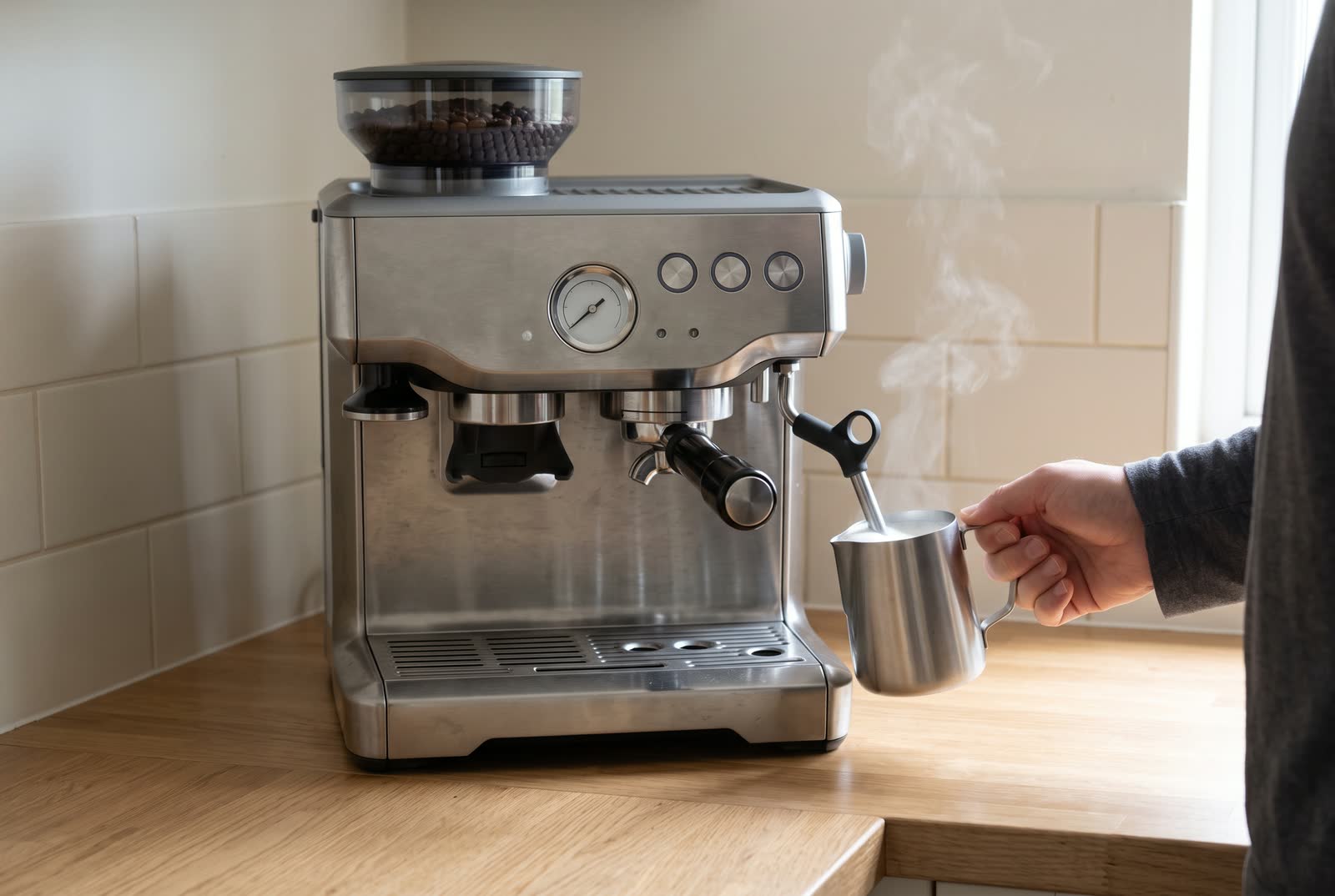
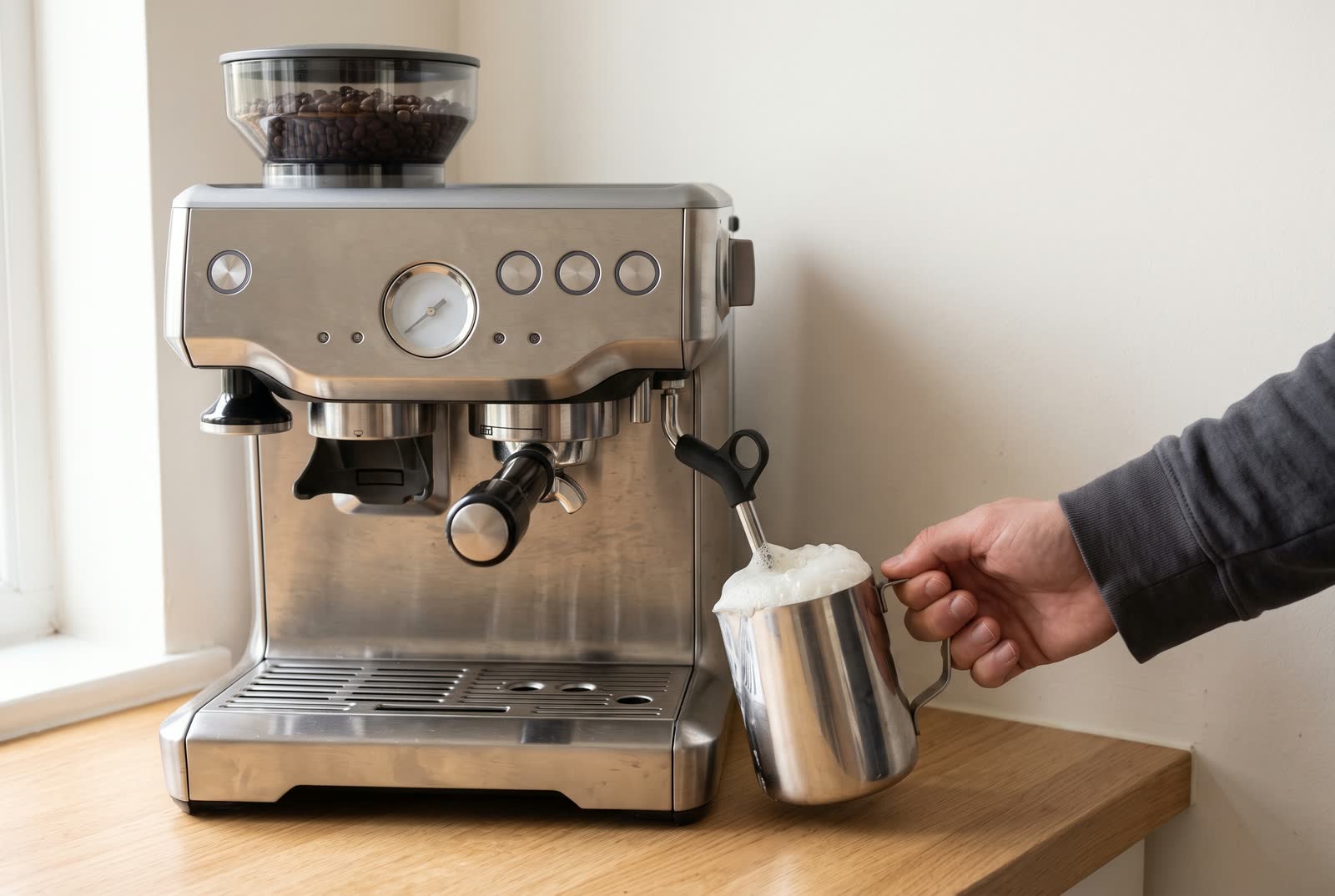
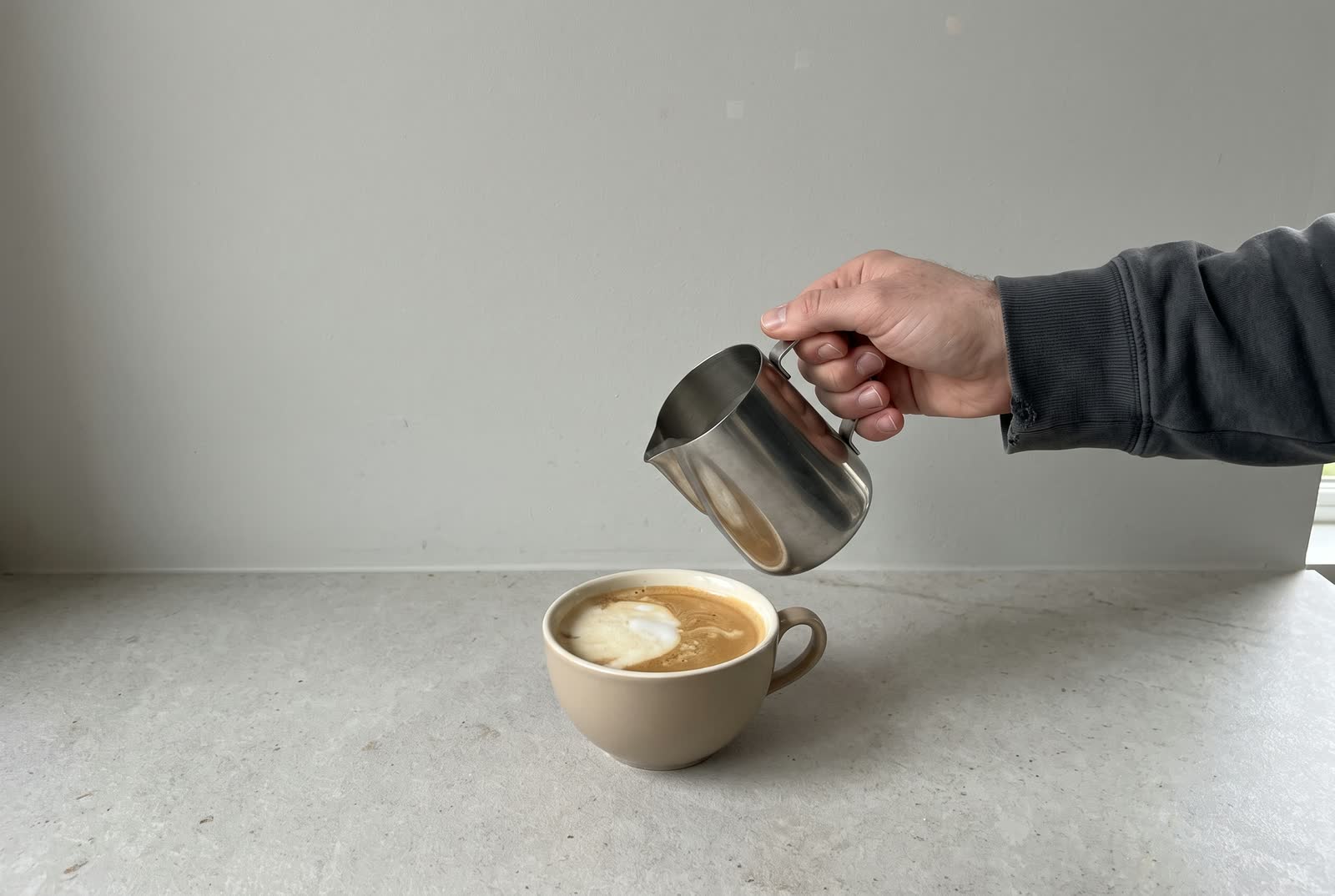
A hand holds a steel milk jug under the steam wand of an espresso machine, the milk foaming and steam rising.
Comparison

The Milk Cafe and a Steam Wand: Two Ways to Heat and Texture Milk

A steam wand heats and textures milk by hand; a standalone frother does it on its own. What each one states, what each one settles for the person holding the jug, and which problem a second appliance actually fixes.

The Milk Cafe and a Steam Wand: Two Ways to Heat and Texture Milk
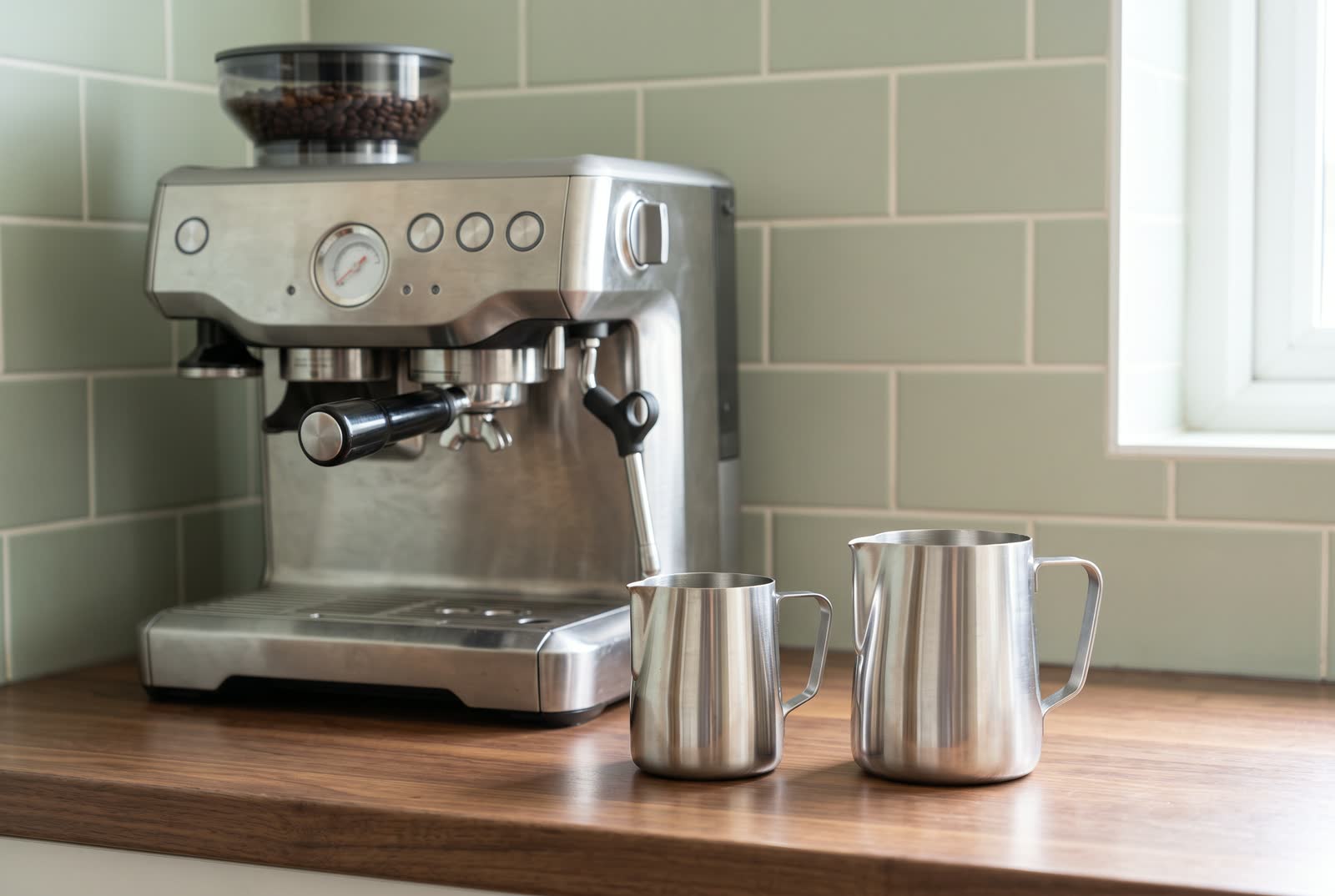
Two plain stainless steel milk jugs stand side by side on a walnut counter, the left one small with a tight pointed spout and the right one larger with a wider rounded spout, a brushed steel espresso machine out of focus behind them and pale sage tile on the wall.
Buying Guide

Milk Jugs: What the Spout Decides and What the Size Decides

Pick a milk jug with a glass of water: half-fill sizes from 12 to 20 oz for five jugs with maker-stated capacities, the three mistakes the test catches, and what a spout changes.

Milk Jugs: What the Spout Decides and What the Size Decides
A sunlit compact coffee station in a small kitchen: a stainless espresso machine and a grinder on a short oak counter under a white wall cabinet, a cup and a folded cloth, a window at the side
Comparison

Bambino vs Bambino Plus vs Stilosa: Which First Espresso Machine Fits You

The Bambino Plus adds an automatic steam wand, a 64 fl oz tank against the Bambino's 47 fl oz, and a tamper, dosing tool and milk jug in the box. The Bambino suits straight shots and hand-steamed milk, and the Stilosa is the way to test a pump machine first.

Bambino vs Bambino Plus vs Stilosa: Which First Espresso Machine Fits You
Buying Guide

Hot Water From a Home Espresso Machine: What Each Manual Says

Where hot water comes out on six home espresso machines, how each manual starts and stops it, and which manuals name an Americano or tea: Bambino, Bambino Plus, Stilosa, Barista Express Impress, Barista Touch and Touch Impress.

Hot Water From a Home Espresso Machine: What Each Manual Says
Buying Guide

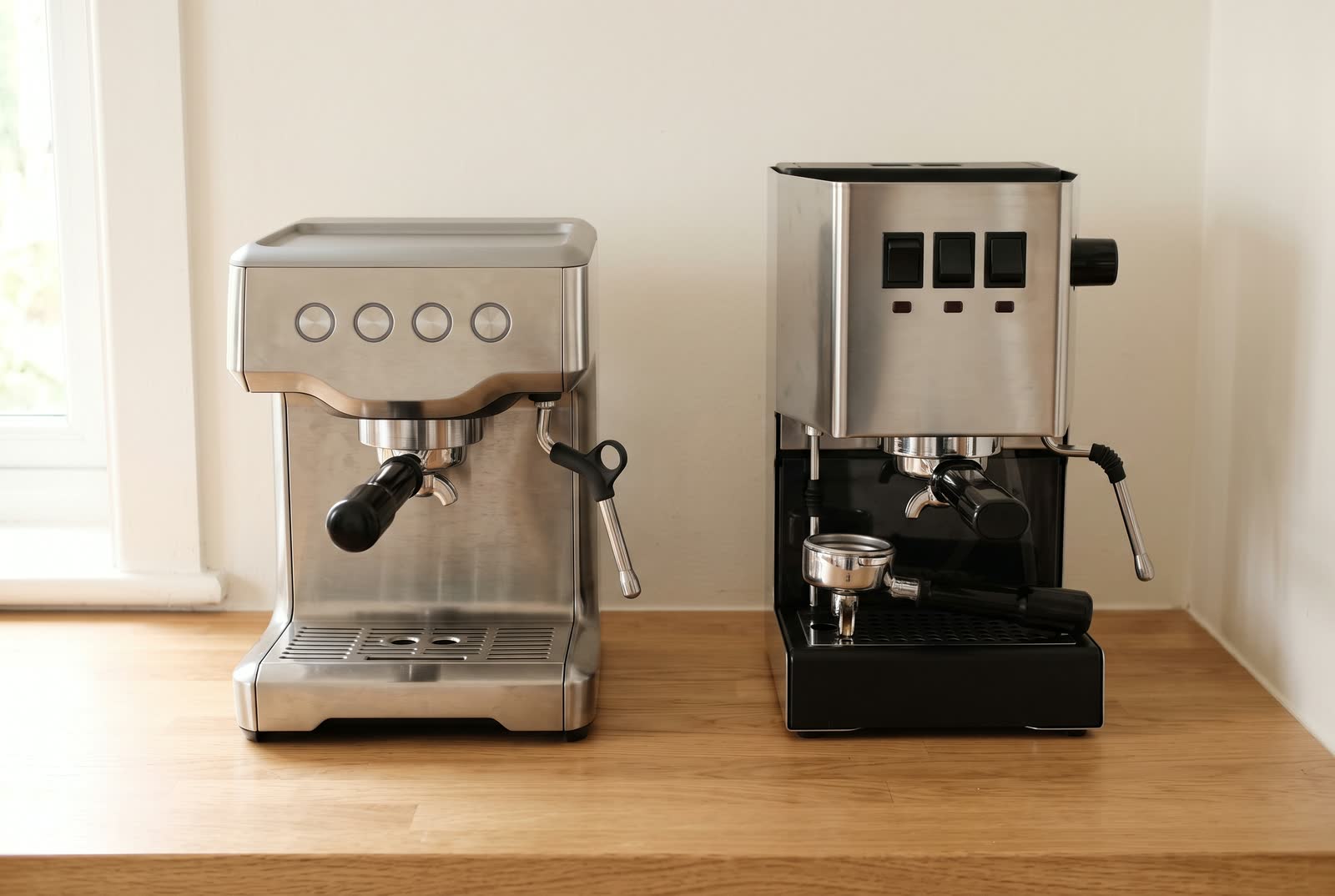
The Espresso Machine for a Small Kitchen, Axis by Axis

Which espresso machine takes the least width, depth and height, using only sizes a maker or a retailer labels, and what each one asks of your cabinet.

The Espresso Machine for a Small Kitchen, Axis by Axis
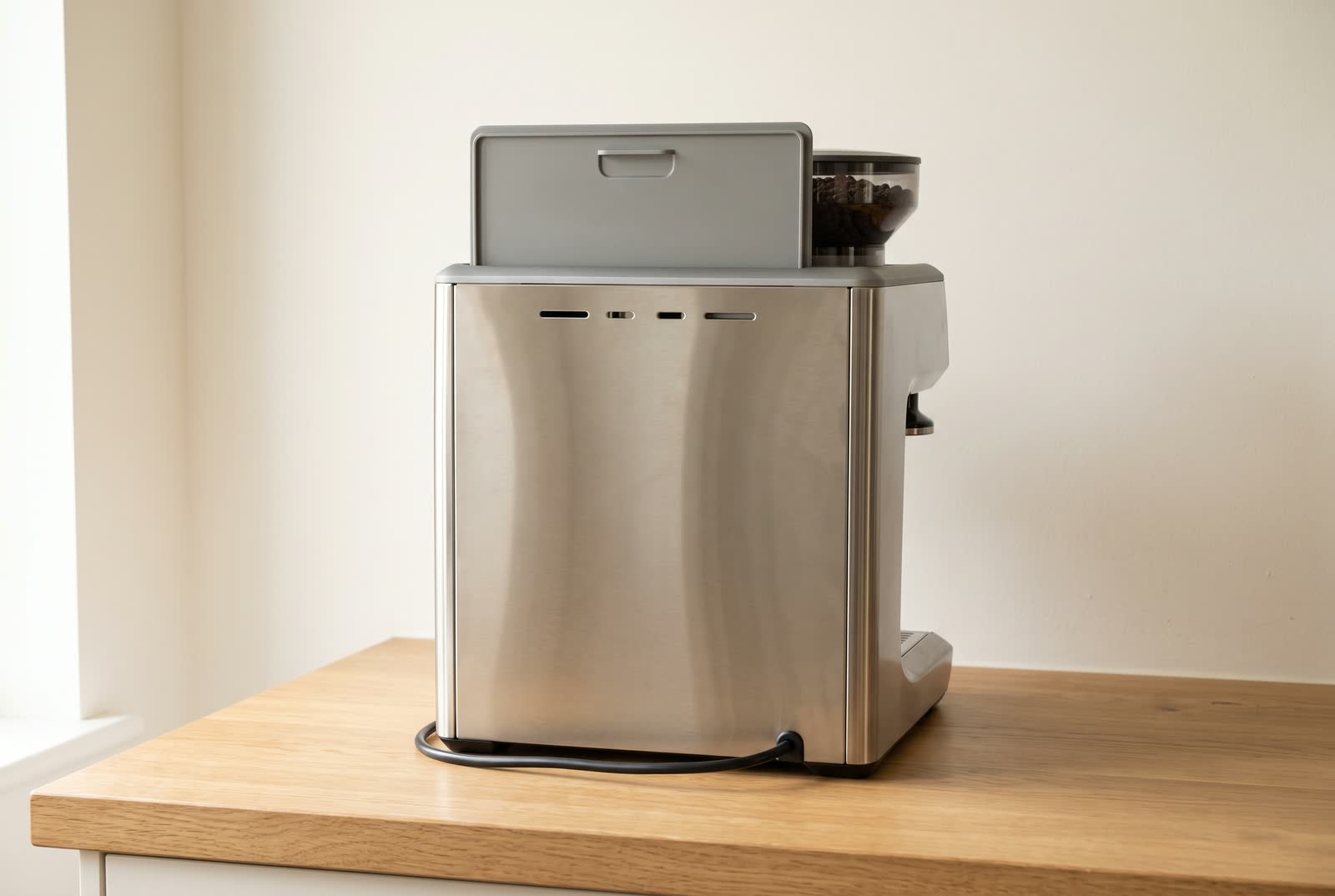
The plain brushed steel back of an espresso machine on a light oak counter, its grey tank lid on top and its cable trailing.
Buying Guide

Entry Espresso Machines: The Four Lines on a Spec Sheet That Separate Them

The boiler, the portafilter diameter, the water tank and the wattage decide what owning an entry espresso machine is like. What each line means, read off four machines with the maker's page and the date beside every figure.

Entry Espresso Machines: The Four Lines on a Spec Sheet That Separate Them
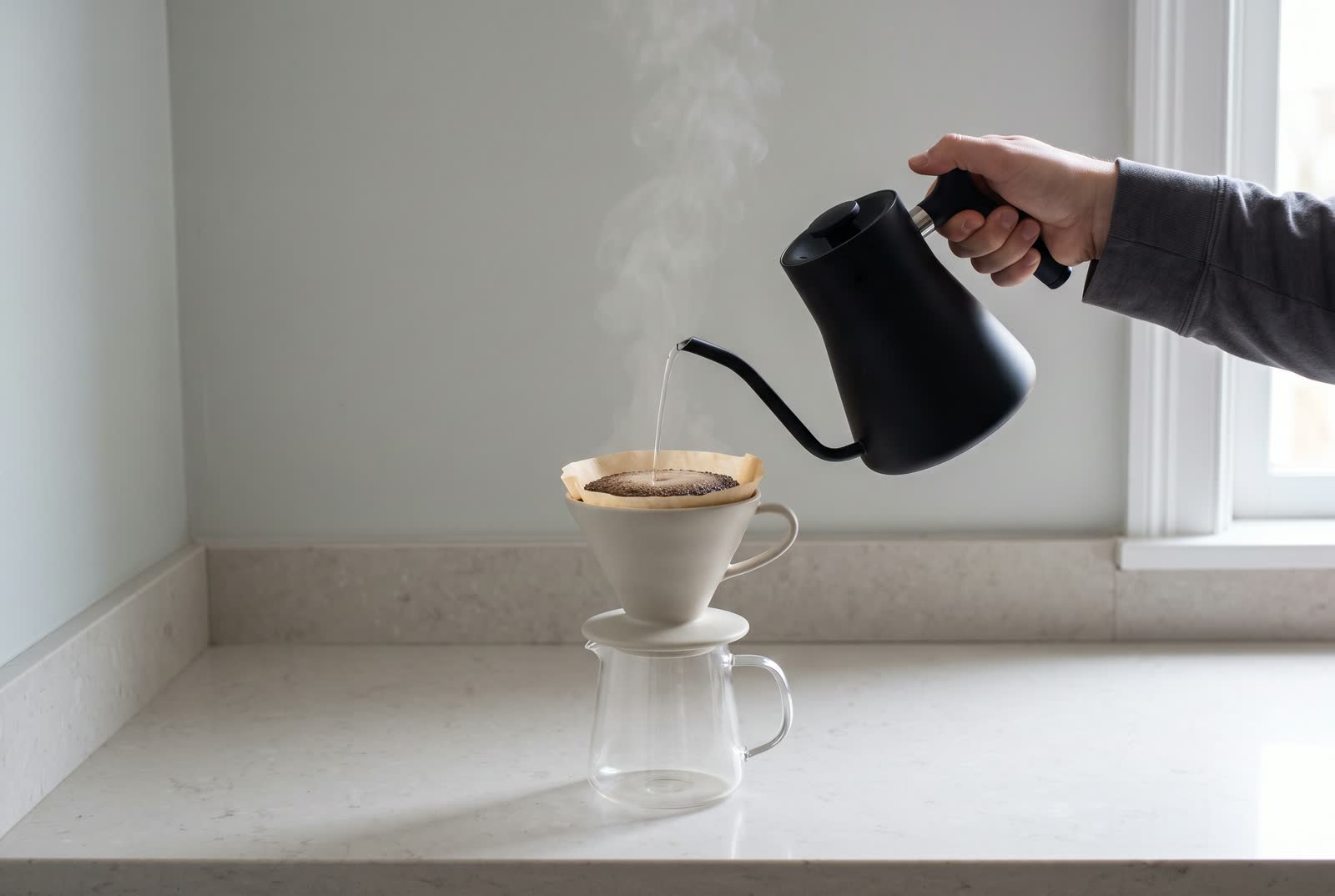
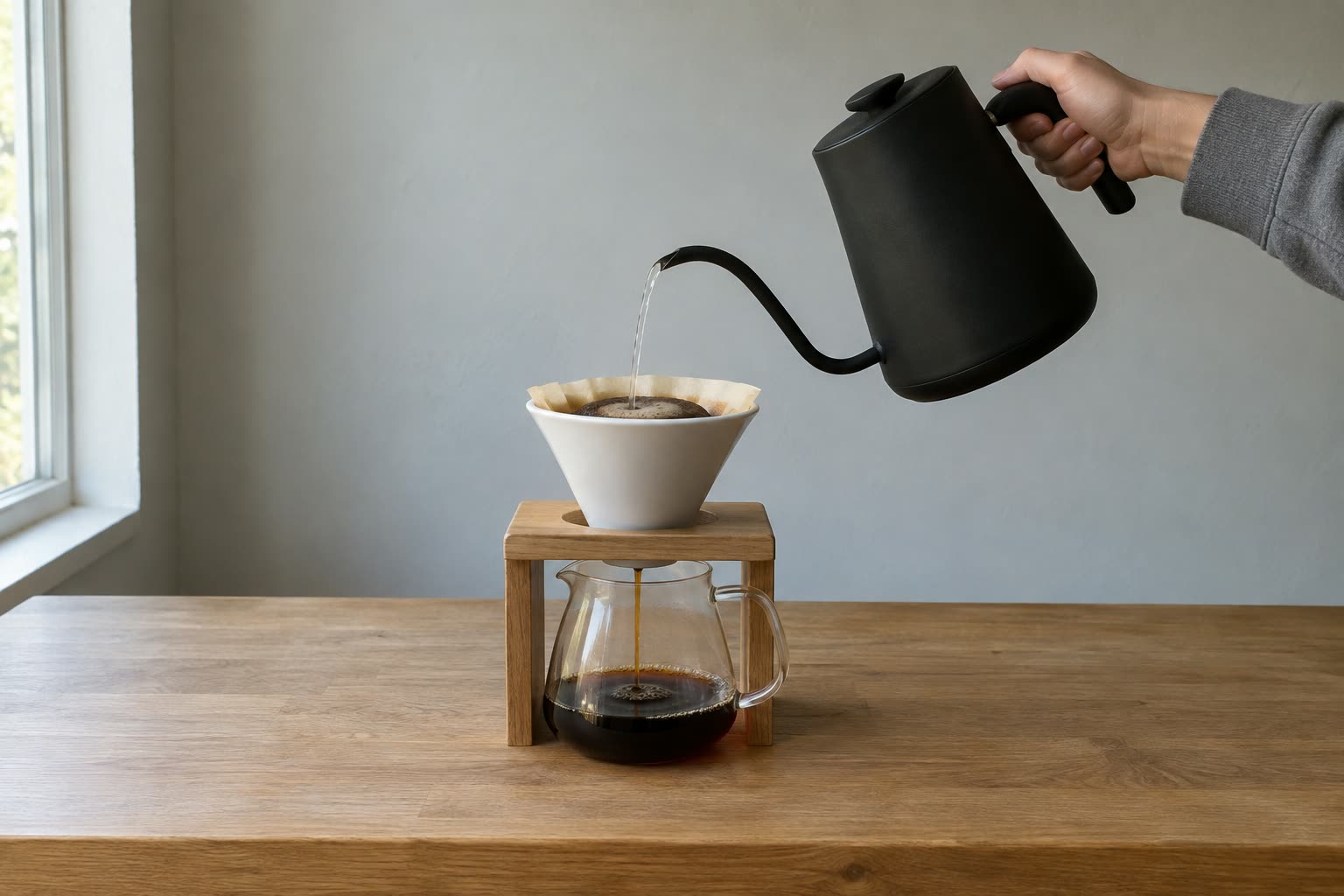
A hand tips a black gooseneck kettle over a ceramic pour-over cone, a thin stream of water landing on the grounds.
Buying Guide

A Gooseneck Kettle and the Kettle Already in the Kitchen

A gooseneck spout controls how fast and where water lands on coffee. Which brewers reward that, which do not care, and what the one gooseneck on this record states about itself.

A Gooseneck Kettle and the Kettle Already in the Kitchen
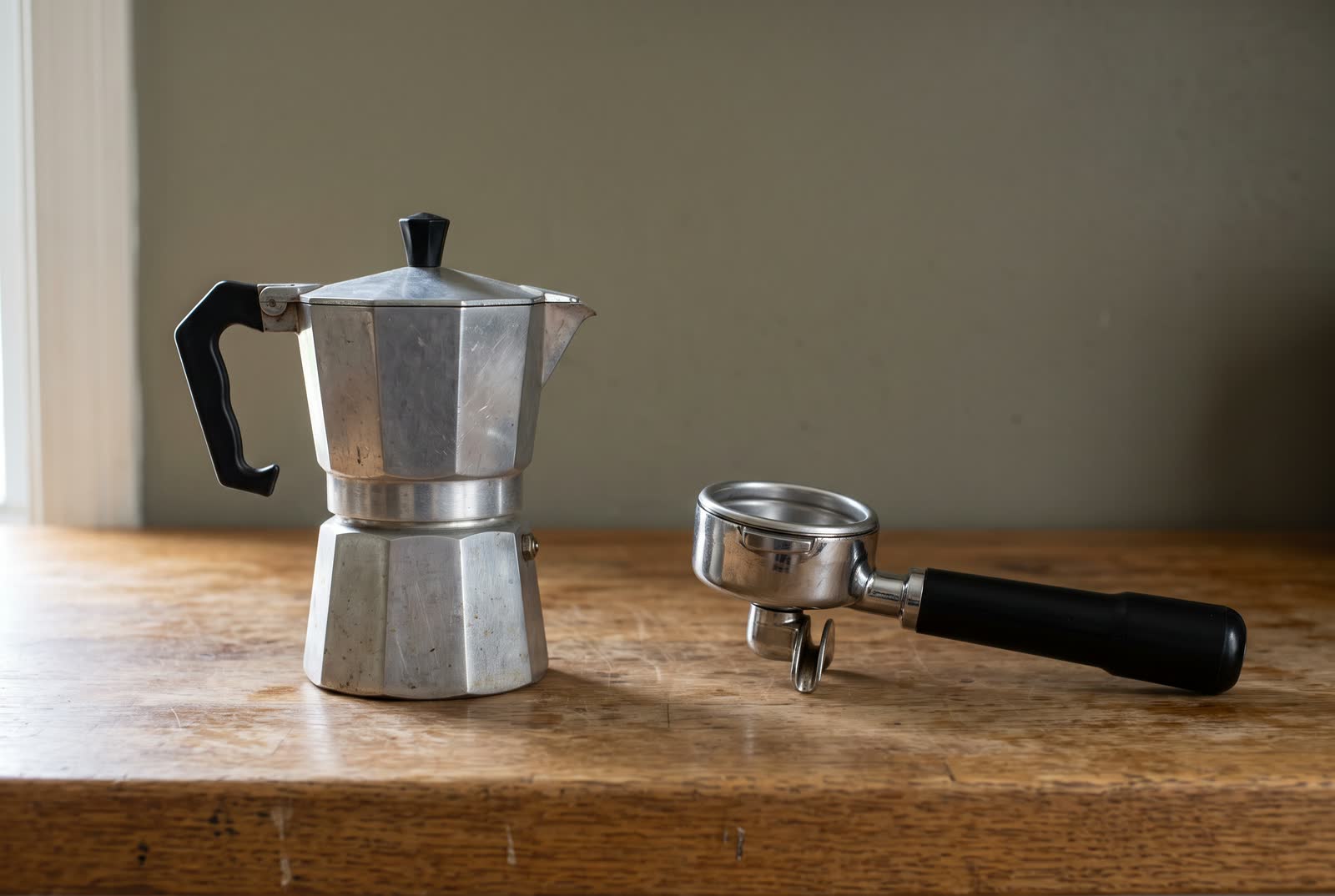
A dulled octagonal moka pot and a bare chrome portafilter lie side by side on a worn old oak counter.
Explainer

The Moka Pot and the Espresso Machine: What Each One Makes

A stovetop pot pushes water up through coffee with steam; a machine pushes it through with a pump at nine bar. What each one makes in the cup, what the boiler figures on record say, and what we have not checked a figure for.

The Moka Pot and the Espresso Machine: What Each One Makes
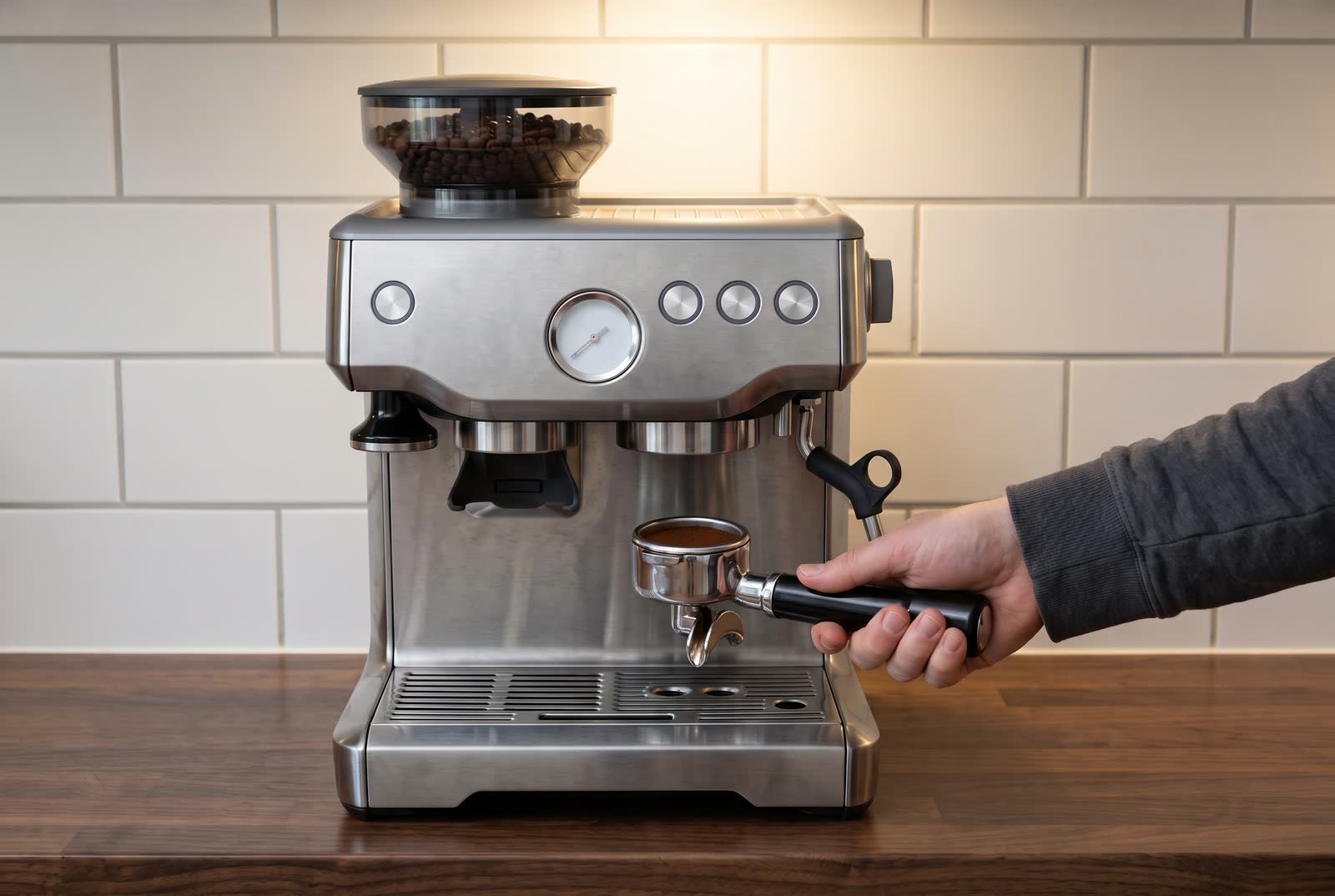
A hand holds a chrome portafilter out of an espresso machine, its basket full of fresh ground coffee.
Explainer

A Pod Machine and a Pump Machine: What Each One Settles for You

A capsule machine decides the grind, the dose and the coffee for you; a pump machine with a portafilter hands all three back. What each kind settles, what it leaves to you, and what this site does not hold.

A Pod Machine and a Pump Machine: What Each One Settles for You
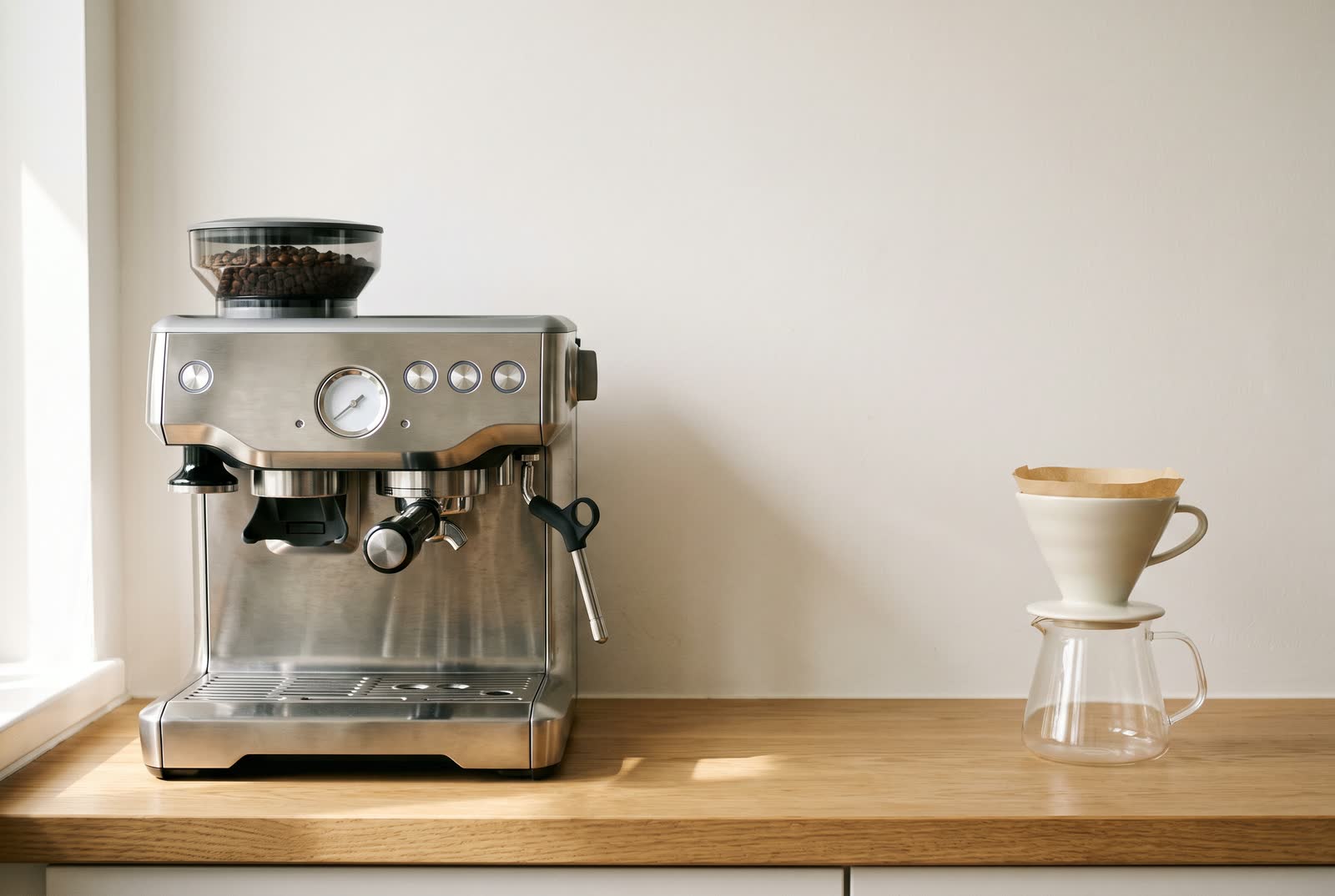
A brushed steel espresso machine and a ceramic pour-over cone on a glass server share one light oak counter.
Explainer

Espresso and Coffee: What the Pressure and the Grind Separate

Espresso is coffee made under pressure from a fine grind. What a pump does that a kettle does not, what a burr does that a blade does not, and which machines state the figures.

Espresso and Coffee: What the Pressure and the Grind Separate
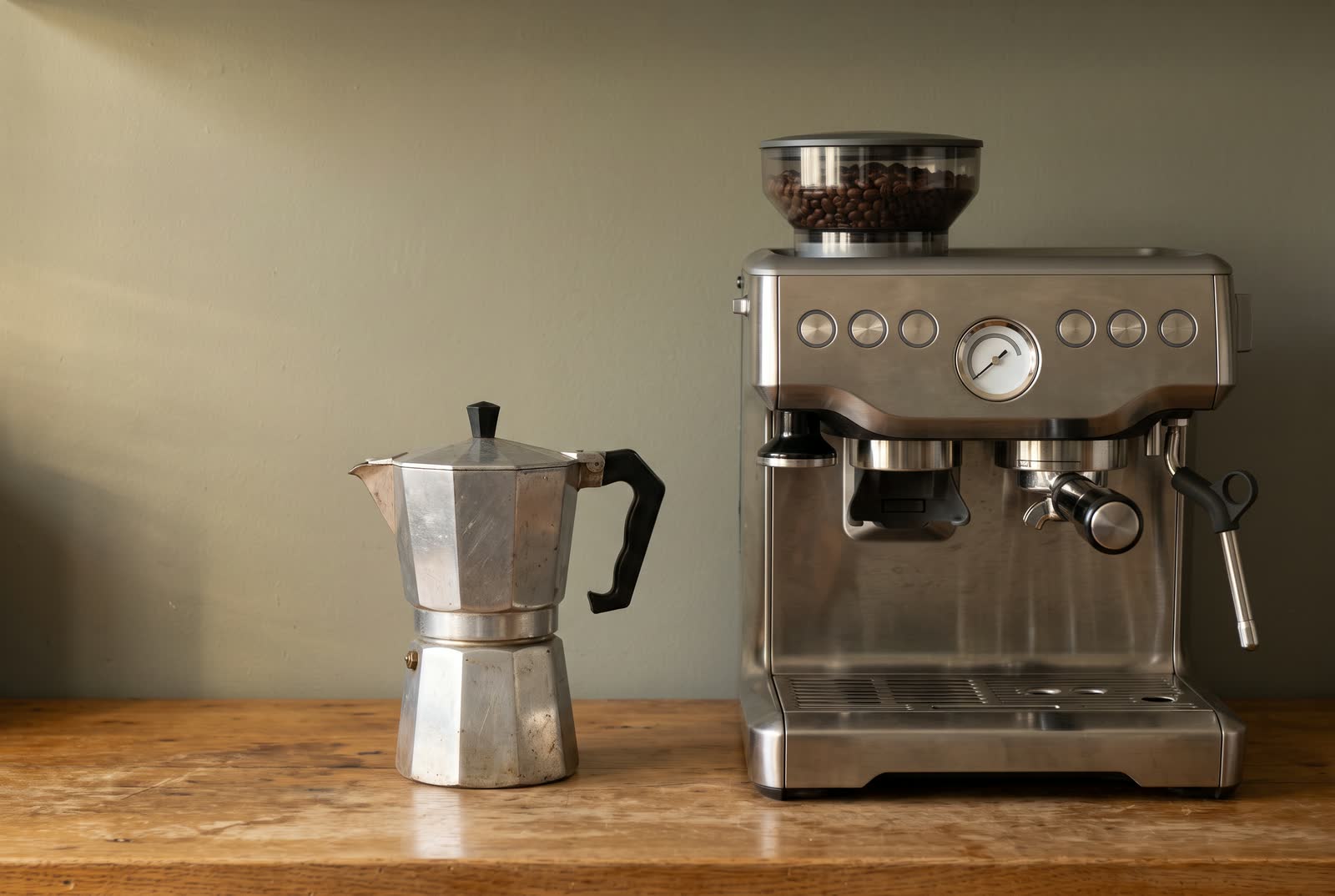
A dulled and scratched octagonal aluminium moka pot with a black handle stands on a worn old oak counter beside a modern brushed steel espresso machine that is taller and heavier than it, warm low light from the left, neither of them carrying a name.
Explainer

The Moka Pot, the Espresso Machine, and the Century Between Them

One makes pressure out of heat and the other makes it with a part and then throws most of it away. What separates the two, what the machines we have checked are made of, and why every date on this page is marked rather than sourced.

The Moka Pot, the Espresso Machine, and the Century Between Them
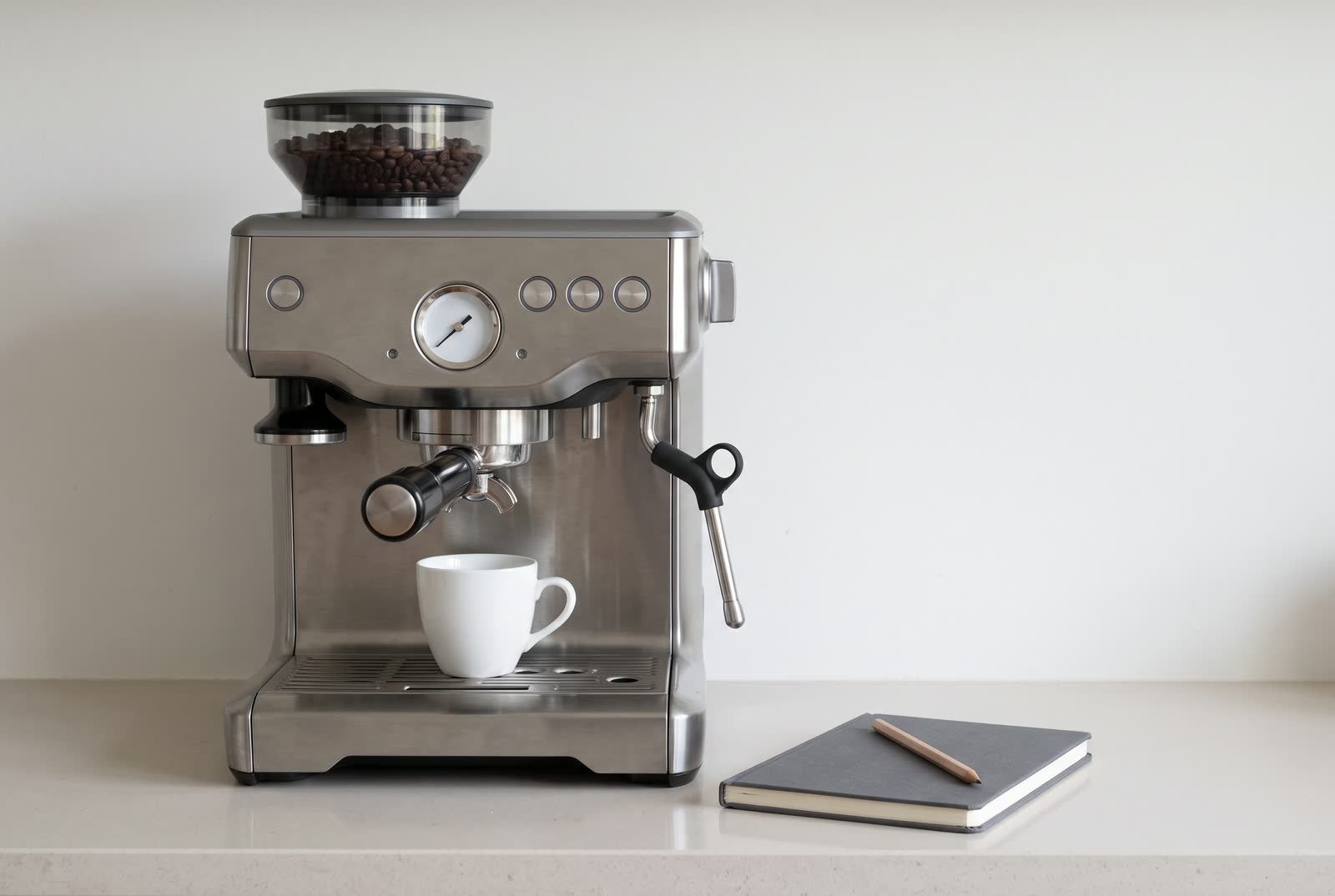
A brushed steel espresso machine stands on a pale stone counter with a white cup on its drip tray, a small closed notebook with a blank dark grey cloth cover lying flat beside it with a pencil across it, nothing written anywhere in the picture.
Explainer

Five Things Said About Home Espresso, and What We Can and Cannot Check

Five claims a reader arrives holding, answered one at a time: what would settle each, whether we have read it, and what it says. Two are settled from published figures, two are refused outright, and one turns out to be a claim about a heater.

Five Things Said About Home Espresso, and What We Can and Cannot Check
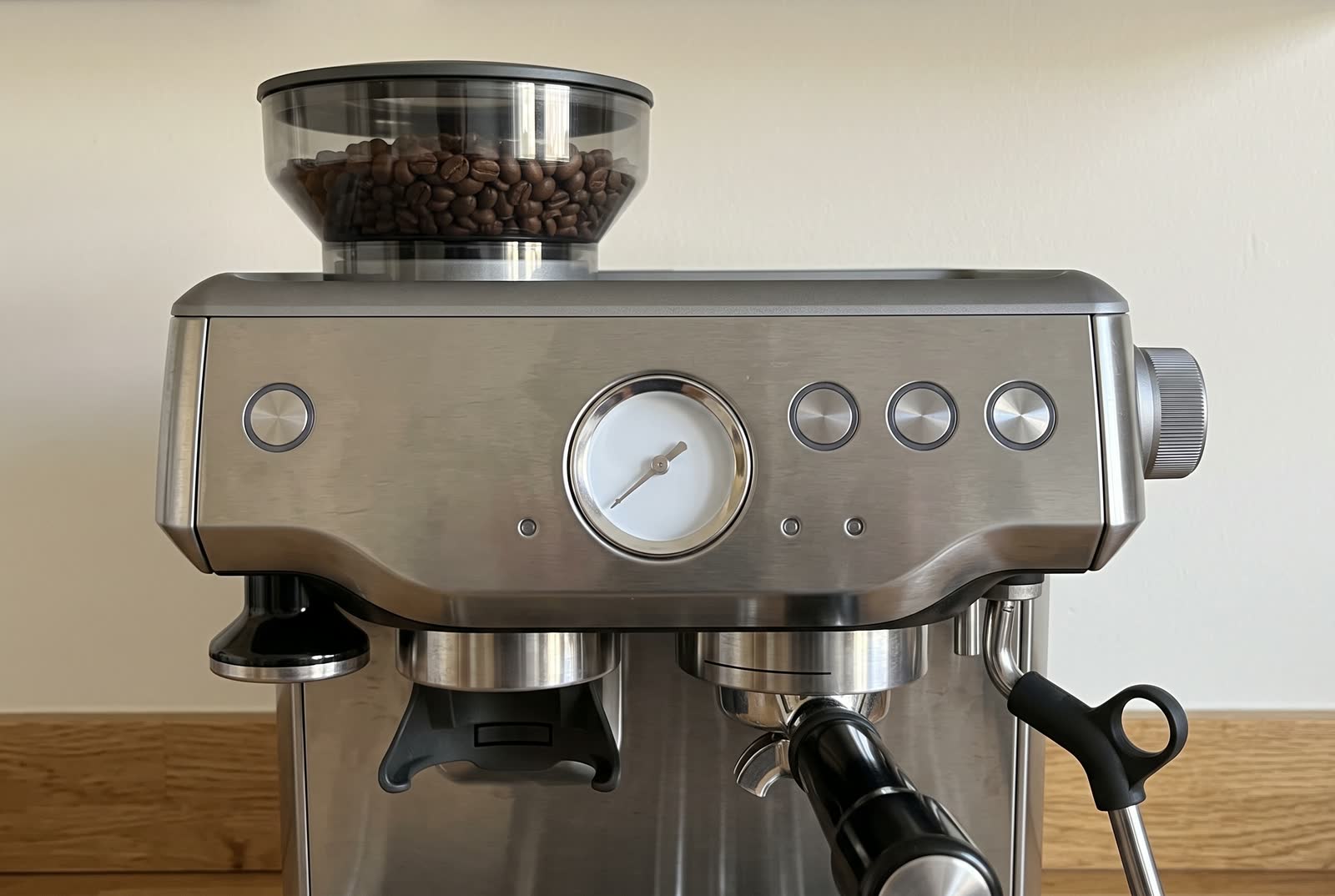
A close crop of an espresso machine's front panel: a blank gauge, plain buttons, a steam knob.
Explainer

Temperature Control: What a PID Does, and Which Machines Carry One

A PID holds the water at a set point instead of letting a thermostat swing across a band. What the three letters mean, what they leave untouched, and which eleven of the fifteen machines here name one.

Temperature Control: What a PID Does, and Which Machines Carry One
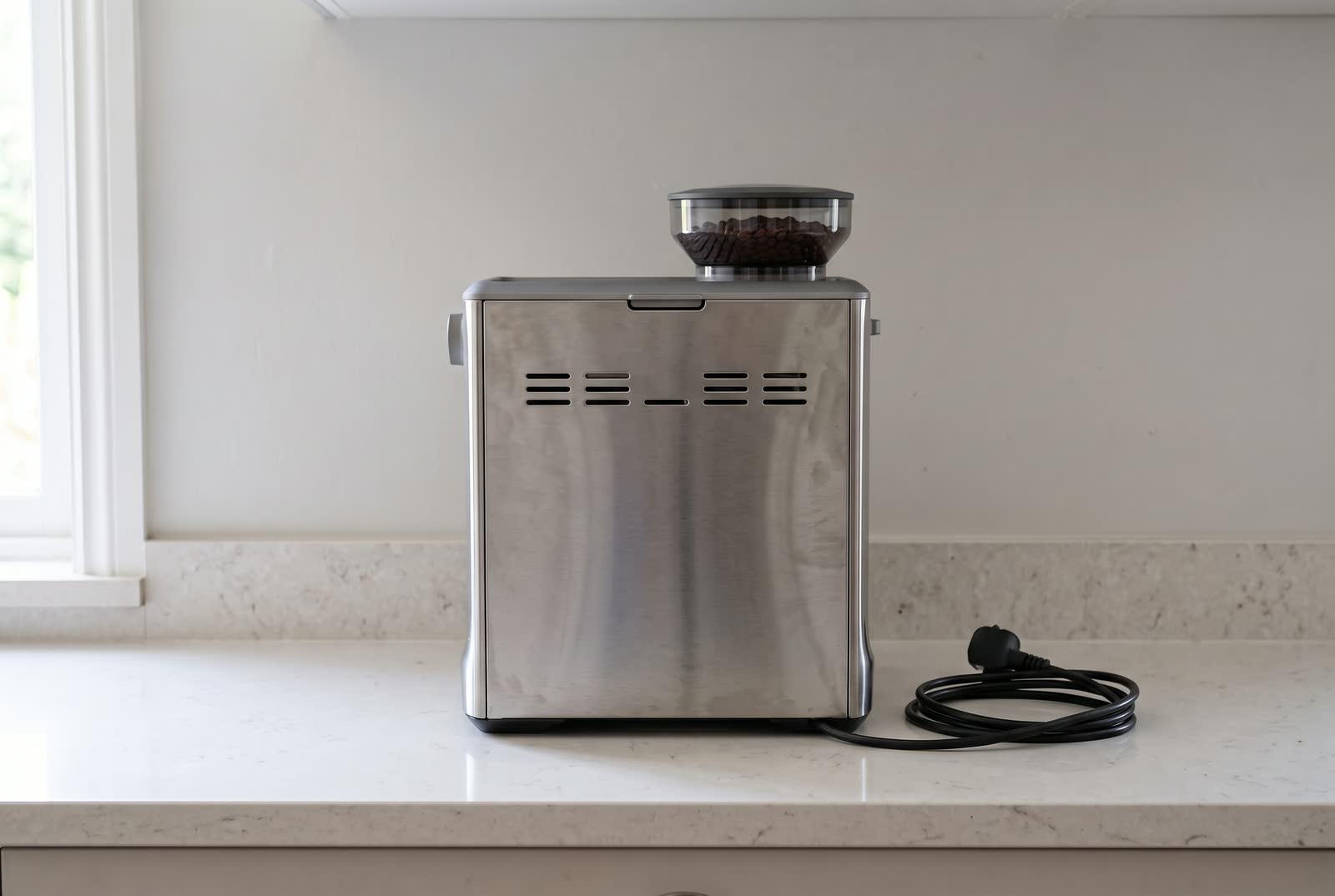
An espresso machine seen from directly behind, its cable unplugged and coiled on the counter.
Buying Guide

Warranties: What Each Maker States, and the Pages That State Nothing

Nine Breville espresso machines state a warranty on their own product page, read on 10 September 2026: one year for the Bambino and the Barista Express, two years for the Bambino Plus, the Barista Pro and the Oracle Touch. Six Baratza grinders state one year in their manuals, read on 6 September 2026.

Warranties: What Each Maker States, and the Pages That State Nothing
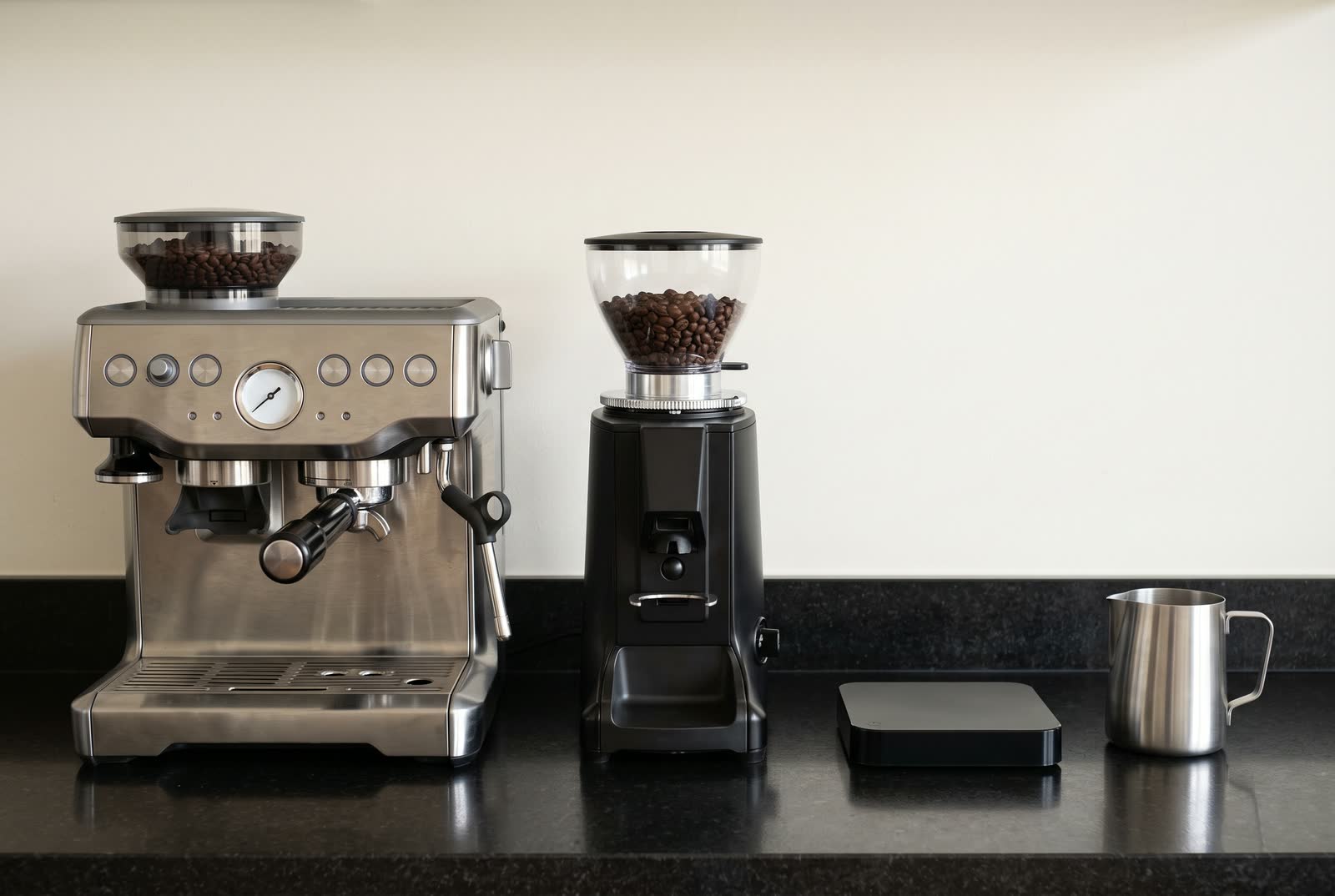
An espresso machine, a black grinder, a dark scale and a steel milk jug stand in a row on a black granite counter.
Buying Guide

What a Home Espresso Setup Is Made Of, and Which of Its Four Jobs Takes the Money

A home espresso setup is four jobs, and the machine and the grinder take nearly all the money: the Bambino sits in the band of two hundred and fifty dollars and up, and the Encore in the hundred to two hundred and fifty band. The beans' home and the cups' home sit below a hundred, and each band is a range this site draws on its own rules.

What a Home Espresso Setup Is Made Of, and Which of Its Four Jobs Takes the Money
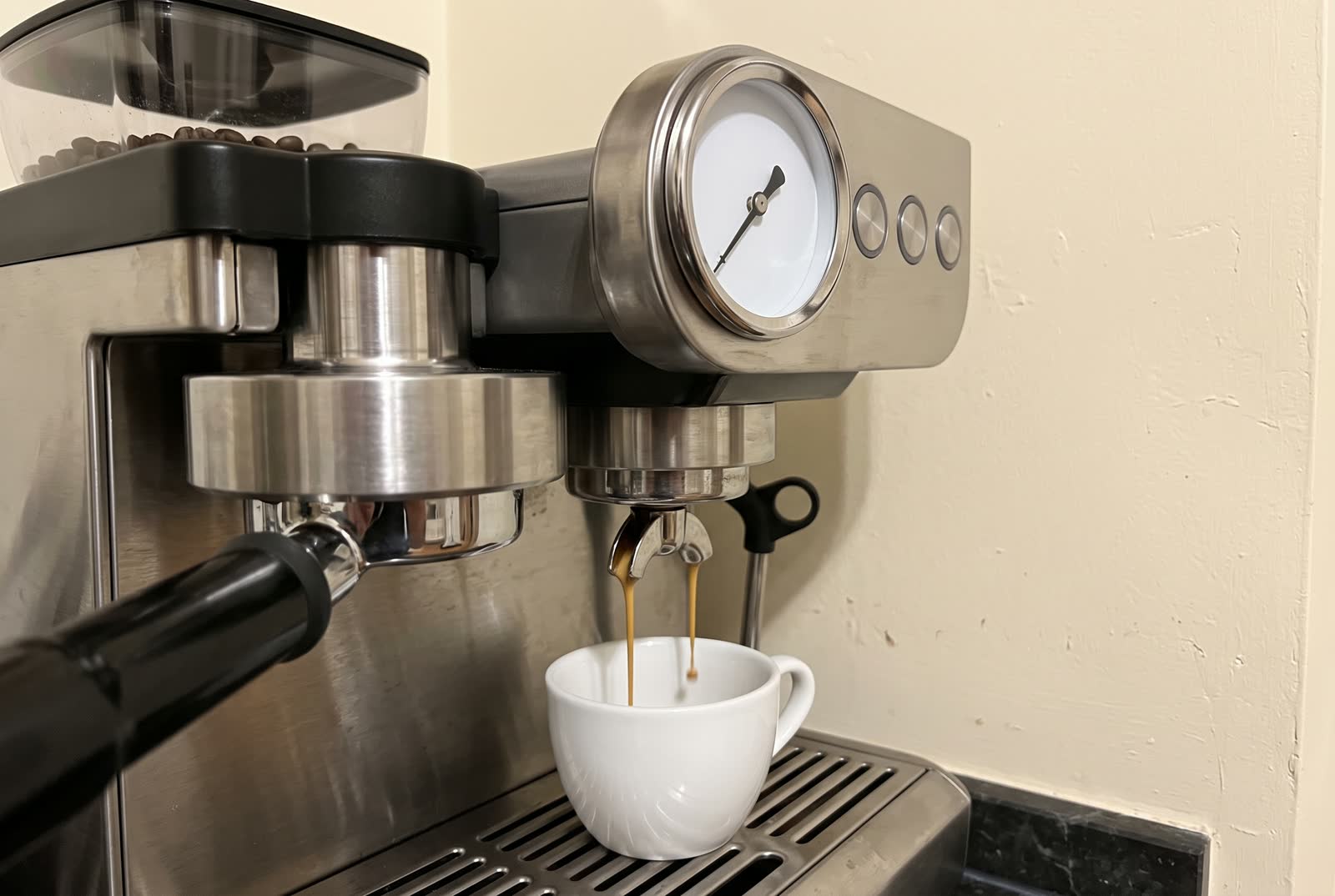
A close view of the working front of an espresso machine, the chrome group head with a loaded portafilter filling the lower left and the round pressure gauge the upper right, a thick dark stream running into a white cup below, the gauge face carrying one needle and one arc and no numerals.
Explainer

How an Espresso Machine Makes Pressure: The Three Pump Kinds

Three kinds of pump raise water to espresso pressure: a vibratory pump pulses a small piston with the mains supply, a rotary vane pump turns a disc for a continuous flow, and a lever machine pushes with a spring. The Rancilio Silvia's page names a vibration pump and the Profitec Go's a rotary vane, both read on 6 September 2026.

How an Espresso Machine Makes Pressure: The Three Pump Kinds
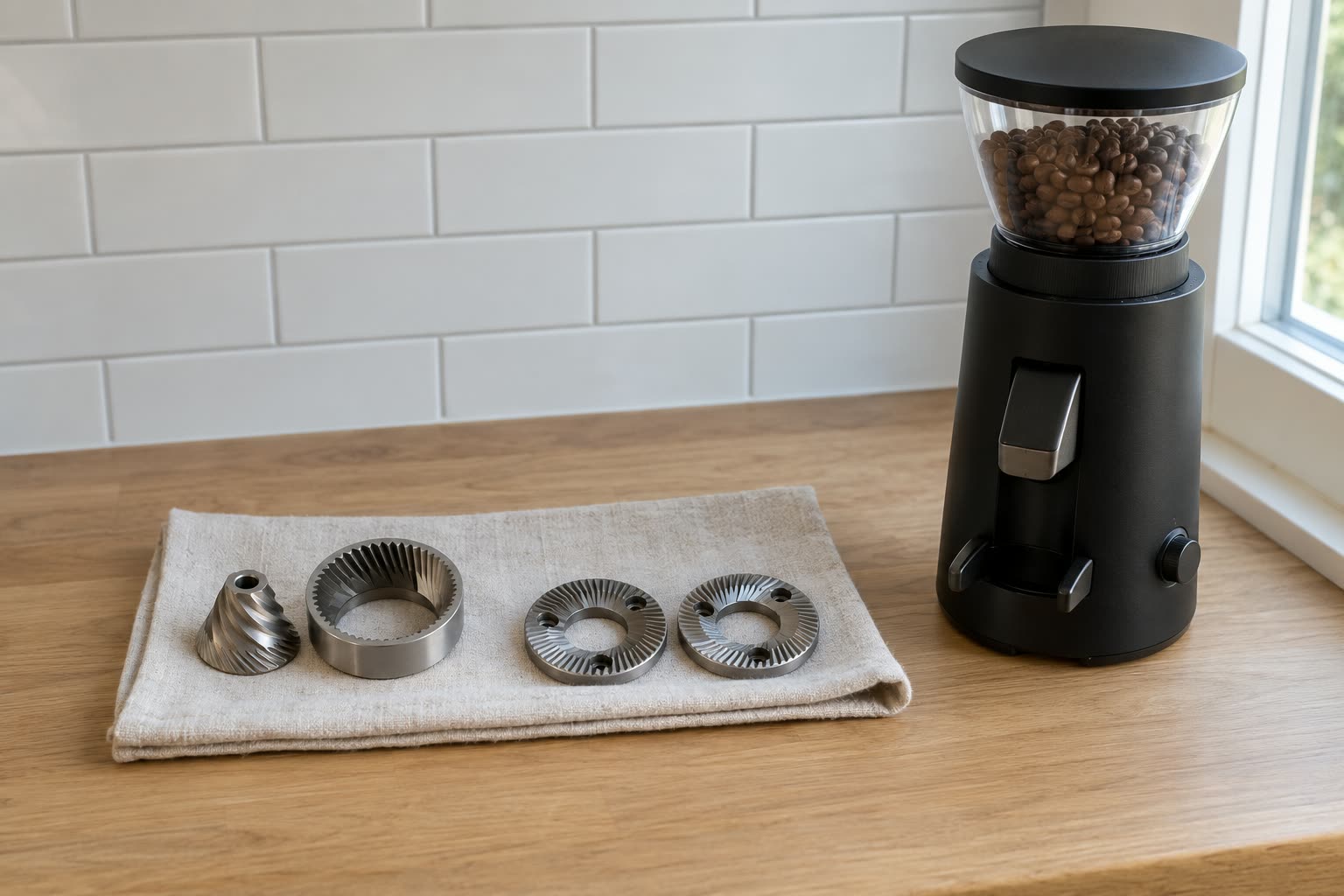
On a folded unbleached cloth on a light oak counter, a conical burr and its ring lie beside two flat burr discs, all plain machined steel, with a matt black burr grinder standing to the right in front of white subway tile and a window.
Technique

Conical Burrs and Flat Burrs: What Each One Changes

A conical burr grinds as beans fall through a narrowing cone, and a flat burr throws them outward between two rings. The Encore and Encore ESP state 40 mm conical burrs and the DF64 Gen 2 states 64 mm flat burrs, and the diameter and the adjustment separate them more than the shape does.

Conical Burrs and Flat Burrs: What Each One Changes
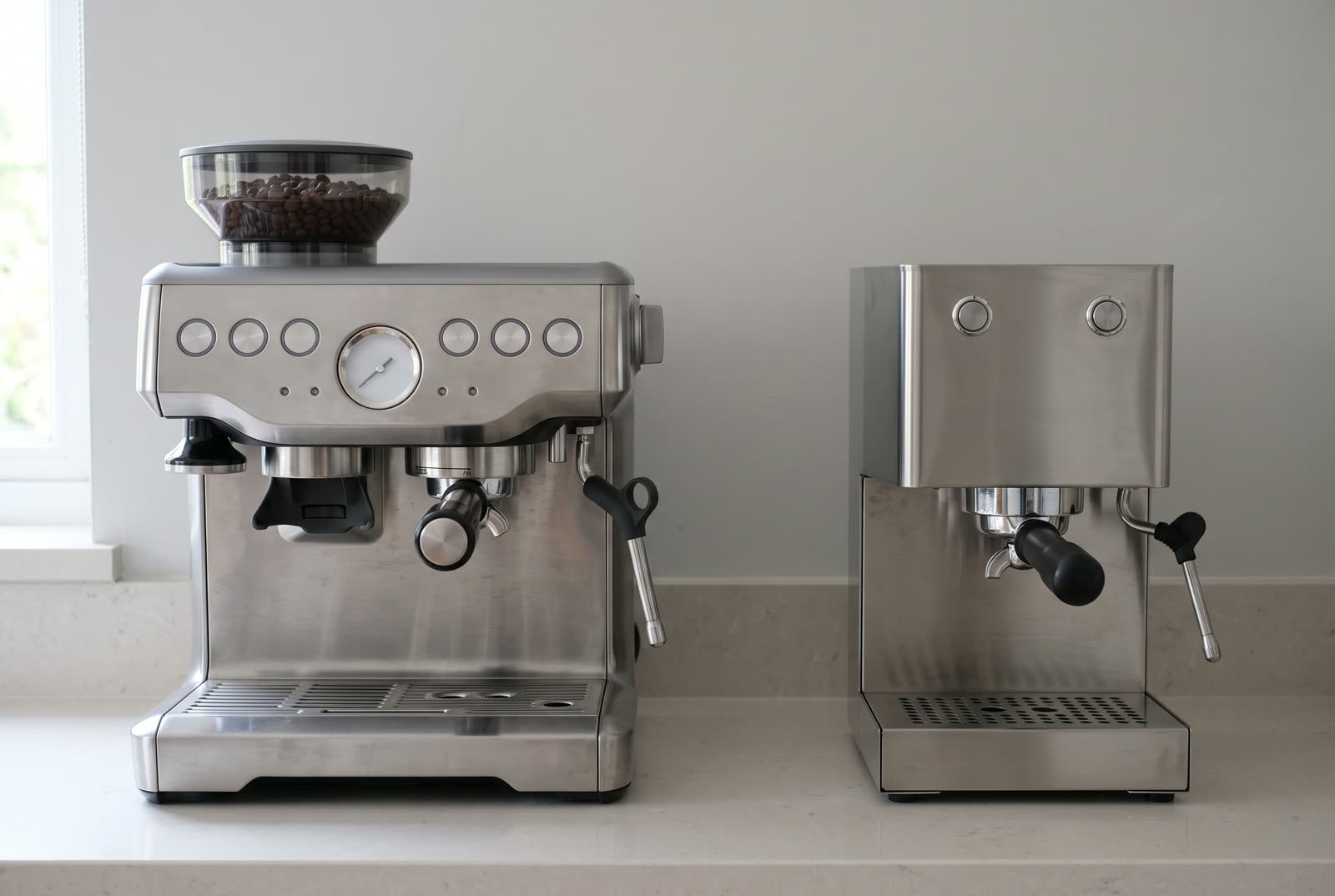
Two home espresso machines of clearly different sizes side by side on a pale stone counter.
Comparison

The Bambino and the Gaggia Classic Pro: A Thermoblock Against a Brass Boiler

One machine heats a little water in three seconds, the other heats a brass boiler and keeps it hot. The heater, the portafilter diameter, the envelope and the tank, from both makers' own pages with the date on each figure.

The Bambino and the Gaggia Classic Pro: A Thermoblock Against a Brass Boiler
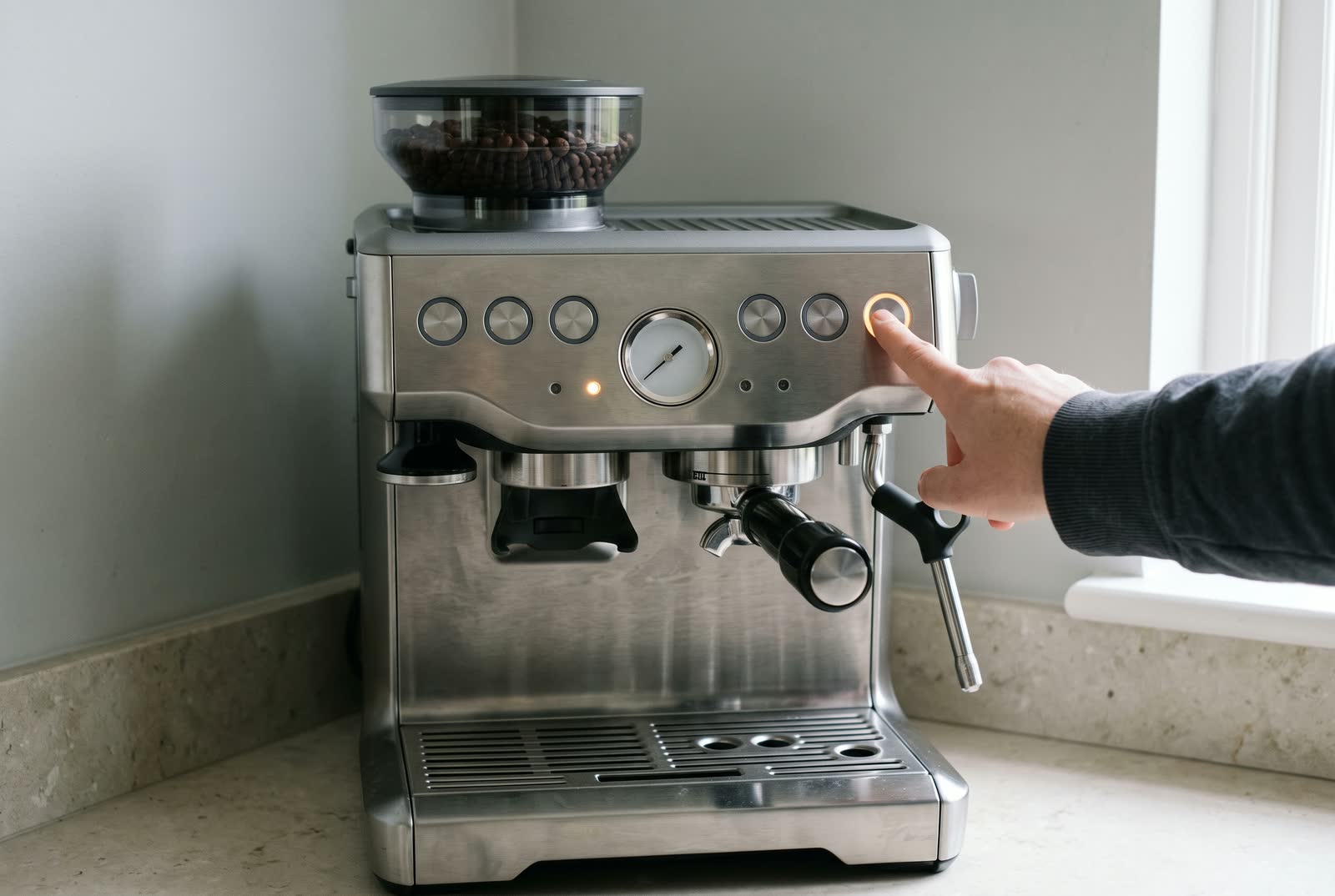
A fingertip presses the power button on an espresso machine, one amber light glowing beside it.
Technique

Time to the First Shot: What a Heat-Up Costs a Morning

A machine that takes six minutes to be ready does not fit an eight-minute morning. What the three makers here actually claim, what their manuals say about heat-up time, and why this page states no duration at all.

Time to the First Shot: What a Heat-Up Costs a Morning
A coffee corner on a kitchen island in warm oak: a plain machine and a hand grinder with a crank handle, one cup and a folded cloth, a clean back wall with no socket anywhere, morning sun across the counter
Budget Build

Building a Coffee Bar: Where the Money Goes First

The order to spend a starter coffee bar budget in: the grinder first, a modest machine under it, a real share for the scale, and the kettle deferred to the next purchase.

Building a Coffee Bar: Where the Money Goes First
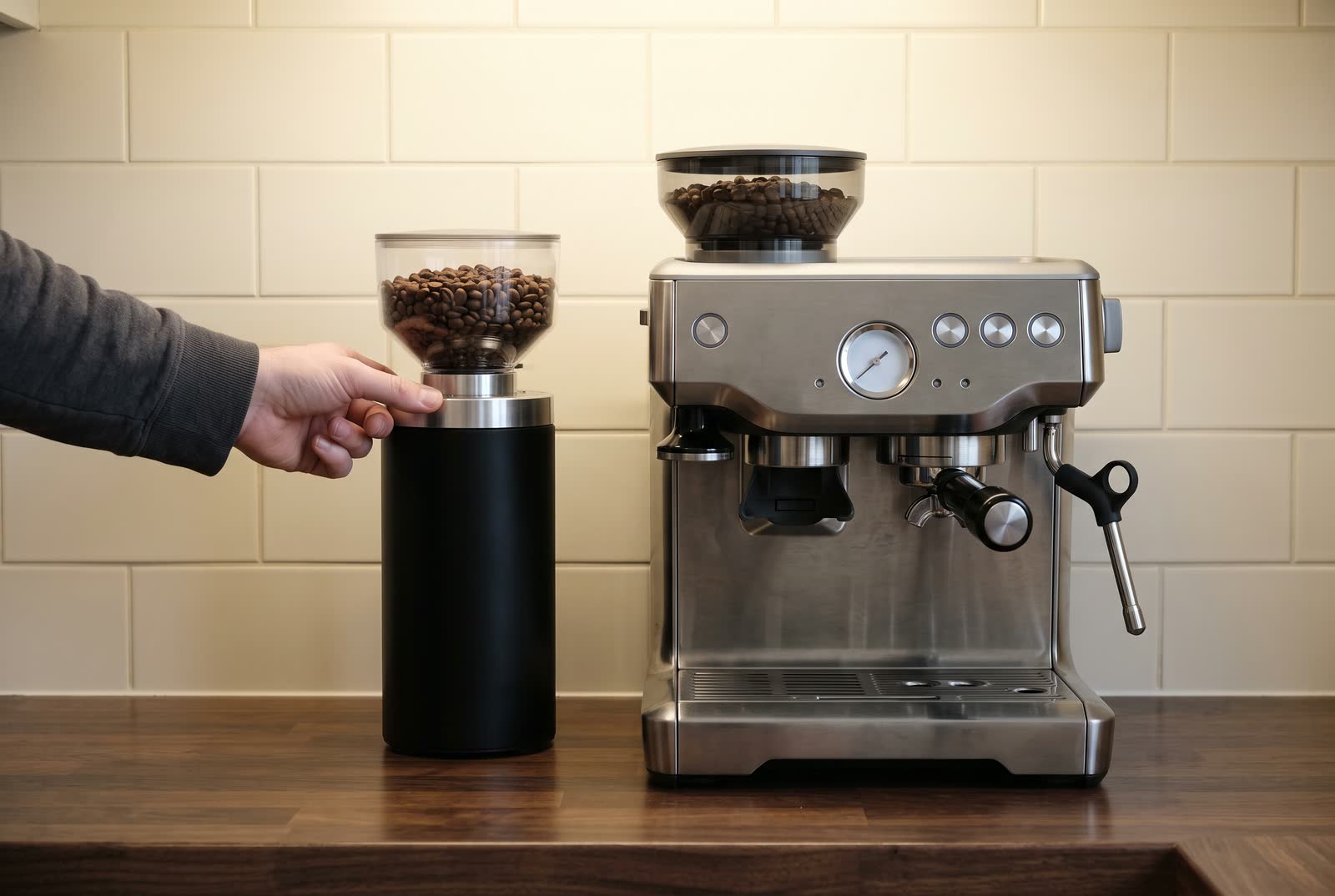
A short run of narrow terrazzo counter that ends at a tall window: a small dark espresso machine and a separate grinder side by side against sage green tile, a cup and a folded cloth, plain jars on a wooden shelf above, daylight and plants at the window
Getting Started

Beginner Home Barista Setup: What You Need First

A first espresso setup needs three roles covered first: machine, grinder, and scale. How to prioritize the budget and when an upgrade pays off.

Beginner Home Barista Setup: What You Need First
A steel burr grinder, a large brushed steel espresso machine, a thin black coffee scale with a white cup on it and a matt black gooseneck kettle stand in one even row along a honed black granite counter, all of them heavy and well made, none of them carrying a name.
Buying Guide

The Luxury Coffee Station: What the Top of Each Category Adds

Four products at the top of four categories, read on what their makers publish rather than on what they cost. The second boiler, the settable temperature range, the scale inside the grinder, the selectable readability, and why not one of the four carries a price bracket here.

The Luxury Coffee Station: What the Top of Each Category Adds
A close macro view of the round analogue pressure gauge on the front of a brushed steel espresso machine, its plain dial carrying one needle and one unbroken arc and no numerals, marks or lettering of any kind, the group head and portafilter handle soft behind it.
Technique

Nine Bars: What the Number Means and Where It Is Measured
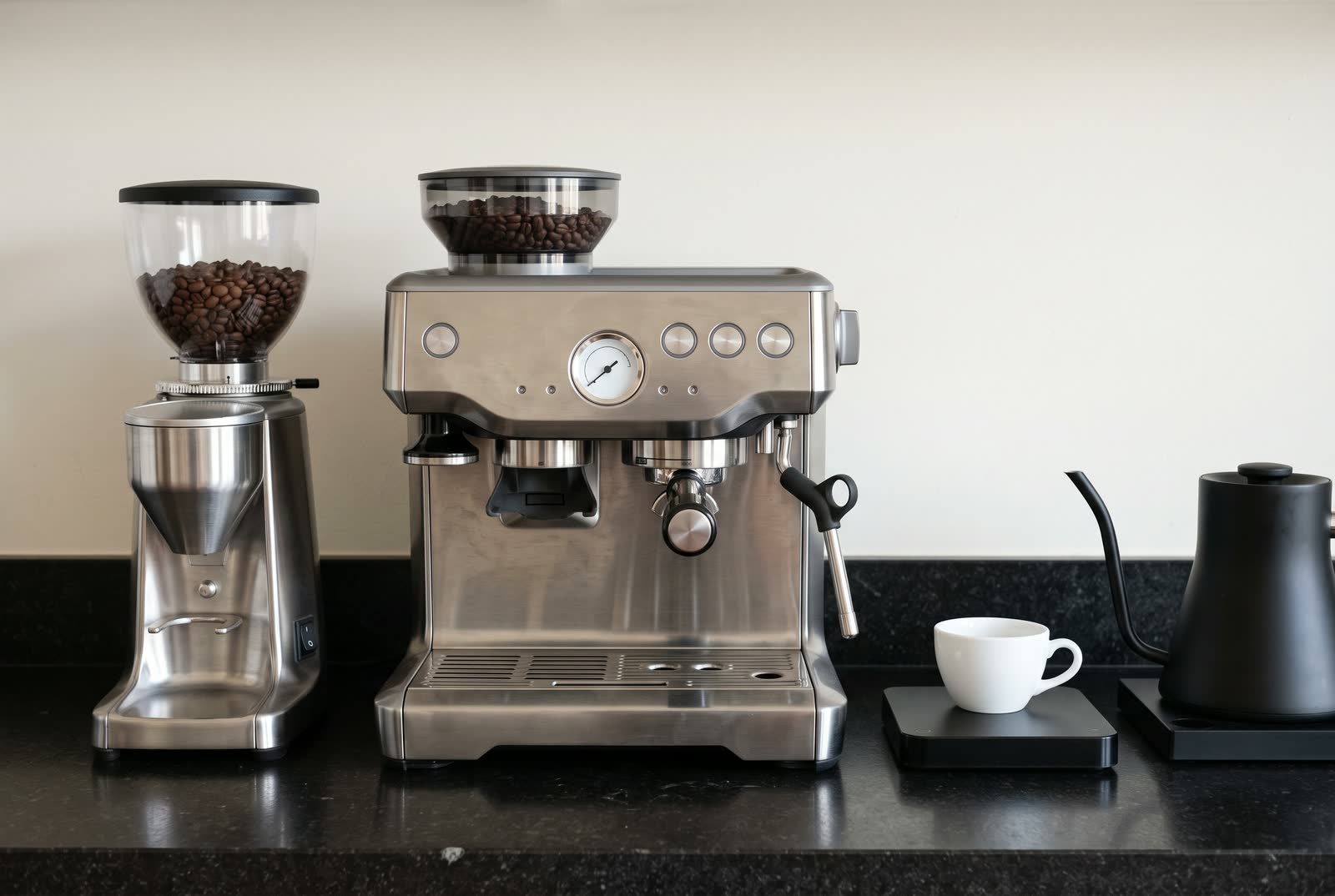
Fifteen bar is the pump and nine bar is the valve, and neither is a reading taken at the coffee. What the fifteen machines listed here state about pressure, what six of them do not, and what a measurement at the group would need.

Nine Bars: What the Number Means and Where It Is Measured
A worn pine side table against an aged plaster wall, used as a coffee station in a rented room: a small stainless machine and a plain grinder, a cup on its saucer, a jar of beans and a folded cloth, a woven mat on the bare wooden floor, low afternoon light
Curated Setup

Vintage Coffee Corner: Sourcing a Retro Setup

Vintage coffee corner sourcing: retro-look SMEG and Nostalgia machines, guidance for antique grinders, signage, handmade mugs, and how to split the budget.

Vintage Coffee Corner: Sourcing a Retro Setup

Fitting it in

16 guides

The counter is the constraint.

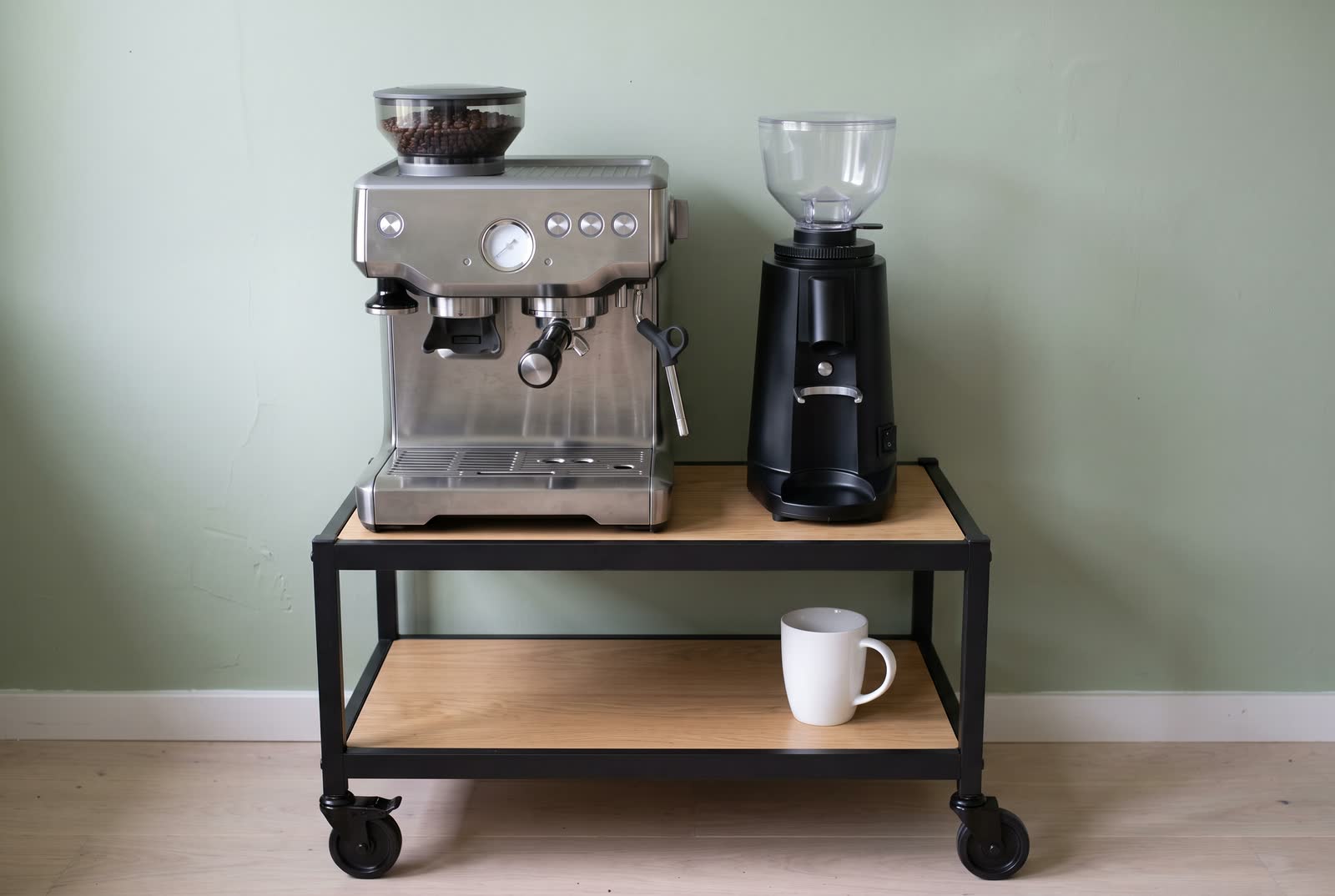
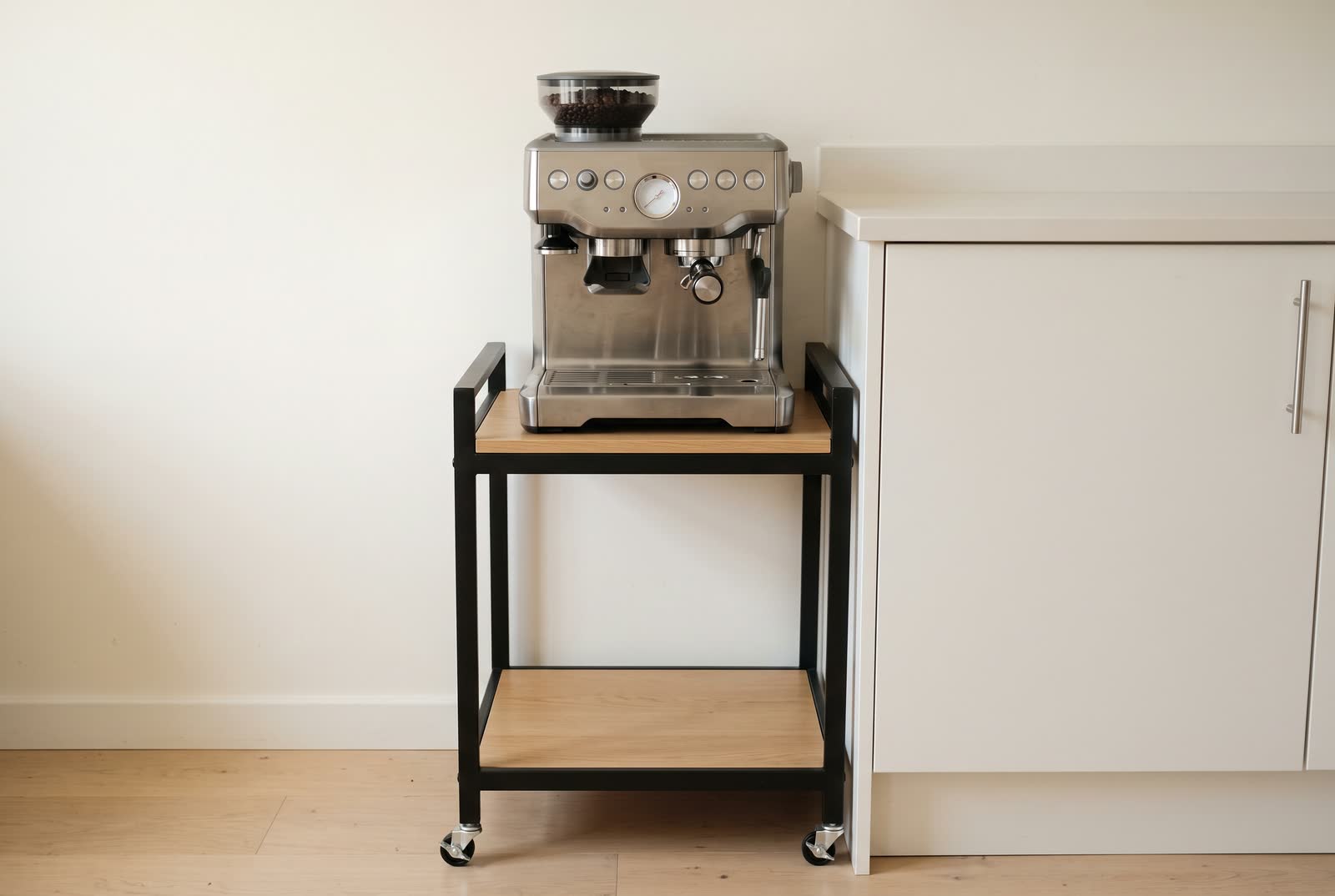
A black kitchen cart on castors holds an espresso machine and a grinder on its top shelf and one white mug below.
Small Spaces

The Coffee Cart: What Rolls, What It Holds, and Where It Parks

A cart gives a coffee station to a kitchen with no free counter. What a cart has to be measured against, what the machine's own page states about its footprint, what a shelf has to be, and the two figures nobody has published.

The Coffee Cart: What Rolls, What It Holds, and Where It Parks
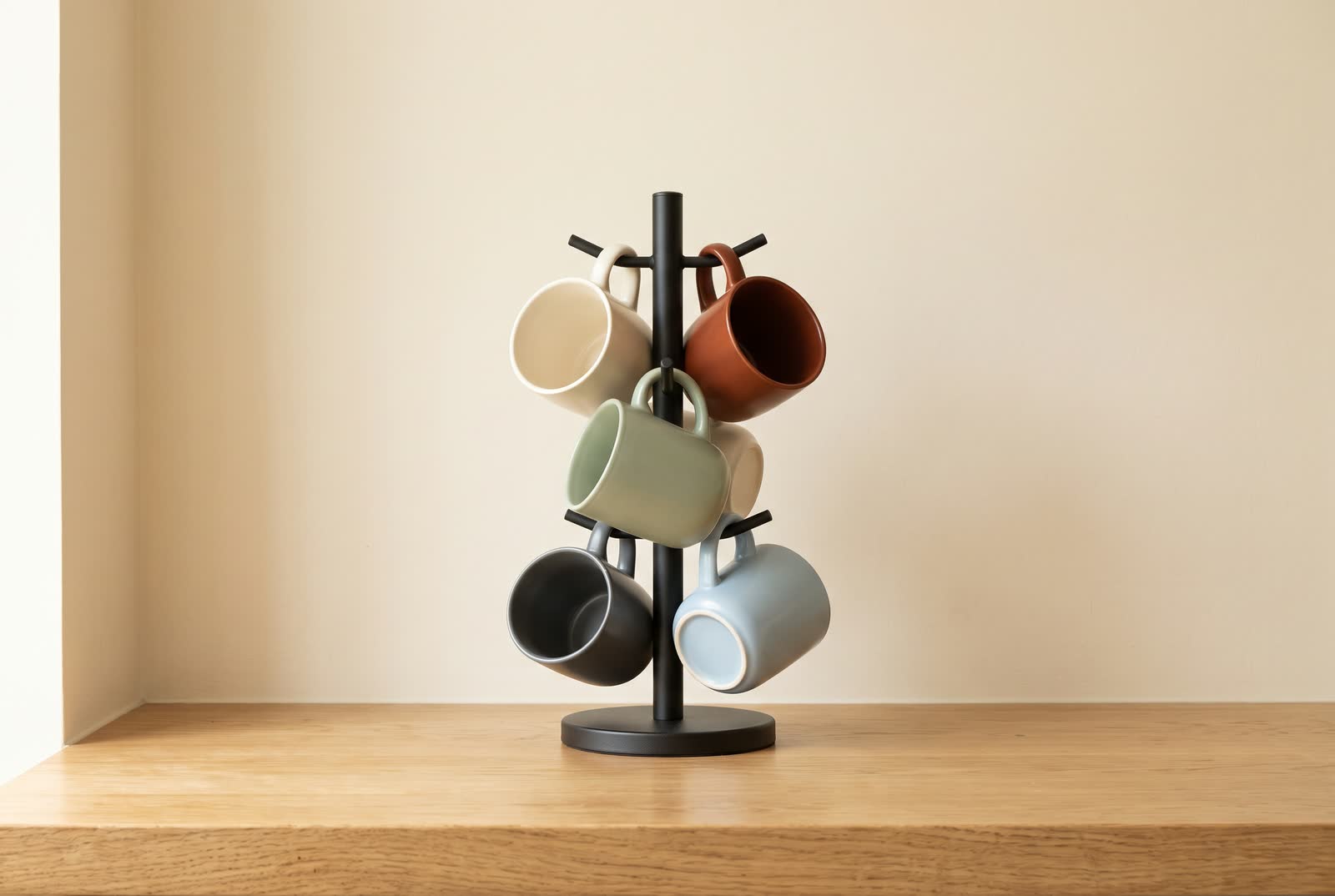
Six plain stoneware mugs in quiet colors hanging from a black mug tree on a light oak counter.
Buying Guide

Mug Storage: The Tree, the Rack and the Shelf

A mug tree trades counter width for height and a wall rack trades holes for counter. What the tree and the rack each state, why one of them is a category rather than a product, and why no load rating appears anywhere on this page.

Mug Storage: The Tree, the Rack and the Shelf
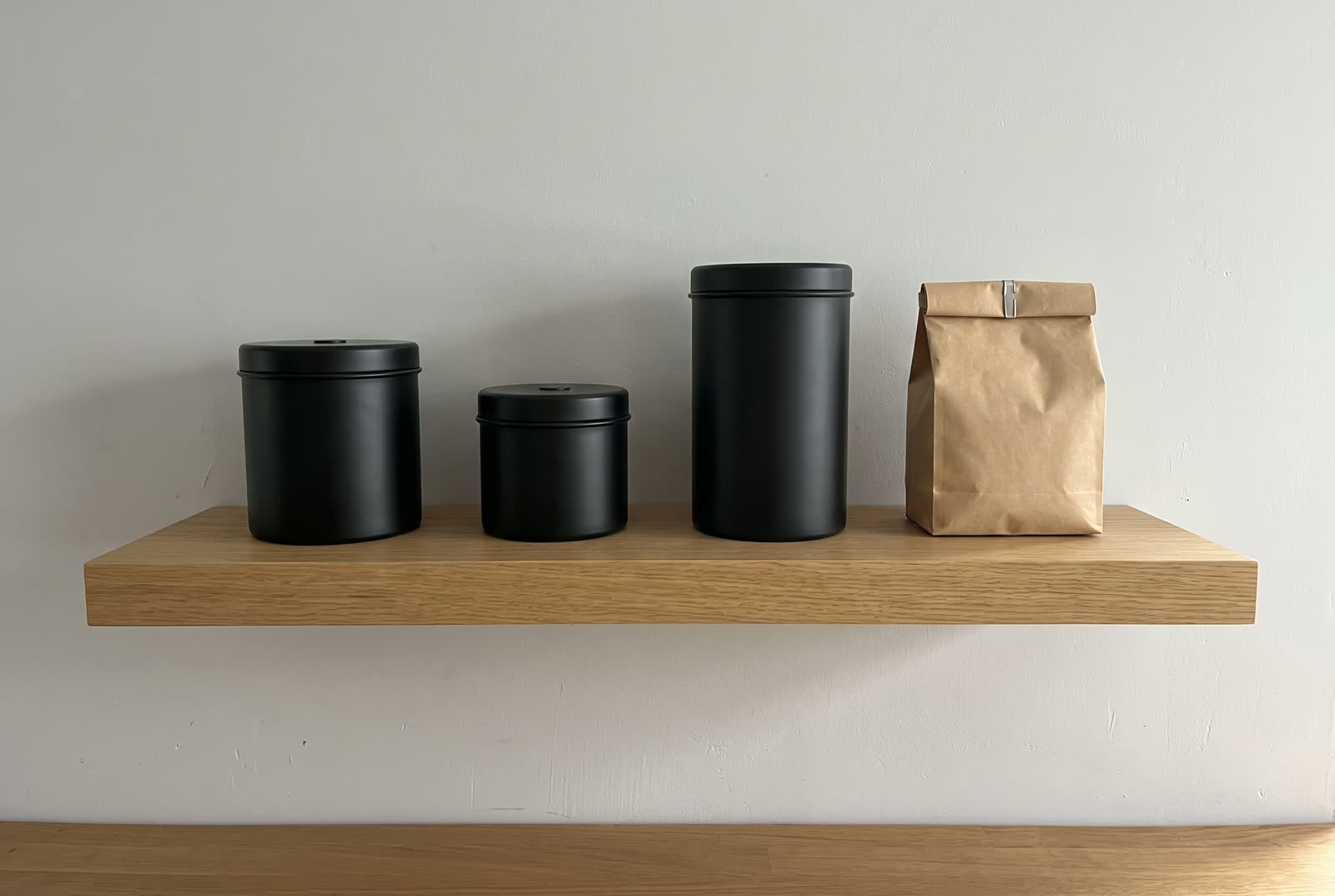
Three plain black canisters of three heights and a folded kraft coffee bag on a light oak shelf.
Buying Guide

Where the Beans Live: The Canister, the Bag and the Week After Roasting

A sealed jar keeps oxygen, moisture, light and heat off roasted coffee, and that is all it does. What OXO's page for the one canister set here states, and why this page gives no number of days for how long beans last.
Where the Beans Live: The Canister, the Bag and the Week After Roasting
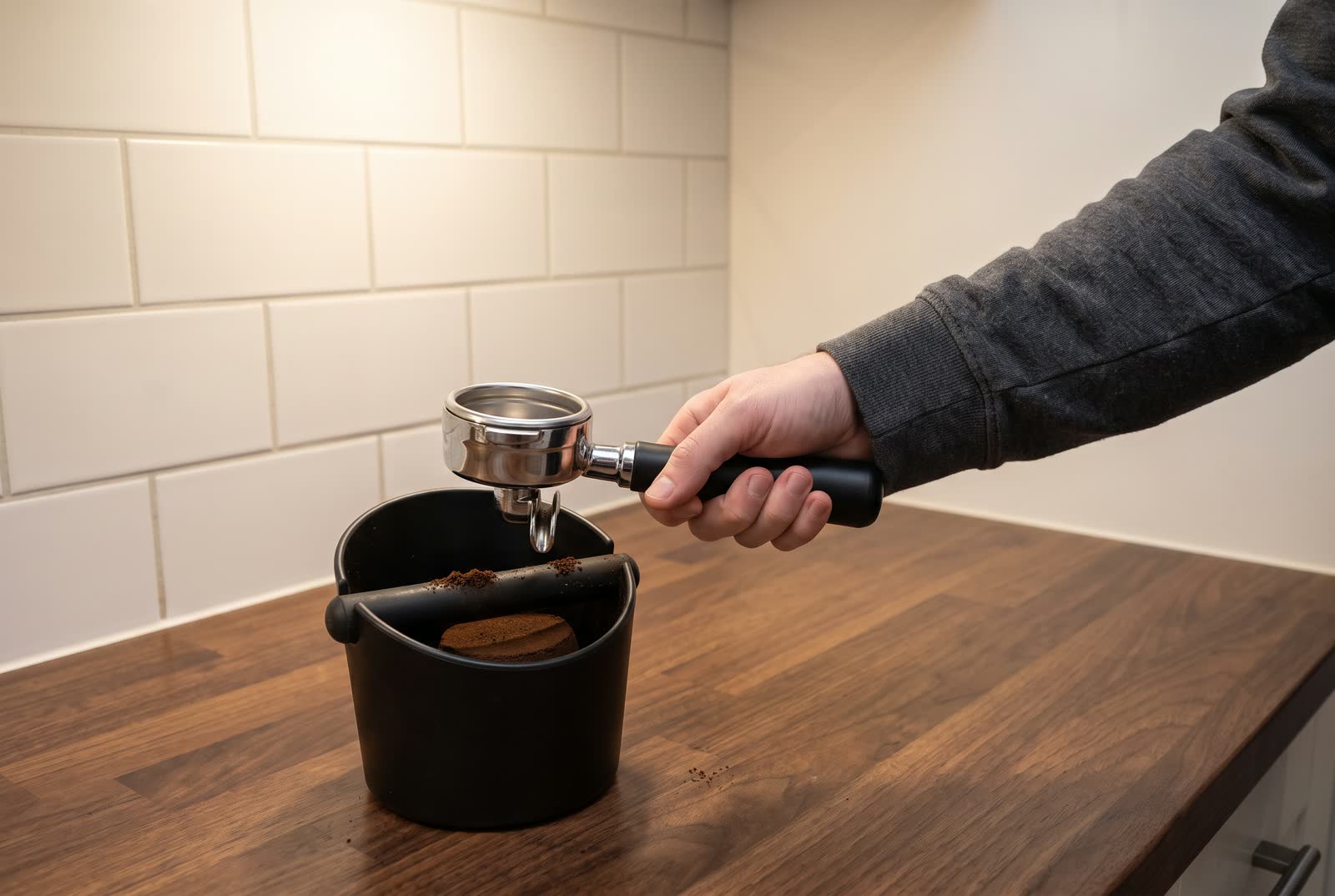
A hand holds an empty chrome portafilter above a black knock box on a walnut counter, a spent coffee puck lying inside it.
Buying Guide

The Knock Box, the Bin and the Sink: Where a Spent Puck Goes

A knock box, a kitchen bin and a drain are the three places a spent espresso puck can go. What the maker states about the one knock box here, what the bin costs you, and why this page states nothing at all about the drain.

The Knock Box, the Bin and the Sink: Where a Spent Puck Goes
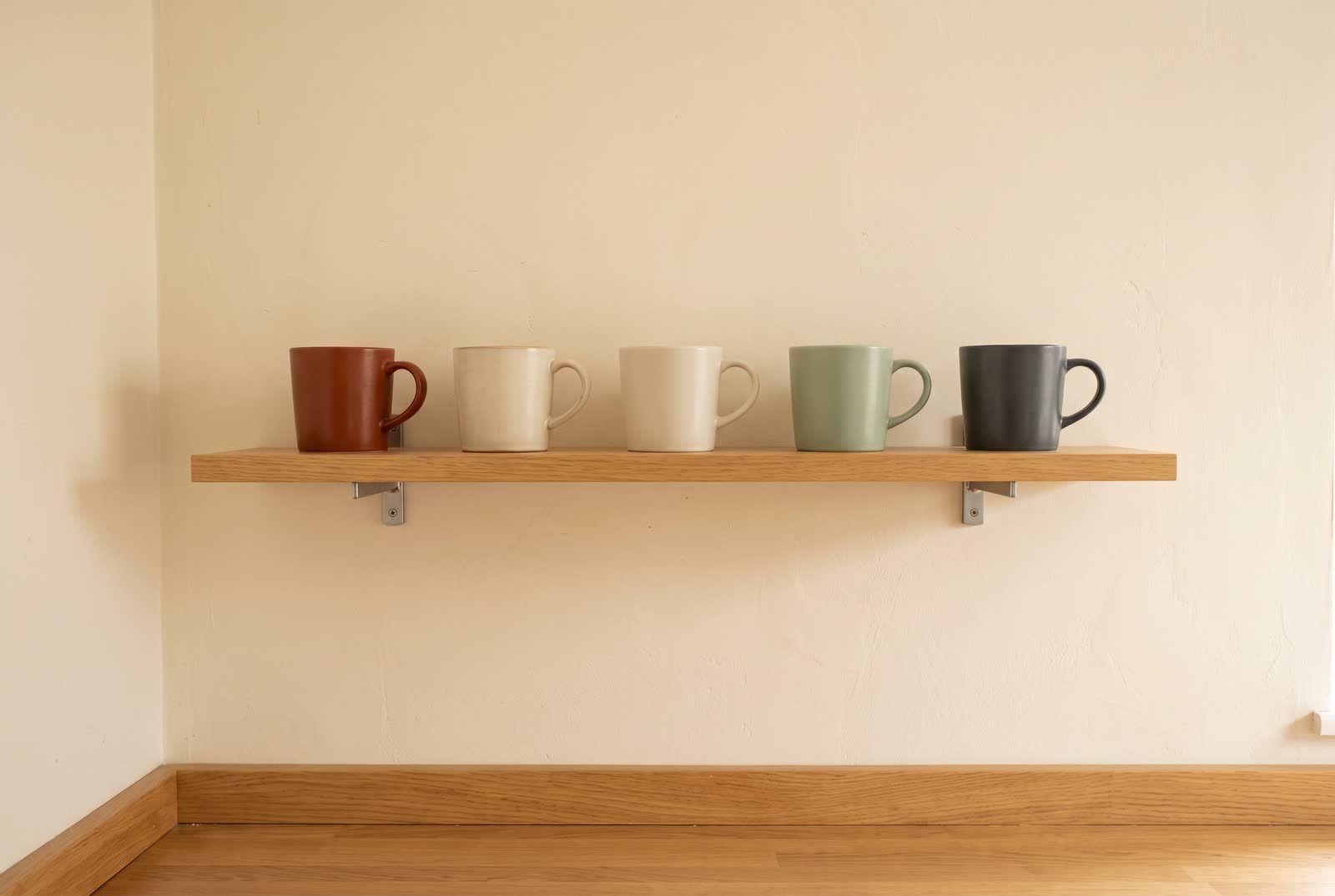
Five plain stoneware mugs in rust, cream, sage and grey stand in a row on a light oak shelf against a cream wall.
Small Spaces

The Wall Above the Counter: The Rack, the Shelf and the Hooks

The wall above a coffee counter can take the mugs, the filters and the beans and give the counter its depth back. What goes up, in what order, what the listings state, and the three figures nobody publishes.

The Wall Above the Counter: The Rack, the Shelf and the Hooks
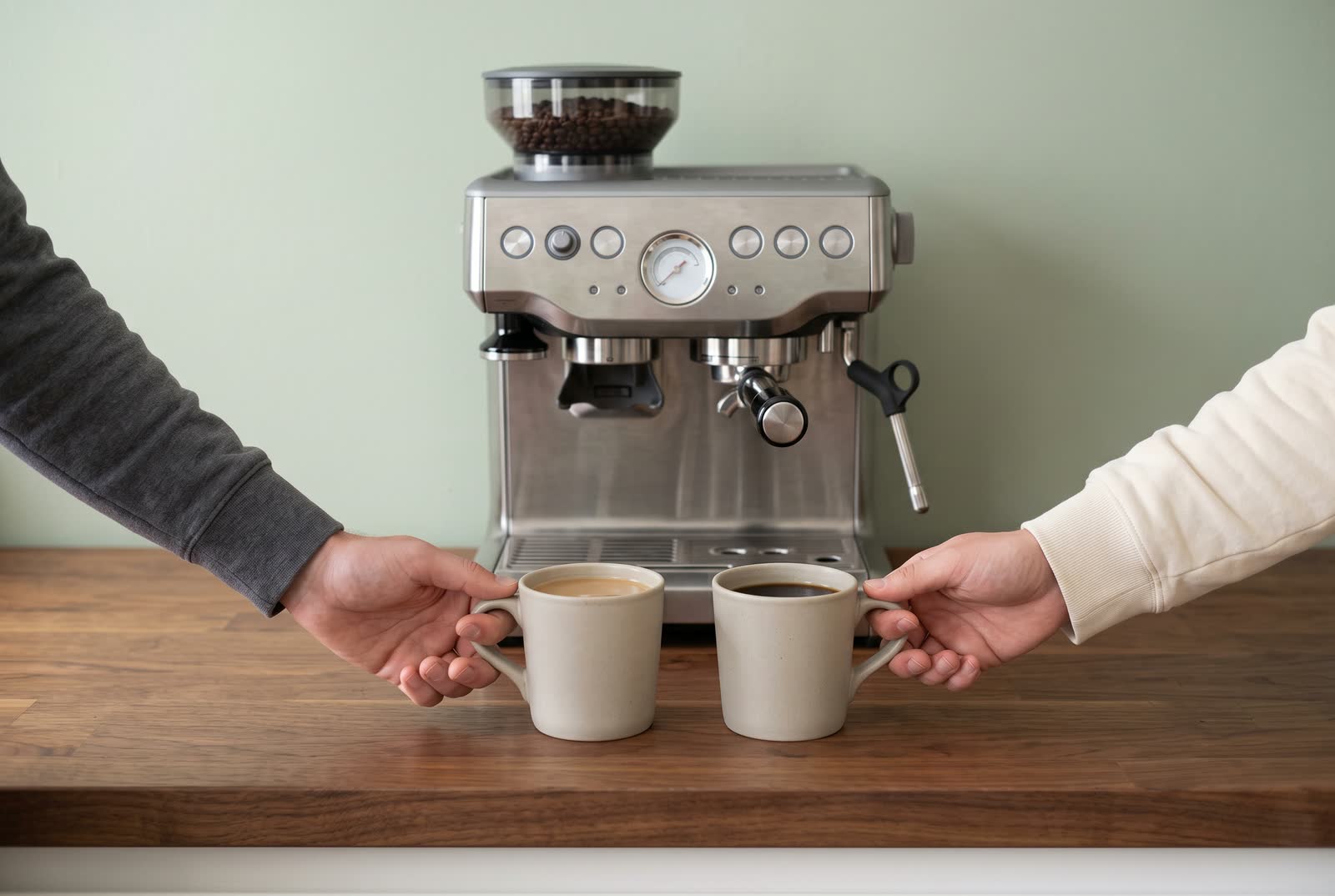
Two plain stoneware mugs stand side by side on a wide walnut counter, one pale with milk and one dark, a hand in a grey sleeve reaching in from the left edge of the frame for one and a hand in a cream sleeve reaching in from the right edge for the other, an espresso machine soft behind them.
Small Spaces

Two People, One Counter: A Station for the Same Five Minutes of the Morning

Two people making coffee in the same five minutes are not short of space, they are queuing for one grinder. Two lanes built from published widths, why the deep one is the kettle's, and the one figure on the counter that is in dispute.

Two People, One Counter: A Station for the Same Five Minutes of the Morning
A narrow light oak counter run seen end on in perspective, only a little deeper than the machine itself, a brushed steel espresso machine backed up against the side wall that closes the run off with a hand's width of bare counter in front of it and the whole near half empty.
Small Spaces

An Espresso Corner Where the Counter Run Is the Constraint

How much length an espresso corner needs, worked from published widths: the machine, the grinder and the knock box sum to 493 mm at the narrowest, and every gap between them is a figure no maker here publishes.

An Espresso Corner Where the Counter Run Is the Constraint
An espresso machine on a counter, seen from the side, a narrow gap and its cable visible behind it.
Technique

The Room Behind an Espresso Machine: Clearance Under a Cabinet

In an 18 in gap under a wall cabinet, the Gaggia Classic Pro stands 14.0 in tall and fills its tank in place. In a tight 15 in gap, the 12.0 in Bambino leaves 3.0 in of air. Heights and placement rules for four machines.

The Room Behind an Espresso Machine: Clearance Under a Cabinet
An espresso machine and grinder stand on a small cart beside a kitchen cabinet, its door shut.
Small Spaces

A Coffee Bar in a Rented Kitchen: The Corner a Lease Allows

A lease sets two conditions: nothing in the walls and nothing in the plumbing. The cart, the closed cabinet and the shelf this page rules out, with the footprints from the makers' own figures and the one manual sentence that decides the door.

A Coffee Bar in a Rented Kitchen: The Corner a Lease Allows
A coffee corner under a low cabinet: a compact black espresso machine and a small grinder tucked into the corner of a marble counter between dark green cupboards, a jar of beans and one cup
Setup Guide

Setting Up a Small Coffee Station

Plan a small coffee station step by step: pick counter or cart placement, choose one anchor brewer by footprint, and add only the accessories you need.

Setting Up a Small Coffee Station
A tall clear glass sits under an espresso machine's spout, only a finger's gap between rim and spout.
Technique

What Fits Under the Group, and How Far the Wand Reaches

The Bambino Plus manual lists extra-tall cup clearance for tall mugs as a feature, the only one of the four machines here whose maker names tall mugs. What has to fit runs from about a 4 oz espresso cup to a 22 oz travel mug and a 20 oz jug, and a ruler on the drip tray with the portafilter fitted gives your own gap in a minute.

What Fits Under the Group, and How Far the Wand Reaches
A milk jug, a tamper and a folded cloth on a dark wood tray on a black granite counter.
Buying Guide

The Tray: The Landing Zone a Coffee Corner Needs

A tray turns a scatter of coffee things into a station by drawing a boundary around them. Size it from what it holds: a knock box and a pour-over cone kit side by side need at least 303 millimetres of width and 160 of depth, before the gaps you want between them.

The Tray: The Landing Zone a Coffee Corner Needs
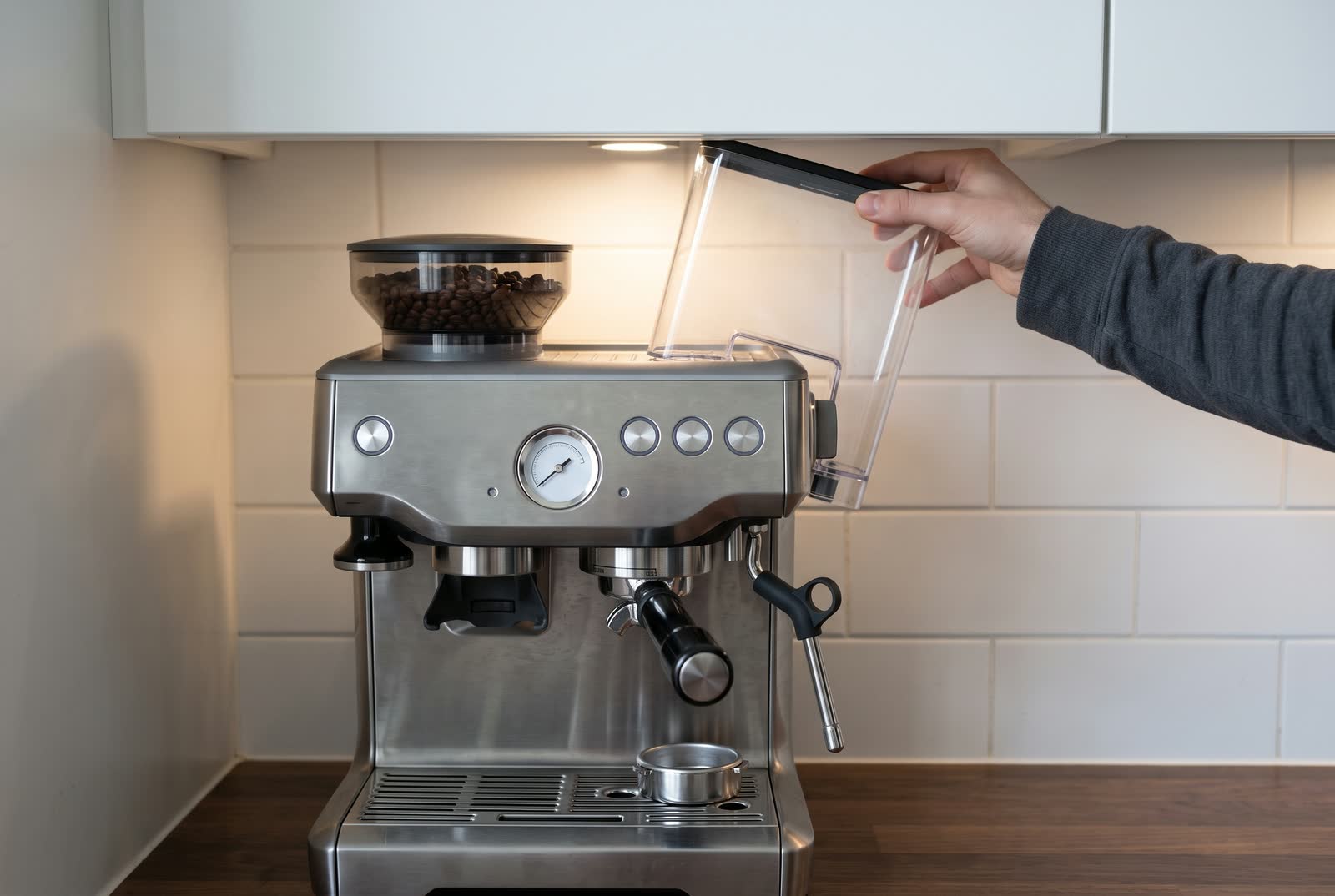
A hand lifts a clear water tank out of an espresso machine under a cabinet, a light on above it.
Small Spaces

Reaching a Machine's Water Tank and Hopper Under a Cabinet

Under a wall cabinet, the Gaggia Classic Pro and the Stilosa fill their tanks in place, per their manuals, while both Bambinos lift the tank out of the top. The machine and the grinder that suit a corner under a cabinet.

Reaching a Machine's Water Tank and Hopper Under a Cabinet

Making it

29 guides

The machine is on the counter.

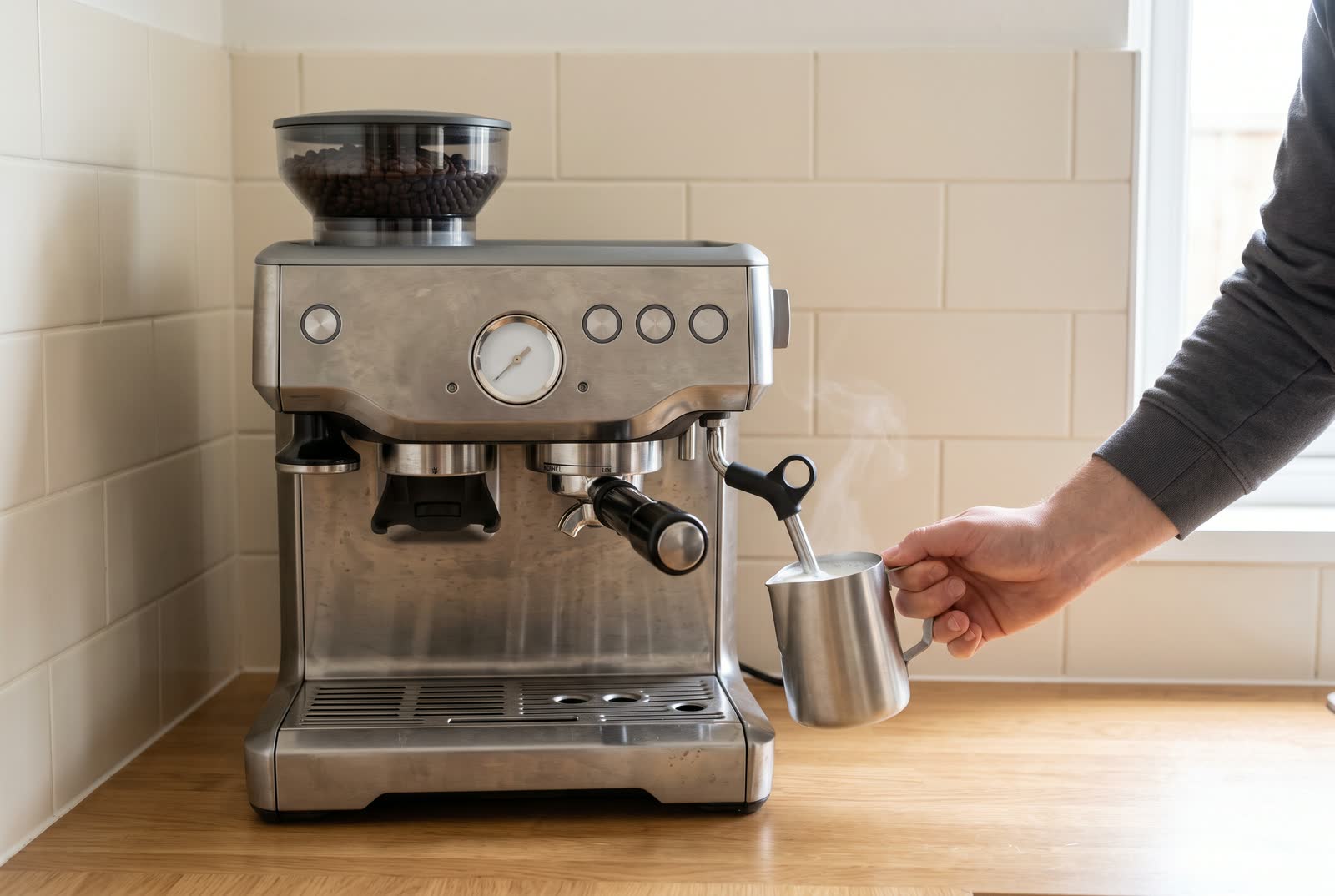
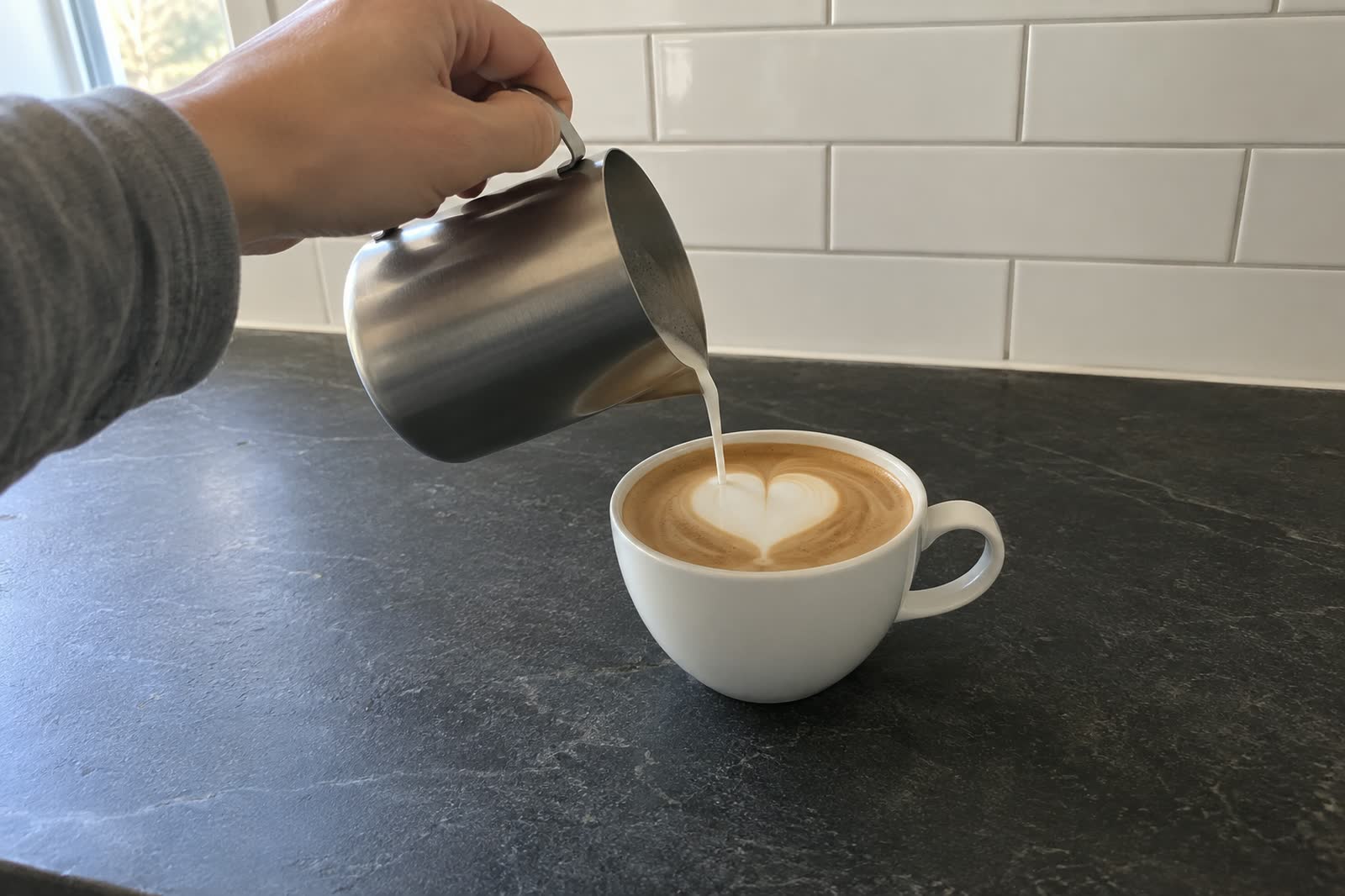
A hand in a dark grey sleeve holds a plain steel milk jug under the steam wand of a bare steel espresso machine on a light oak counter, foam rising in the jug, cream subway tile behind and a window at the right.
Technique

Steaming Milk: The Jug, the Wand and the Sound

Stretching and spinning, what each stage sounds like, where to put the wand, how full the jug should be, and how to read the milk before it reaches the cup.

Steaming Milk: The Jug, the Wand and the Sound
A hand in a dark grey sleeve sets a small glass of espresso topped with a thin pale layer down on a dark walnut counter, with a bare steel espresso machine standing to the left.
Drink Recipe

The Cortado: One Shot, One Glass, and the Milk That Fits It

A cortado is one espresso cut with about the same volume of warm milk in a small glass. What the glass decides, how thin the milk should be, and the order to build it.

The Cortado: One Shot, One Glass, and the Milk That Fits It
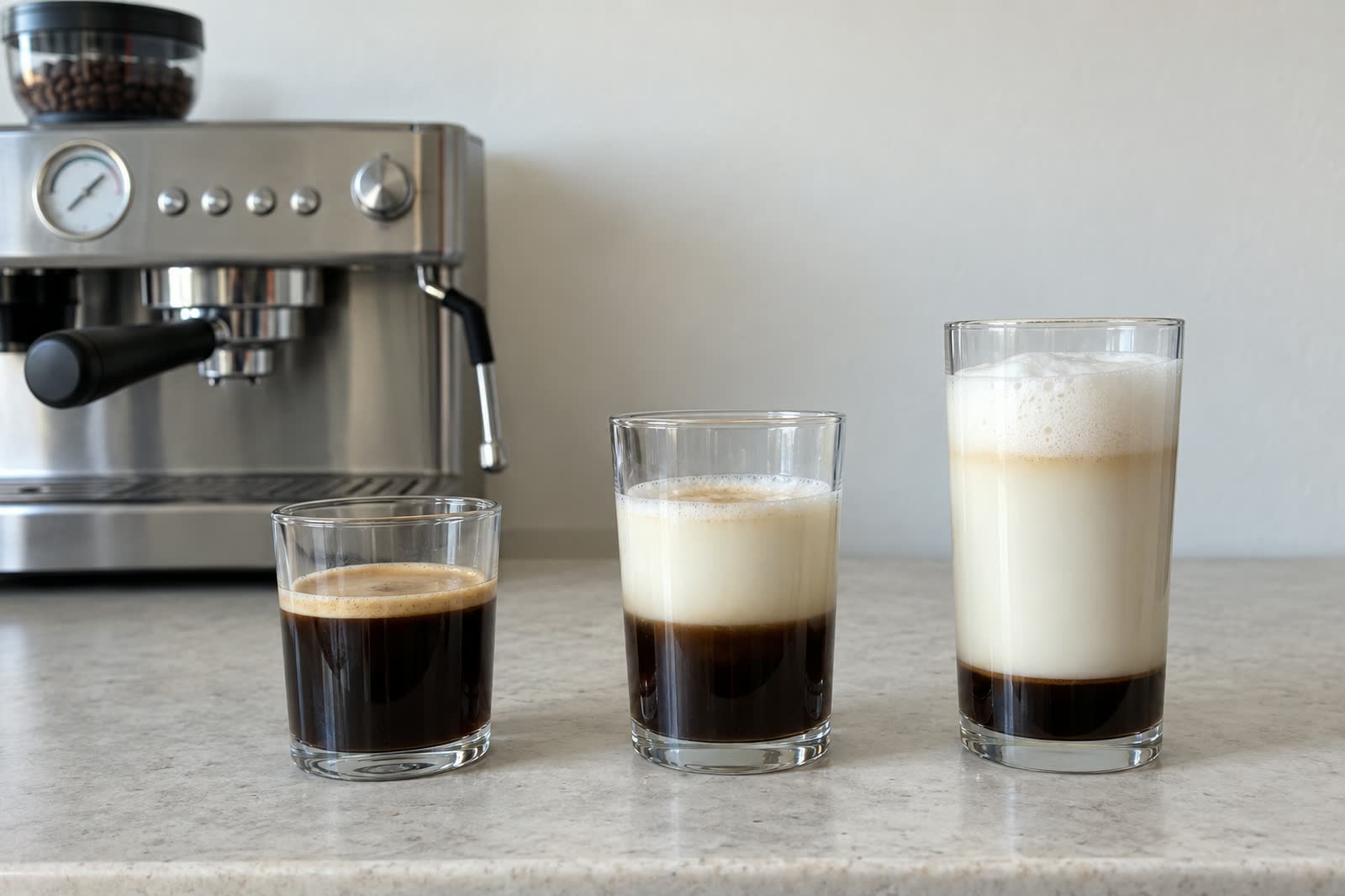
Three plain glasses of different heights in a row on a pale stone counter, the coffee and the milk in each one showing as bands, with the bare steel side of an espresso machine behind them on the left.
Drink Recipe

Latte, Cappuccino and Flat White: What the Ratio Changes

The three milk drinks a cafe sells are one shot and one jug of milk in three proportions. Which ratio makes which, how much foam each needs, and how to measure it.

Latte, Cappuccino and Flat White: What the Ratio Changes
A hand rests on a grinder's collar beside a compact espresso machine with no hopper or gauge.
Technique

Dialing In on a Breville Bambino: Where Each Handle Sits

On the Bambino, grind sits on the grinder, dose in the 54mm basket, temperature inside the ThermoJet heater and time at the 1 Cup and 2 Cup buttons. The Encore ESP's 54mm dosing cup fits that basket.

Dialing In on a Breville Bambino: Where Each Handle Sits
A hand turns the plain adjustment collar on a coffee grinder, its bean hopper full above.
Technique

One Bag, Two Brewers: What the Grind Decides Between Filter and Espresso

The same beans go into a portafilter and into a cone, and the grinder's collar is the only part that has to move. What the ten grinders we have read state about their adjustment, and what the two ends of the range are for.

One Bag, Two Brewers: What the Grind Decides Between Filter and Espresso
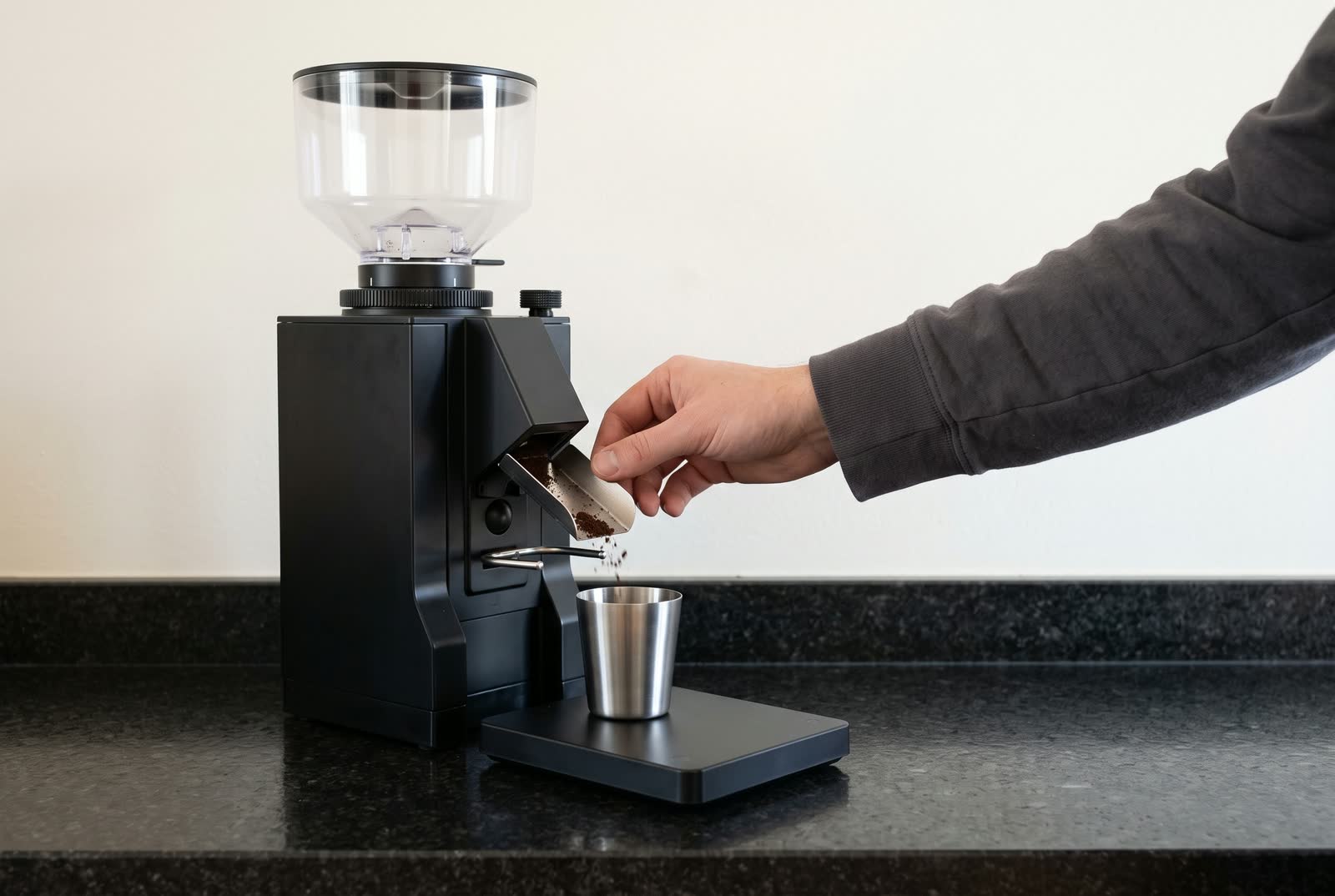
A hand steadies a grinder's open chute over a steel cup on a scale, loose grounds falling in.
Technique

Grind Retention: What Stays in the Grinder Between Two Doses

Retention is coffee that stays on the burrs and in the chute and comes out in the next dose. The DF64 Gen 2's 50 g bellows hopper pushes it out, the Encore ESP grinds into a 54 mm dosing cup, and a scale reading to 0.1 g with a weigh-in, weigh-out check shows how much your own grinder keeps.

Grind Retention: What Stays in the Grinder Between Two Doses
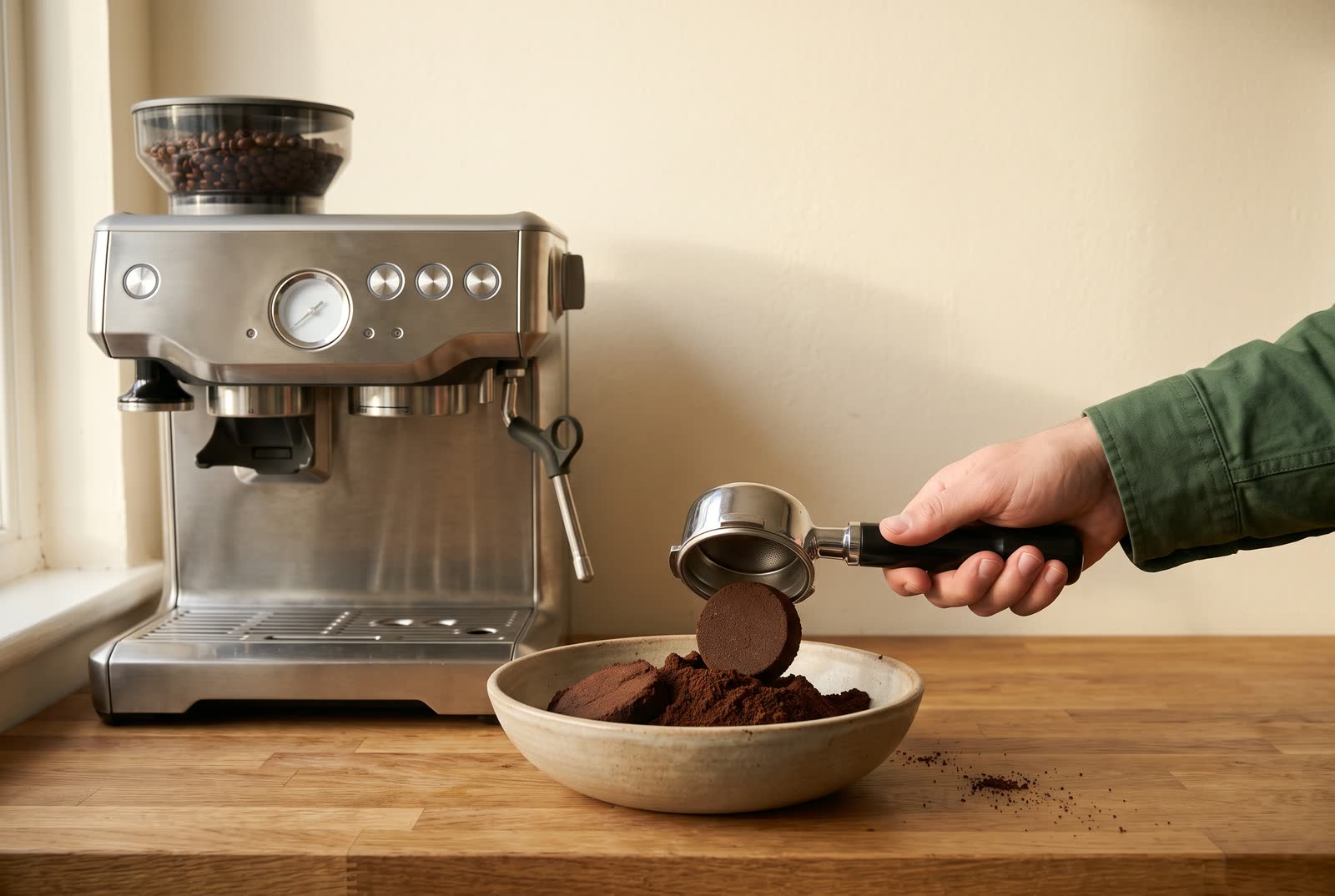
A hand in a dark green sleeve holds a portafilter upside down over a plain stoneware bowl of spent coffee grounds on a butcher block counter, a puck falling into the bowl, with a bare steel espresso machine behind on the left.
Project

Used Coffee Grounds: Four Uses, and the One We Could Not Source

Four second uses for spent espresso grounds: scouring a pan while they are damp, taking a smell out of a fridge once dried, a hand scrub after cooking, and a green layer in a compost heap. A knock box holding up to 20 pucks collects most of a week of them at two or three shots a day.

Used Coffee Grounds: Four Uses, and the One We Could Not Source
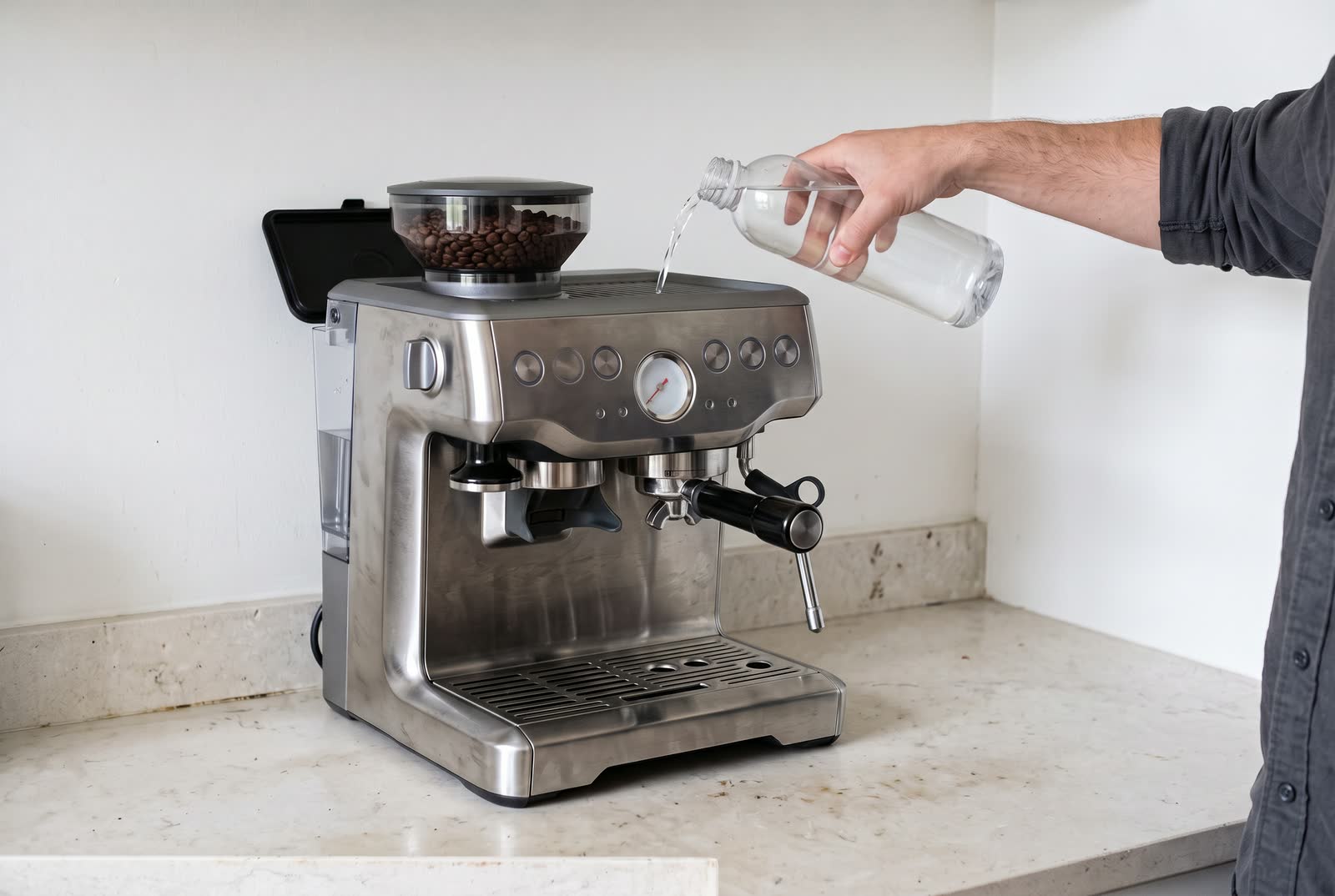
A hand in a dark grey sleeve tips a plain clear bottle over the open water tank of a brushed steel espresso machine on a pale stone counter, a thin stream of clear solution pouring in, the tank lid propped open.
Technique

How to Descale an Espresso Machine: What Each Maker Says, Machine by Machine

Descale when flow slows, heat-up lengthens or steam weakens, since the rate depends on your water. The Bambino ships with Breville's descaling powder, and the Stilosa and the Classic Pro take the solution with the tank in place.

How to Descale an Espresso Machine: What Each Maker Says, Machine by Machine
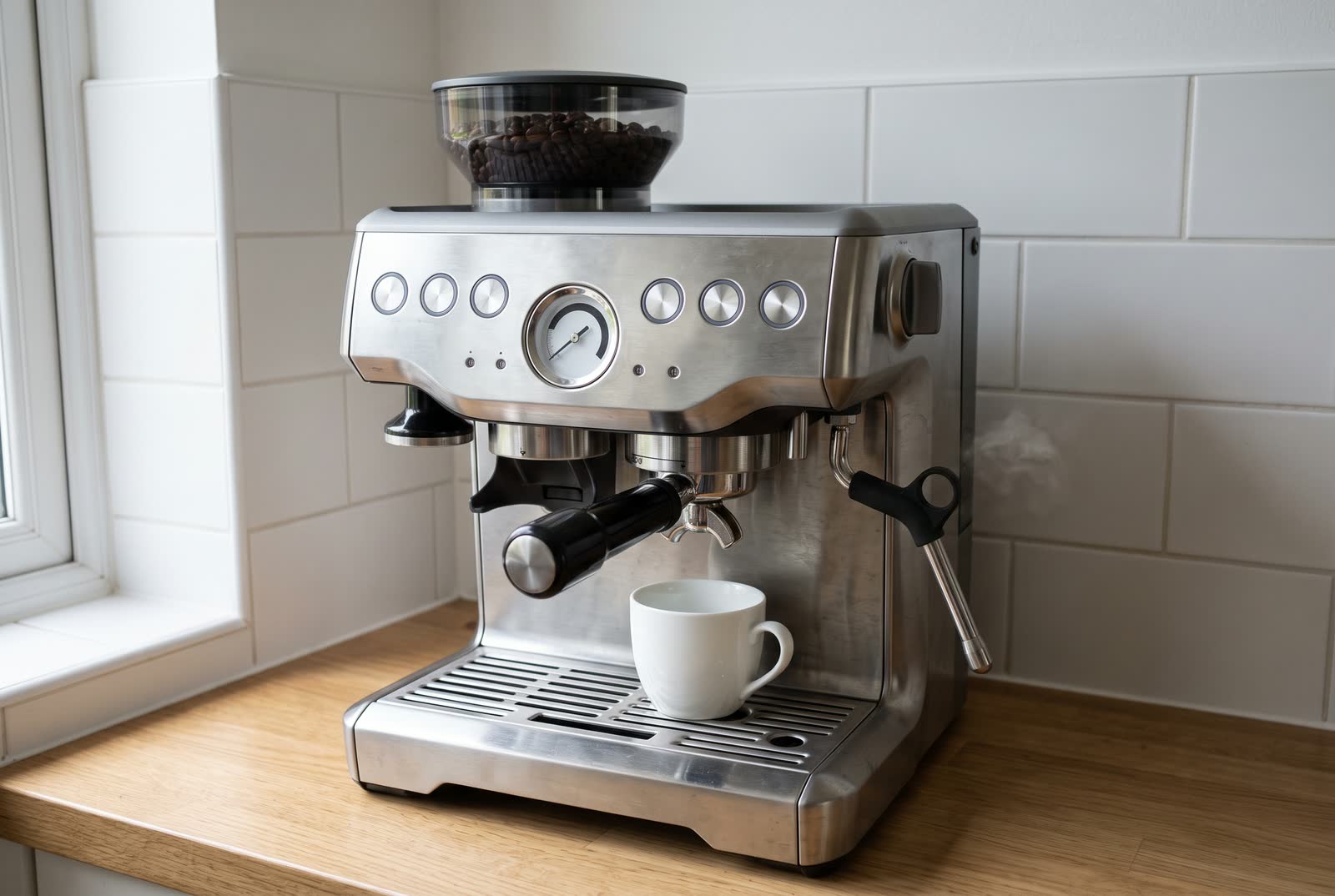
A compact single-boiler espresso machine stands alone on a light oak counter seen from the front and slightly right, its chrome group head with a loaded portafilter and its steam wand swung out to the side both in the same picture, a wisp of steam at the wand tip and a white cup on the drip tray.
Technique

Brew Temperature: What a Single Boiler Holds and What It Does Not

One heater, two jobs, and only one maker on this record prints the range its control moves over. What the fifteen machines here state about temperature, what four of them are silent about, and what a measurement at the group would need.

Brew Temperature: What a Single Boiler Holds and What It Does Not
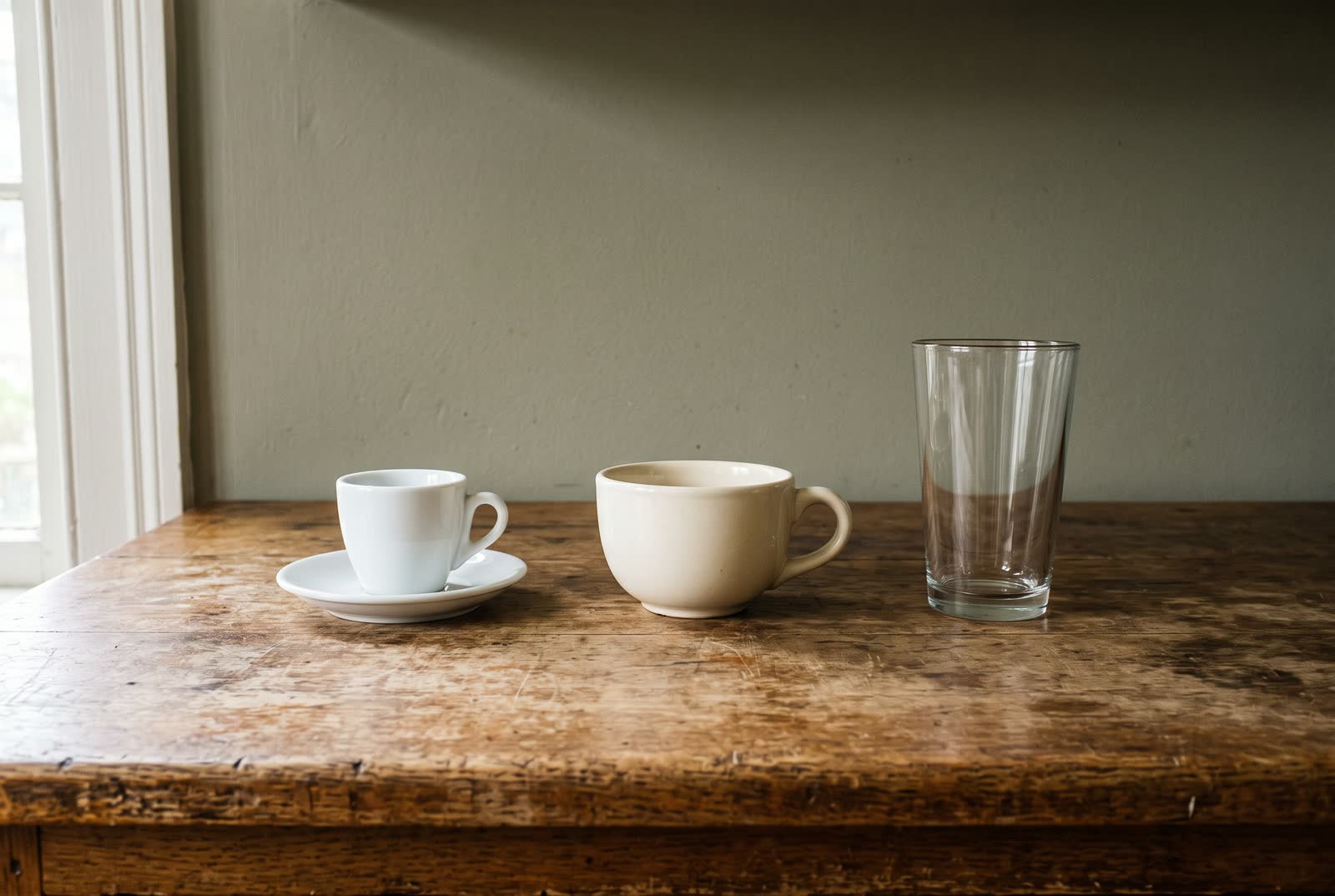
A small espresso cup, a mid stoneware mug and a tall glass, empty, in a row on a worn oak table.
Buying Guide

Cups and Glasses: What the Drink Decides About the Vessel

A cortado in a mug stops being a cortado. Which vessel each drink's ratio asks for, the one capacity range this page uses and what each end of it holds, with every size named as a convention where no figure is published.

Cups and Glasses: What the Drink Decides About the Vessel
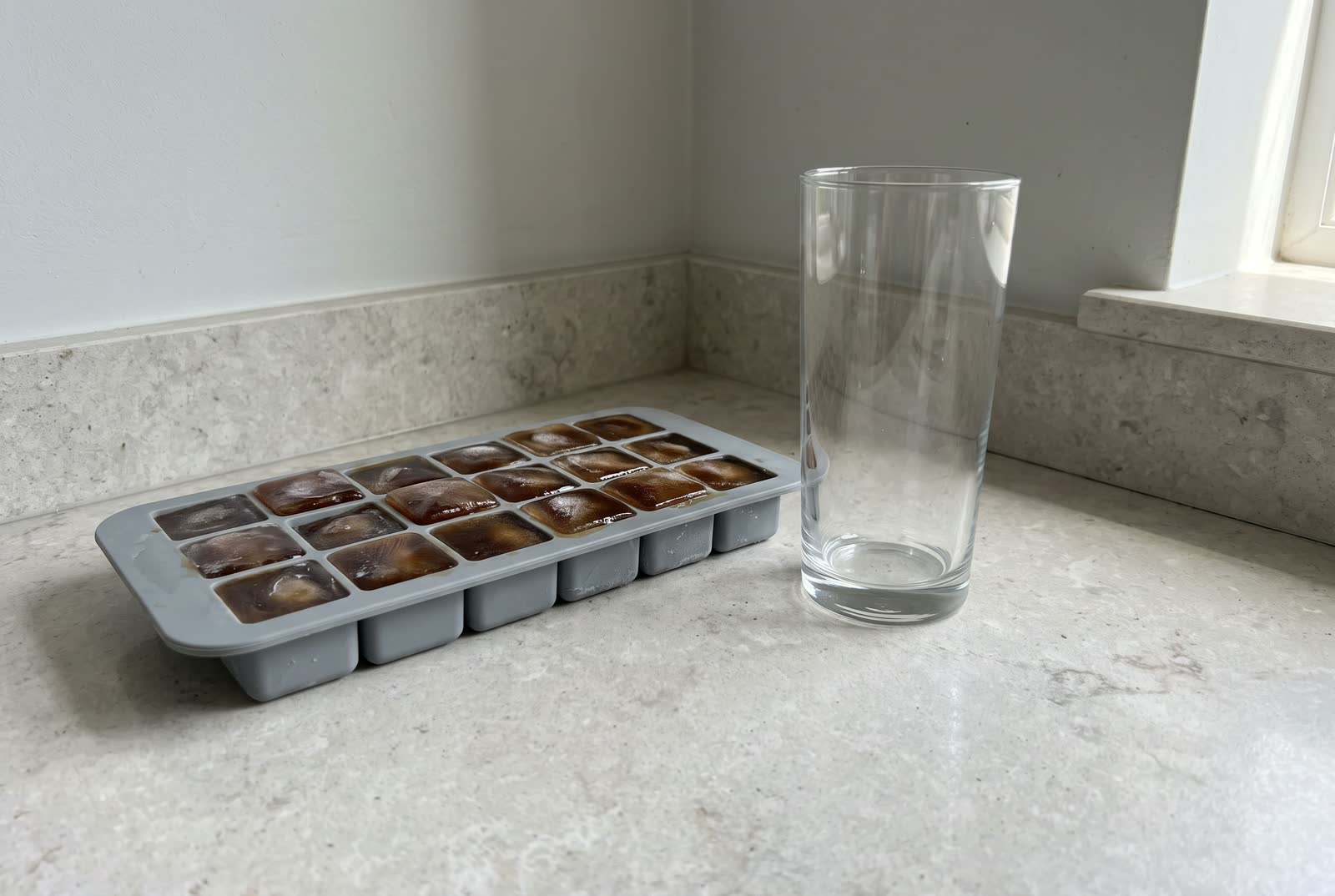
A silicone tray of frozen dark coffee cubes sits beside an empty tall glass on a stone counter.
Project

Coffee Ice: The Cubes That Stop an Iced Drink Going Thin

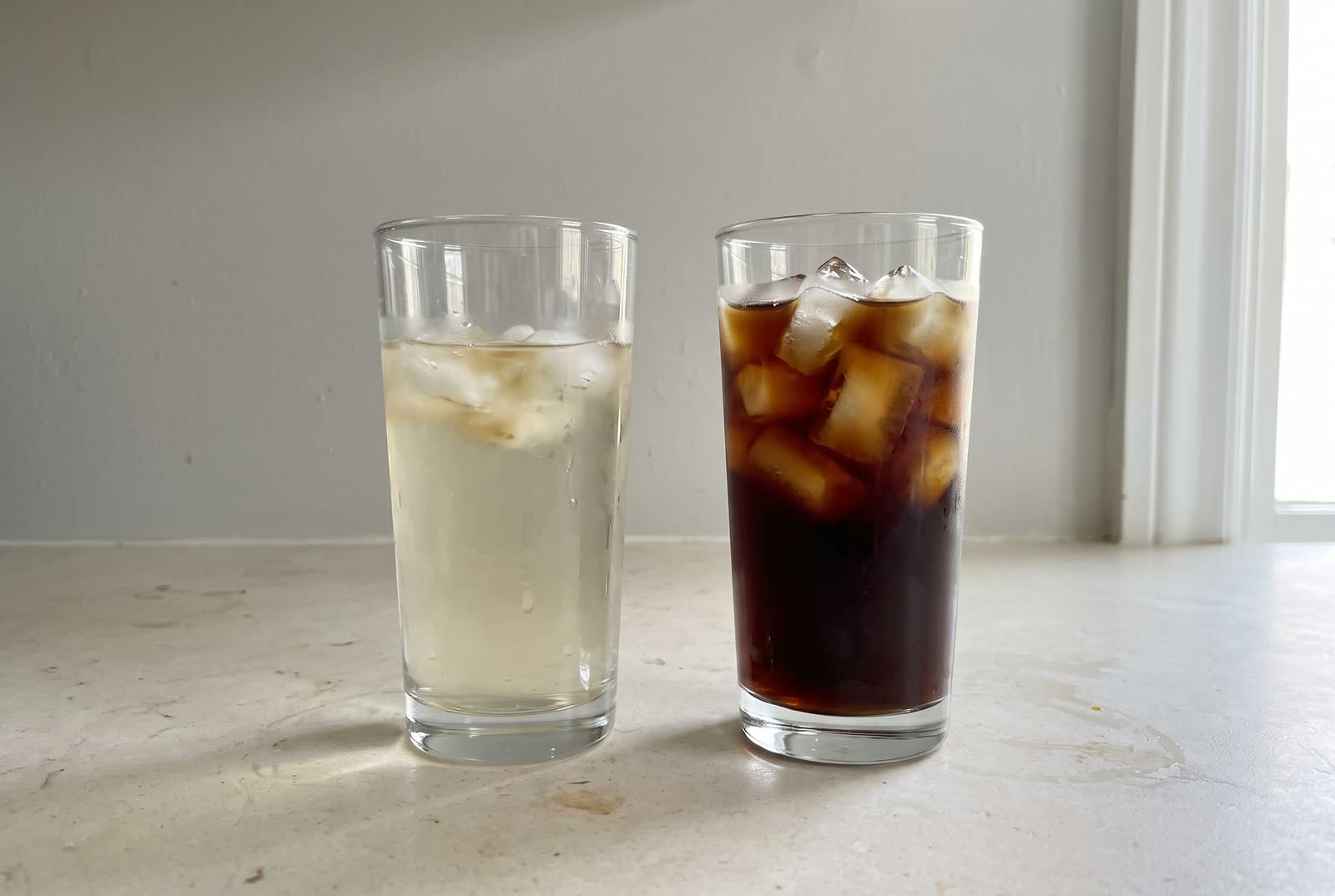
Water ice turns an iced coffee into weak coffee by the time you reach the bottom of the glass. Coffee ice does not. What to freeze, how strong it has to be, and why this page gives you no freezing time.

Coffee Ice: The Cubes That Stop an Iced Drink Going Thin
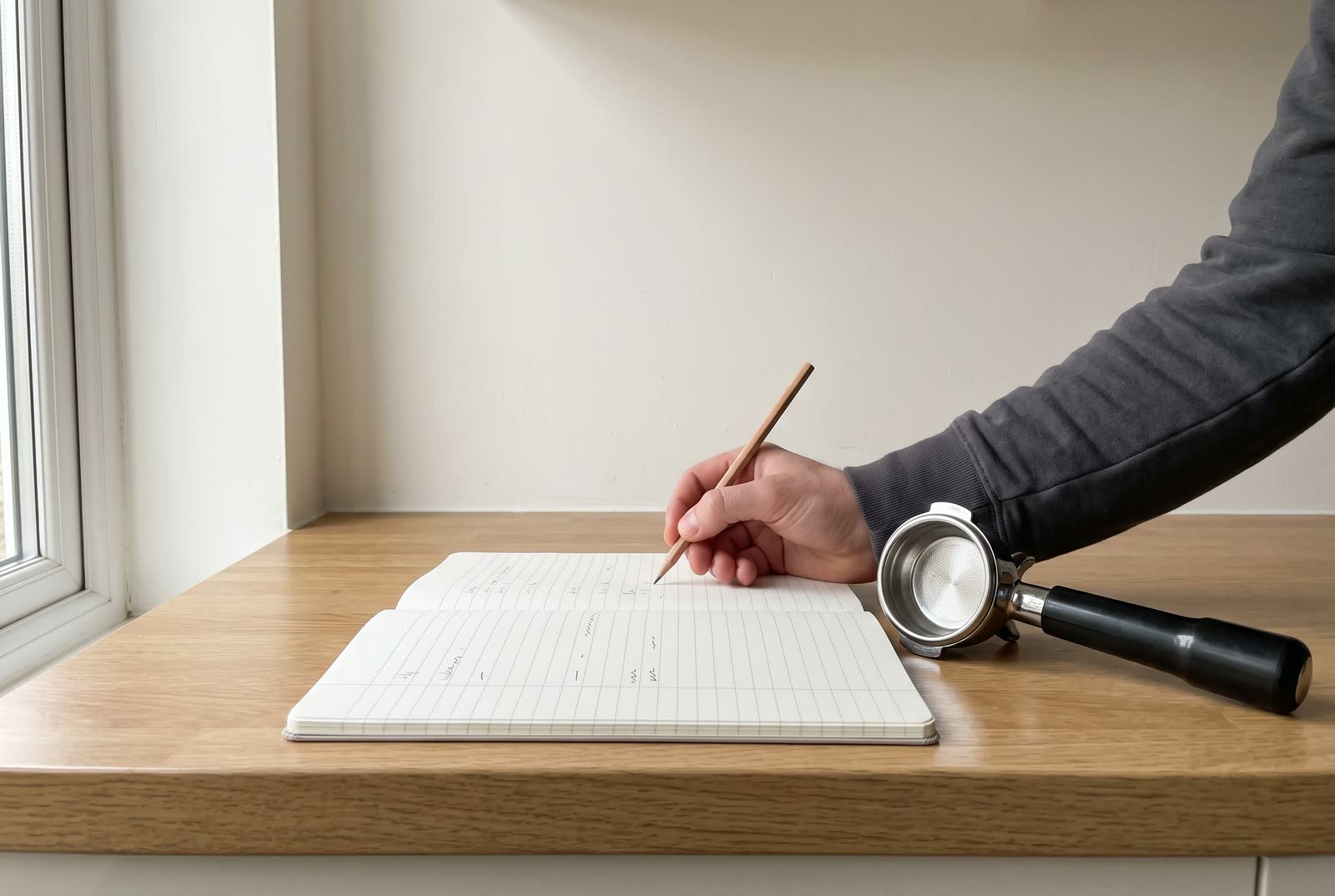
A hand holds a pencil over a ruled notebook page beside a portafilter, its marks plain scribbles.
Project

A Shot Log: One Sheet That Makes Dialing In Repeatable

A shot log is four columns on a sheet of paper, and it is the cheapest thing on any coffee counter. What to write down, what the grinder's own numbering gives you for free, and what a week of it tells you that memory does not.

A Shot Log: One Sheet That Makes Dialing In Repeatable
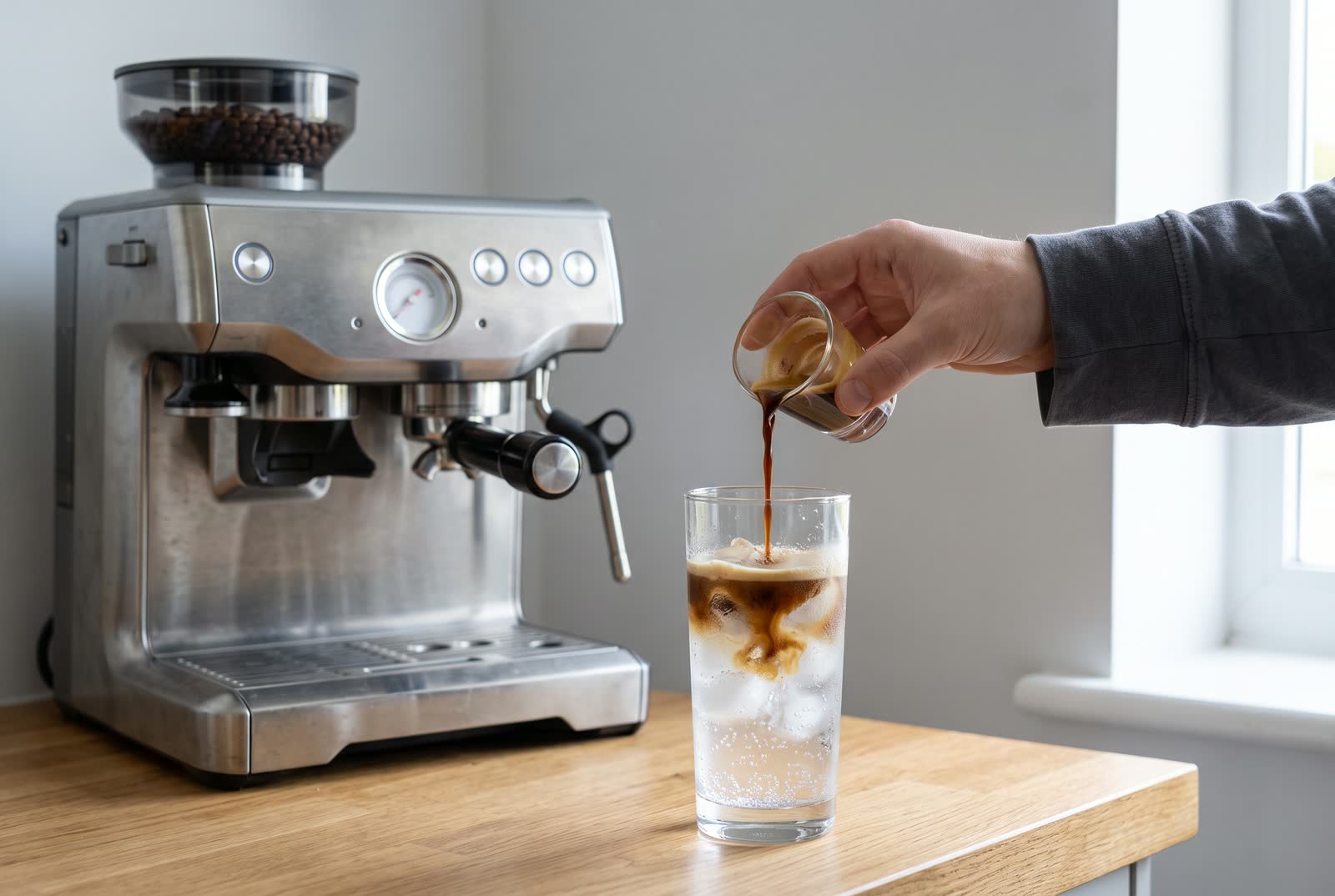
A hand in a dark grey sleeve tips a small glass of espresso over a tall glass of ice and fizzing tonic on a light oak counter, the dark coffee falling through the clear tonic in ribbons and not yet mixed.
Drink Recipe

Espresso Tonic, and the Order the Glass Goes Together In

Espresso tonic is three things and one order: ice, tonic, then coffee, poured over a spoon. Why the order is physical rather than a matter of taste, and what to change when it tastes flat.

Espresso Tonic, and the Order the Glass Goes Together In
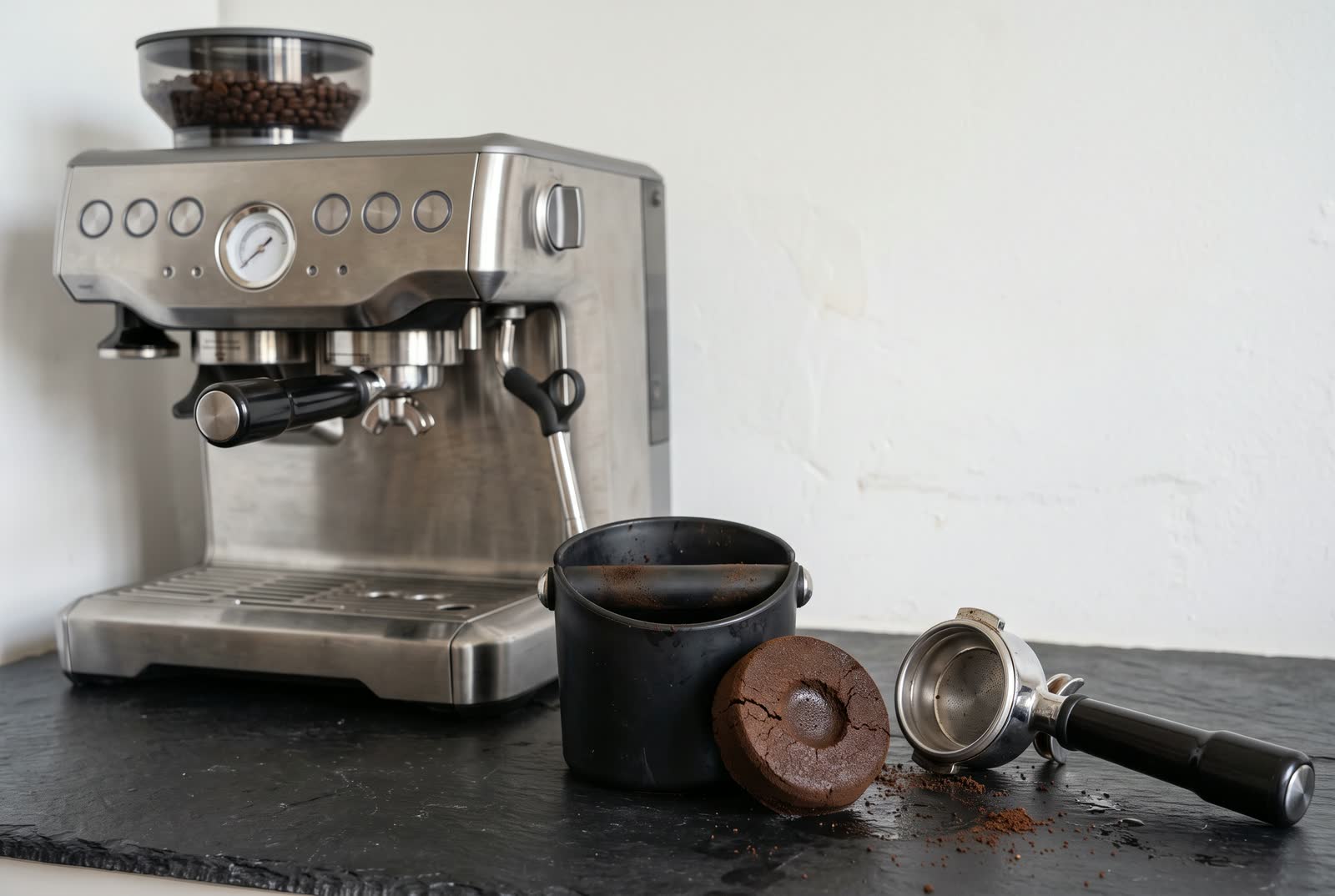
A spent coffee puck lies knocked out whole on a dark slate counter beside a round black knock box, its damp cracked face and the shallow crater worn through its middle turned towards the camera, a chrome portafilter on its side with its empty basket showing.
Project

Reading the Used Puck: What the Basket Leaves Behind

The spent puck is a free instrument that reports on the shot you just pulled. Four things it shows, what each one means, and the one thing it cannot tell you.

Reading the Used Puck: What the Basket Leaves Behind
Four tall plain glasses of iced coffee stand in a row on a pale stone counter in front of a pale blue wall, one black over ice, one with a dark layer sitting on milk, one fully mixed and pale, and one pale amber and fizzing with a dark layer settling through it.
Drink Recipe

Iced Coffee, Four Ways, and the Machine Each One Needs

Four ways to make iced coffee at home, sorted by what each one asks of the counter: over ice from the machine, shaken, brewed onto ice, and steeped cold overnight.

Iced Coffee, Four Ways, and the Machine Each One Needs
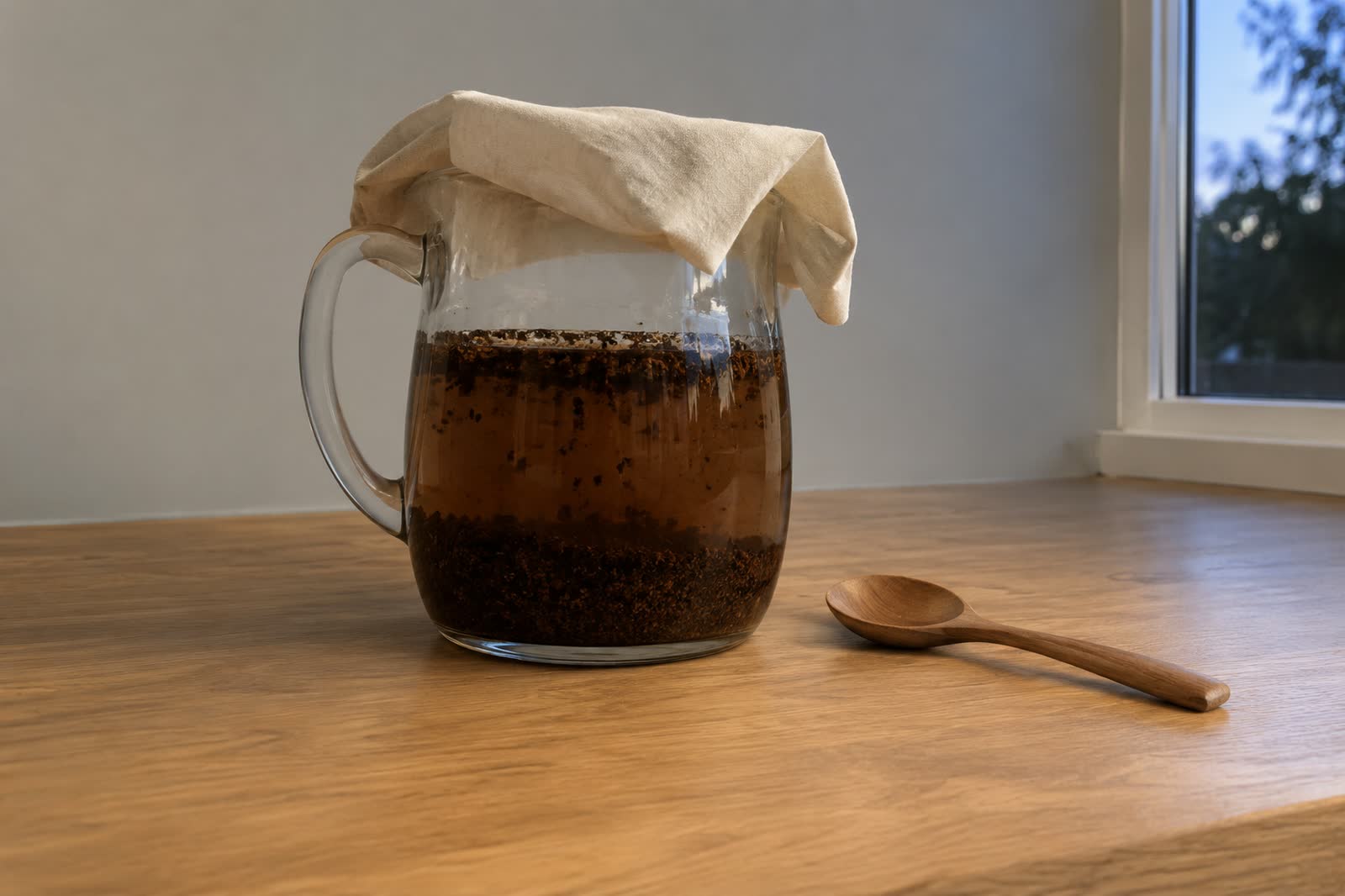
A plain glass jug of coarse coffee grounds steeping in water stands on a light oak counter with a folded unbleached cloth draped over its mouth and a wooden spoon beside it, evening light from a window on the right.
Project

Cold Brew in a Jug You Already Own

A jug, a coarse grind, a night on the counter and two passes through a strainer. How to make a week of cold brew without buying a dedicated brewer for it.

Cold Brew in a Jug You Already Own
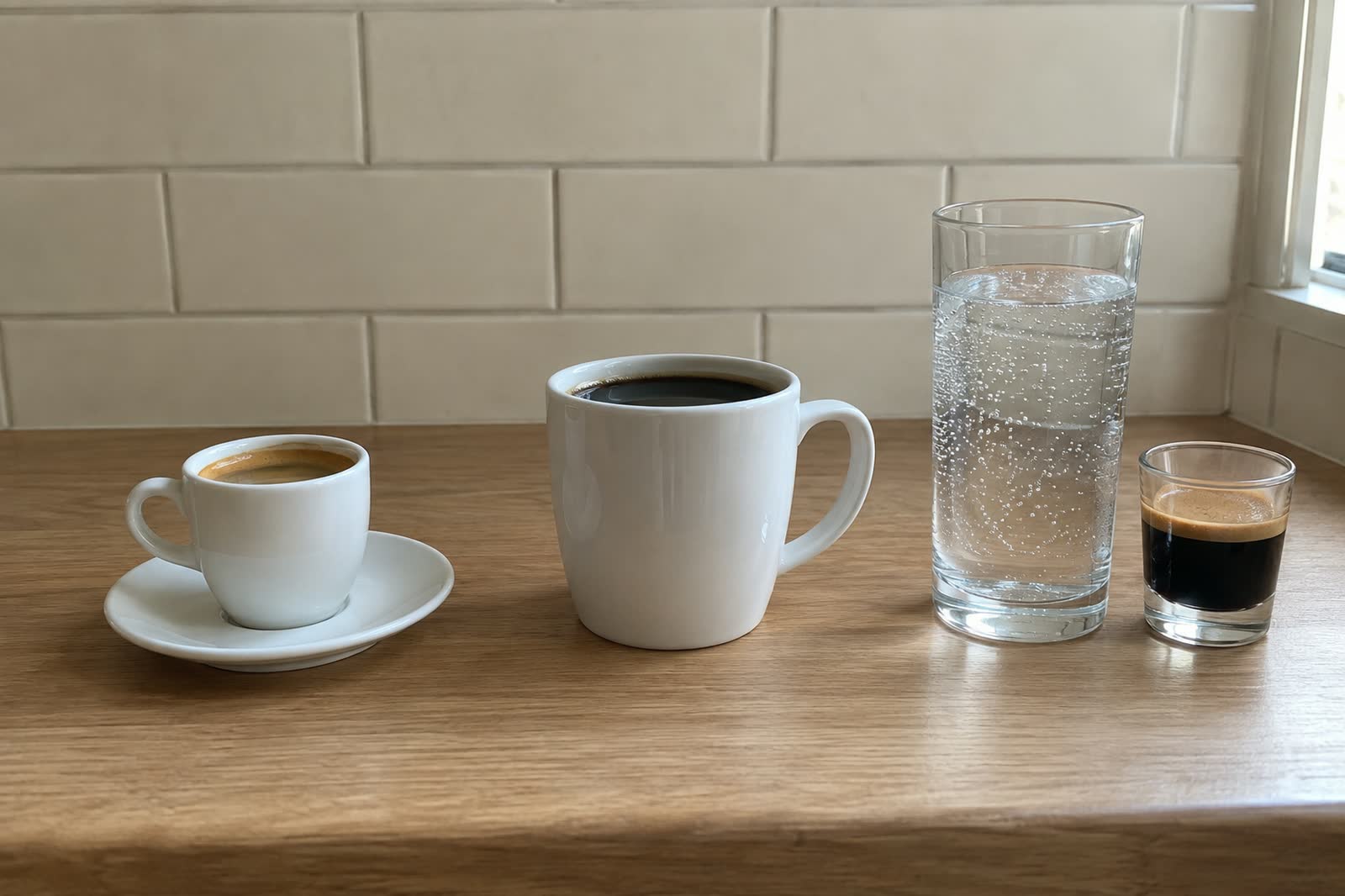
On a light oak counter in front of cream subway tile: a small white espresso cup on a saucer, a larger white cup of black coffee, and a tall glass of sparkling water with a small glass of espresso beside it.
Drink Recipe

Four Espresso Drinks That Need No Milk at All

Espresso, americano, espresso over ice and affogato: four drinks a new machine owner can make correctly on the first attempt, with no steaming and no jug involved.

Four Espresso Drinks That Need No Milk at All

Dressing it

7 guides

Seasonal layers on a counter that already works.

A matt black espresso machine stands in the warm pool of a plain linen table lamp on an oak counter against a deep taupe wall, two heavy stoneware mugs in rust and ochre standing empty beside it with a folded brown linen cloth.
Seasonal

A Fall Coffee Bar, Built on the Counter You Use All Year

Three seasonal layers on a working counter: a syrup with somewhere to live, mugs a guest picks up, and one tray that groups them. What each listing states, and what comes down in November.

A Fall Coffee Bar, Built on the Counter You Use All Year
A hand lifts the lid off a green gift box holding a plain cream mug on tissue paper.
Buying Guide

Coffee Gifts Drawn From What a Coffee Corner Uses

Five things a coffee corner already uses, sorted by whether they are still in use in February. No ranking, no exact prices, and four of the five named as categories rather than as products with makers behind them.

Coffee Gifts Drawn From What a Coffee Corner Uses
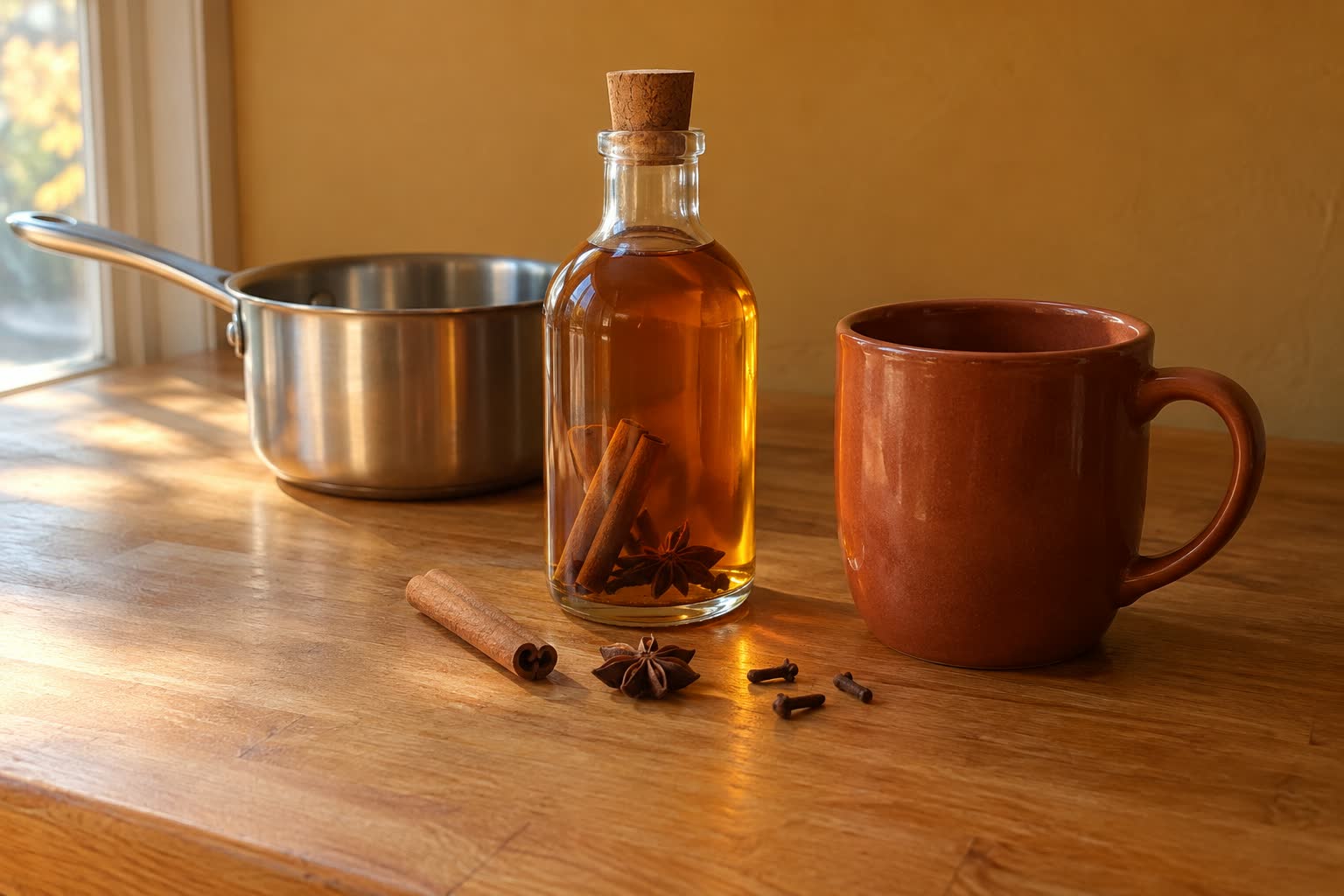
A small unlabelled glass bottle with a cork stopper stands on an oak counter filled with deep amber syrup, cinnamon sticks, star anise and cloves settled at the bottom of it, a rust stoneware mug beside it and a few loose whole spices on the counter in front.
Drink Recipe

Autumn Spiced Drinks from One Syrup, Made Once

One jar of spiced syrup made on a Sunday covers a season of autumn drinks. What goes in the pan, whole spice against ground, how to bottle it, and how long it keeps.
Autumn Spiced Drinks from One Syrup, Made Once
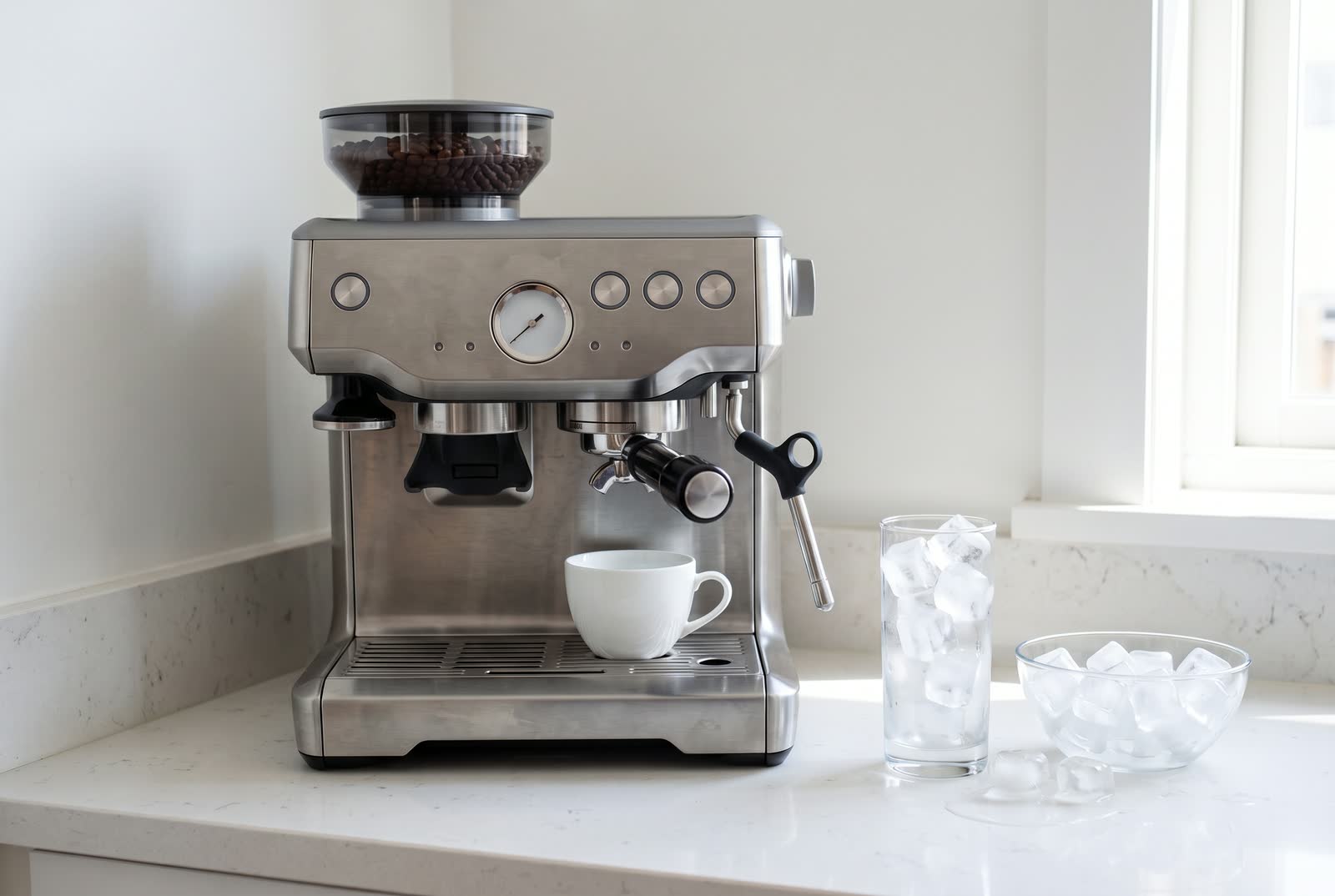
A tall clear glass packed with ice cubes and beading with condensation stands beside a bowl of ice on a white quartz counter, a brushed steel espresso machine behind it with a white cup on its drip tray, bright summer light from the right.
Seasonal

An Iced Coffee Station for Summer, on the Same Counter

A summer coffee corner is the winter corner with a batch vessel, somewhere for ice and a taller glass added to it. What we have checked about each, and what comes off in September.

An Iced Coffee Station for Summer, on the Same Counter
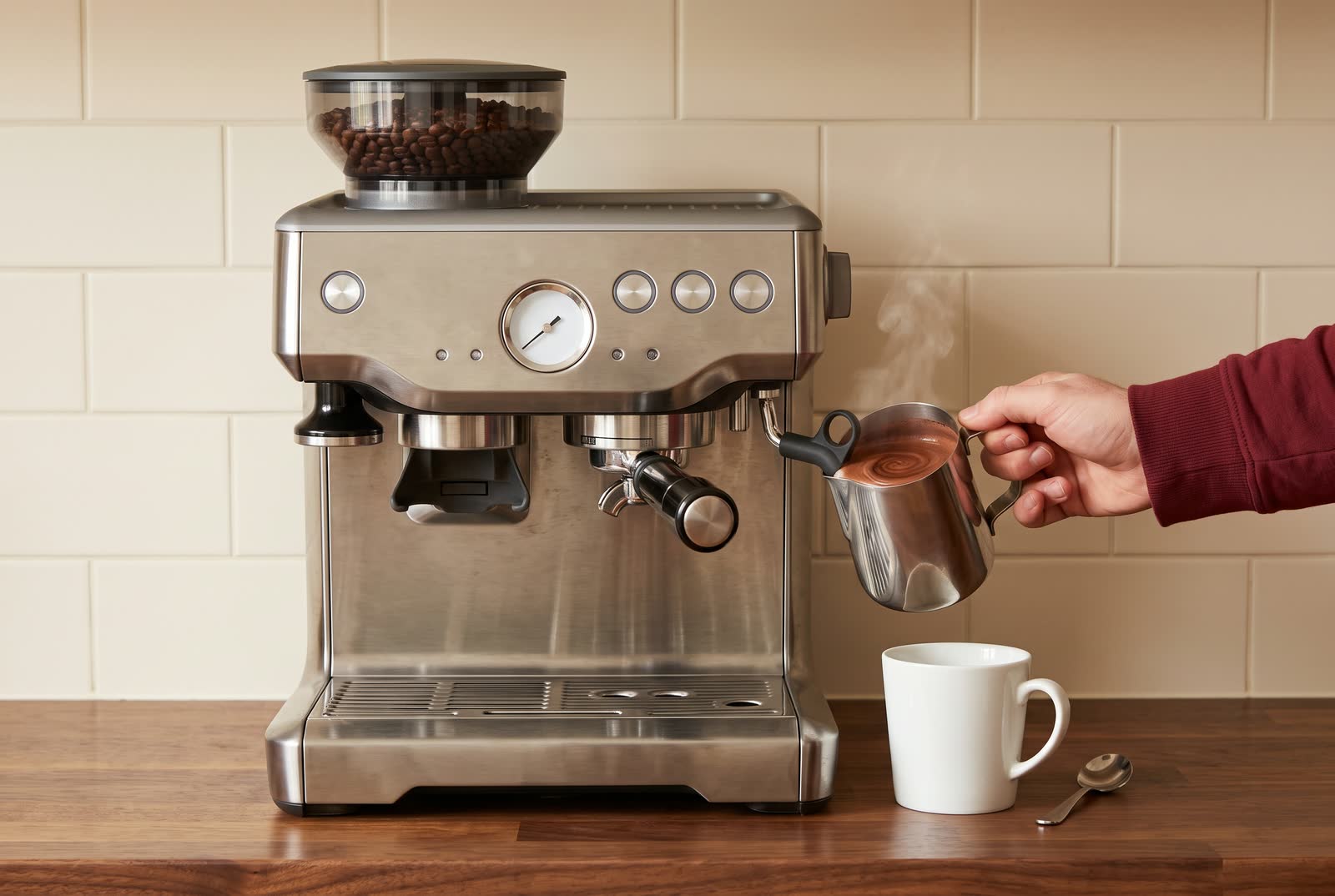
A hand in a dark red sleeve holds a steel milk jug of thick dark cocoa up under the chrome steam wand of a matt black espresso machine on a walnut counter, the cocoa steaming hard with a swirl turning on its surface, a plain white mug waiting beside it.
Drink Recipe

Hot Cocoa on a Coffee Machine's Steam Wand

The steam wand heats cocoa and moves it at the same time, which is the part a pan does badly. What the makers state about their wands, the order to mix in, and the clean-down cocoa needs.

Hot Cocoa on a Coffee Machine's Steam Wand
The corners, all 13

Each corner keeps its own page and address, with every guide filed under it.