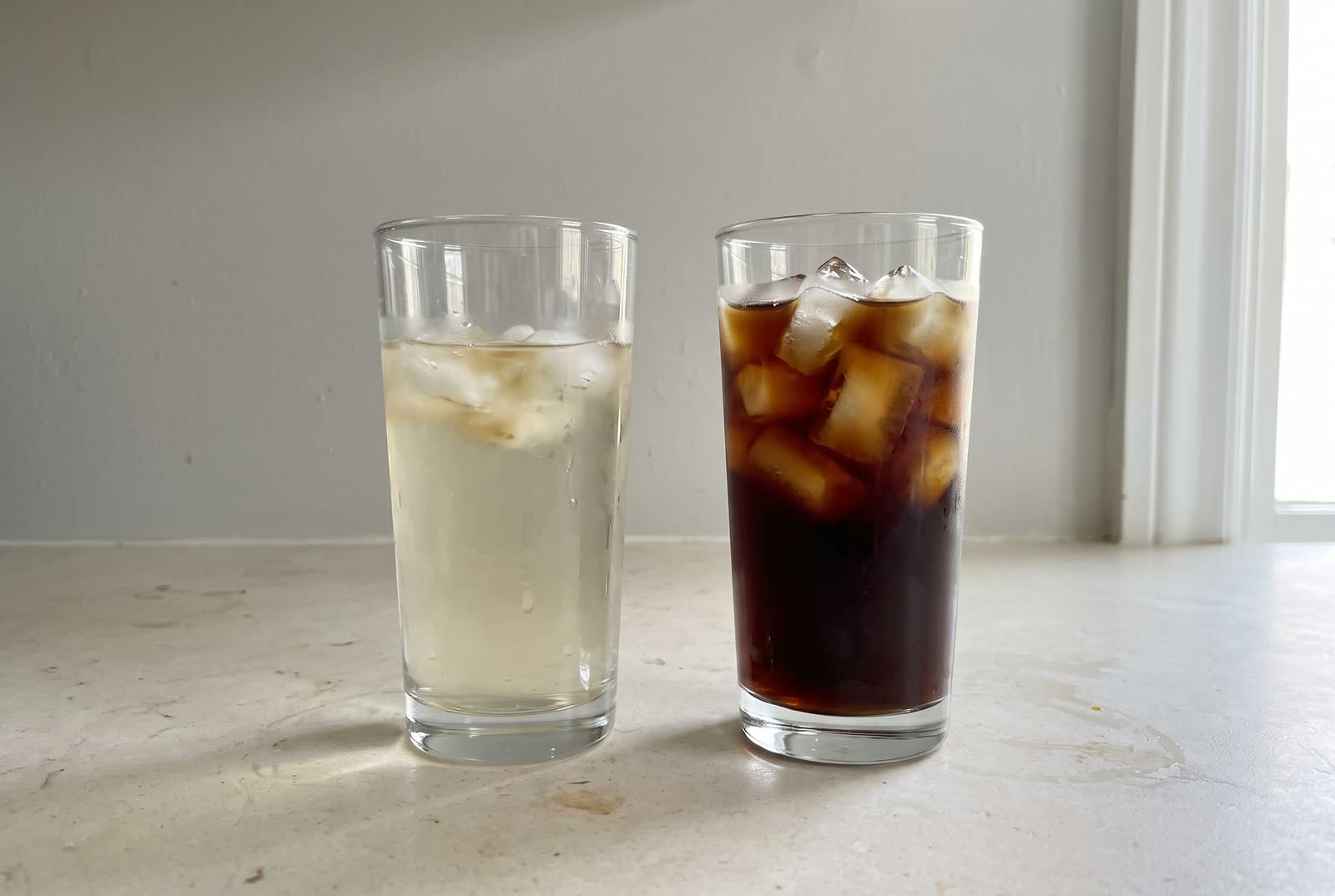
Summer iced coffee fails in three recognisable ways, and each one points at a different stage rather than at the same mistake made three times. This page is the fault-finder this site's summer hub never had: three faults, one cause named for each, rather than another season of recipes with no page that says what went wrong.
Weak: dilution did it
A weak iced coffee usually means the ice did more diluting than the coffee could survive: plain water ice melts into the drink and thins it exactly as the drink cools, which is the opposite of what a hot method needs. Coffee ice cubes is the fix for this fault specifically, since ice made from coffee dilutes the drink with more of the same thing rather than with plain water; this page does not restate the method, only the fault it solves. No ratio appears here: this site states none beyond what its live iced-coffee pieces already carry, and this page adds none of its own. Weak is the fault most likely to be blamed on the coffee itself, the beans or the roast, when the actual cause is sitting melted in the bottom of the glass; swapping the ice is worth trying before anything upstream of it is changed.
Sour: extraction did it
A sour iced coffee is an under-extracted one that got poured over ice before the fault had a chance to show itself hot; iced drinks hide sourness less than hot ones do, not more, so a fault a hot cup might mask often reads clearly once it's cold. The grind is the handle most often behind it: a manual grinder like the JX-Pro S, which states 40 clicks per rotation at 12.5 microns per click, per its maker, gives fine enough steps to correct a sour result without overshooting into bitter. Iced coffee four ways is where the methods themselves live; this page only names which fault belongs to which stage. A sour result can also travel with a weak one in the same glass, since a coarse grind under-extracts and lets water through fast at the same time, which is why checking the grind first settles both faults rather than one.
Cloudy: the water did it
Cloudiness is the one fault of the three that traces back to what was dissolved in the water before the coffee ever met it, not to anything done during brewing or cooling. Water, and what it does to a boiler covers what minerals in tap water do inside a machine over time; the same minerals are what can leave a cold brew or an iced pour-over looking hazy rather than clear. A kettle that holds a set temperature, like the Stagg EKG Pro, whose maker's page lists variable temperature control with presets, keep-warm and automatic shutoff, on a read this site's own record marks as not saying which of the EKG and the EKG Pro that spec block describes, controls one variable in this fault, the heat the water carries into the grounds, and does nothing about what else is dissolved in that same water; the two are separate causes even when they sit in the same kettle. Cloudiness is also the fault least likely to fix itself by changing the coffee or the grind at all, since the water reaching the grounds is the same water reaching the ice, and a filter change or a different source is the only lever this page can point at without a figure attached to it.
What this page does not fix
A glass syrup pump is a flavour decision that comes after a drink is already right, not a fix for any of the three faults above; a flavoured syrup poured into a weak, sour or cloudy iced coffee changes the taste on top of the fault rather than underneath it. Get one of the three causes above right first.
A V60 dripper, sold by its maker as a dripper, server and paper-filter kit, brews hot on this site's summer pages and is then poured over ice rather than brewed cold, which puts it on the extraction side of this page rather than the dilution or water side; a sour result from a V60 traces back to the same grind handle named above, not to the pour-over method itself.
Checking the three in order
The three faults above sort by where they can be checked fastest. Dilution is visible before a sip is even taken, since it is the ice itself sitting in the glass; extraction takes a taste to confirm, and points back at the grind; water is the slowest to trace, since it means looking upstream of the glass entirely, at the tap or the filter feeding it. A drink that fails more than one of these tests at once is still three separate causes, not one bigger one, and each still gets checked against its own page rather than guessed at together.



