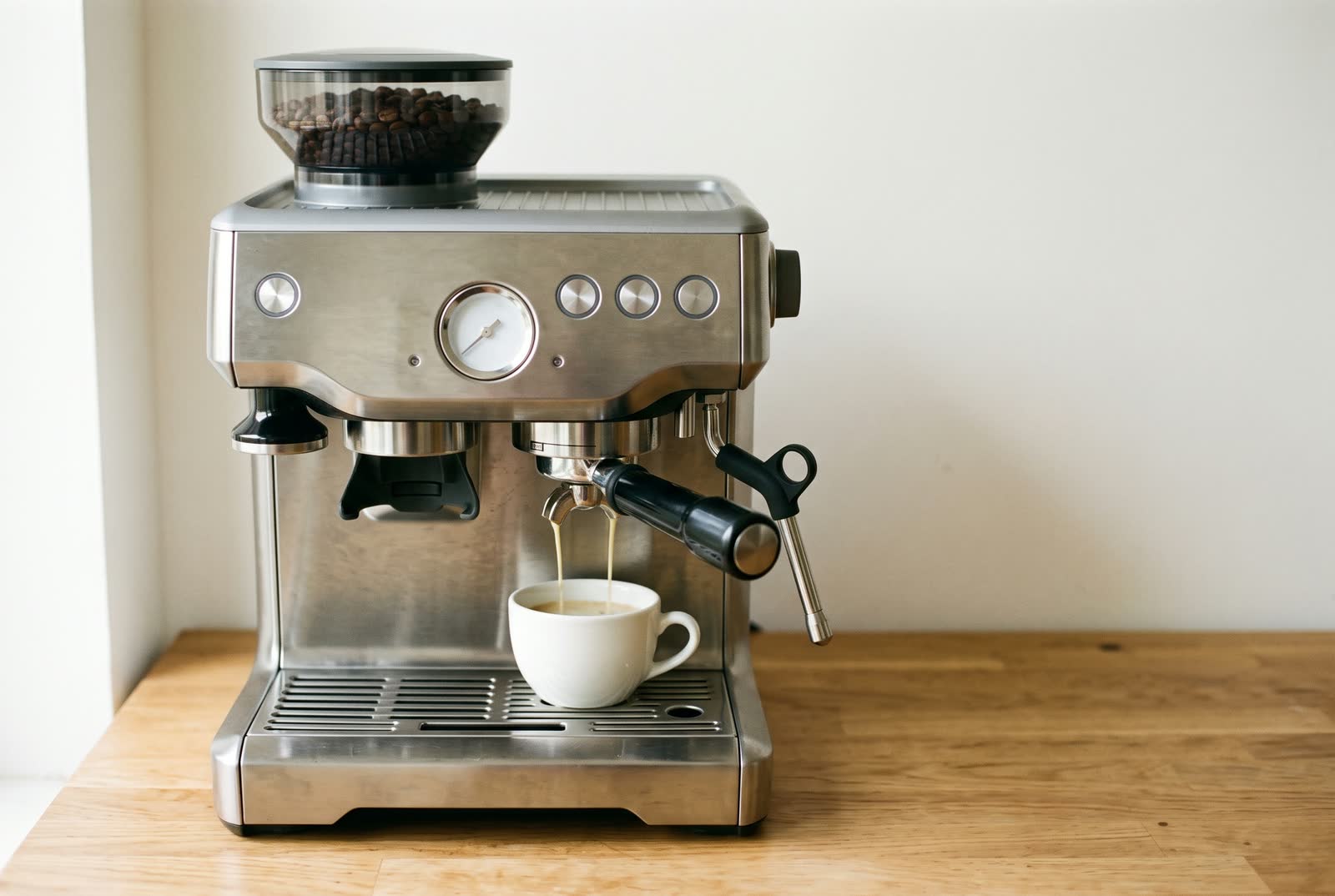
Dialling in names four handles a shot has: grind, dose, temperature and time. Sour and bitter point mostly at grind and time; the three faults below, burnt, watery and weak, point at the other two, each with one exception worth naming.
Burnt: the temperature ran hot
A burnt taste is what a single boiler tastes like when the water met the puck too hot, scorching the surface of the grounds before the rest of the shot had a chance to extract evenly. Temperature is the primary handle here, and brew temperature on a single boiler is where that half of the fault is worked through in full; this page only names it as the one to turn first. Grind can compound a burnt taste too, since a grind set too fine adds resistance that raises the temperature the water sits at inside the puck, but the first handle to check is still temperature, not grind. A burnt taste is also easy to confuse with a bitter one, since both sit at the same end of the flavour range; the difference this page draws is that bitter, covered elsewhere, tends to travel with grind and time together, while a genuinely burnt shot tastes scorched from the first sip rather than turning bitter only toward the end of the cup.
Watery: the grind ran coarse
Watery espresso, pale and thin with none of the body a shot should carry, is what under-extraction tastes like: water moved through the puck too fast to pick up much of anything. The handle is grind, set coarser than the basket wants. On a stepped grinder like the Encore ESP, which states 40 total settings split into 20 for espresso and 20 for filter, per its maker, coarse means a step toward the filter side of that range, not a jump across it. A watery shot can also come from a channel opened in the puck rather than from the grind alone, when water finds one soft spot and rushes through it while the rest of the bed barely sees any flow; a coarser grind and a channel can look identical in the cup, which is why this page keeps the fix at the grind handle first, since that is the one a person can actually turn.
Weak: the dose ran light
A weak shot can taste correctly extracted and still come out thin, because there was not enough coffee in the basket to fill the cup with flavour regardless of how well the water passed through it. The handle is dose: less coffee in the basket than the basket is built for. This page states no gram figure for the right dose, because what we have read states none; the basket itself, sized to the portafilter, is the only guide these pages carry. Weak and watery can sit side by side in the same cup, since a light dose lets water pass through even faster than the grind alone would allow, but they are separable at the source: watery starts at the grind, weak starts at the scoop, and fixing one without checking the other only solves half the cup.
What the figures do and do not say about the machines here
All three machines answering these faults carry a 15 bar pump, per their makers: the Stilosa and the Bambino, and the Classic Pro, which states a 15 bar Italian-made Ulka pump with a 9 bar OPV, per its own pump pressure figure, sourced from a distributor page. The pump pressure figure is usable on 9 of the site's 15 espresso machines, each read 6 September 2026, and all three of these are among the nine; the Bambino adds 9 bar extraction beside its 15, the Classic Pro adds the 9 bar OPV, and the Stilosa carries the 15 alone.
No shot time and no dose in grams appears anywhere above, for any of the three faults or any of the four machines named here. We have read neither figure for any espresso machine on this site, which is also why an earlier piece on pod machines cut its own shot times rather than invent them.
Reading the three together
Burnt, watery and weak rarely arrive one at a time in practice, and the order to check them in matters more than the order they are listed here. Start with dose, since it is the fastest to rule out and needs nothing but a look at the basket; move to grind next, since it explains both watery and, in its own way, burnt; leave temperature for last, not because it matters least but because brew temperature on a single boiler is the piece built to carry that adjustment properly, and this page is not it. A shot that still tastes wrong after dose and grind have both been checked is the shot worth taking to that page next.



