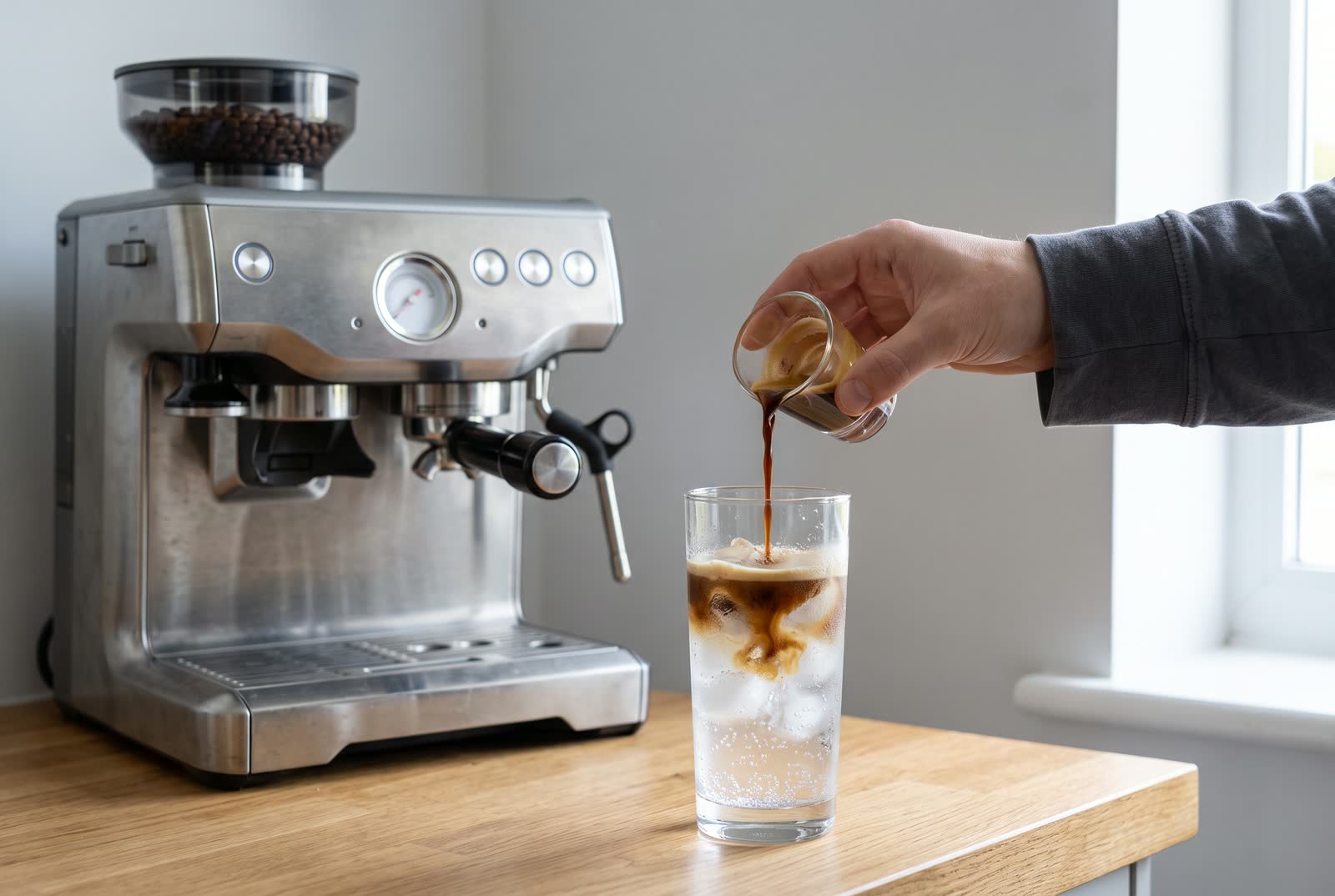
Three things, and one order
Espresso tonic is ice, tonic water and a shot of espresso. There is no milk in it, no foam, nothing to steam and nothing to pour a pattern into, which makes it the drink to make on the evening a flat white has just gone wrong for the fourth time.
The only thing to get right is the order, and the order is not a matter of taste. Ice, then tonic, then coffee, last and slowly. Reverse any two of those and the drink is worse in a way you can see before you taste it.
Ice first, and more of it than looks right
Fill the glass. Not a third, not half: to the top, with the biggest cubes you have.
Two reasons, and both are physical. A glass packed with ice has less room for tonic, so the drink is stronger rather than weaker, which is the opposite of what people expect ice to do. And a packed glass melts slowly, because the cubes chill each other; a glass with a few cubes rattling in it is a glass of warm tonic before it is finished.
Use a tall glass. The drink is three layers deep when it is built and it needs the height.
Tonic second, poured down the side
Pour the tonic onto the ice slowly, down the inside wall of the glass rather than straight into the middle. Poured hard onto ice, tonic loses most of its carbonation on the way in, and the fizz is much of what this drink is for.
Fill to about two thirds, which is a working proportion rather than a measured one. The last third is the coffee and the head it makes, and a glass filled to the brim with tonic overflows the moment the shot goes in.
Cold tonic, from the fridge. Room-temperature tonic on ice melts the ice to chill itself and the drink is diluted before the coffee arrives.
Coffee last, over the back of a spoon
Pull the shot into a small cup, then pour it slowly into the glass over the back of a spoon held just above the tonic. The spoon breaks the fall, so the espresso spreads across the surface instead of punching through it, and what you get is a layered drink with a dark band sitting on a pale one.
It will mix whatever you do, and that is fine: the layer is for the look, not the flavour. Stirring it immediately is also fine, and honest about what the drink is.
Pour the shot straight from the machine if the glass fits under the group; there is no reason to let it stand. The shot itself is an ordinary espresso and nothing about a tonic asks for a special one. On the Bambino the maker describes the brew as a low-pressure pre-infusion followed by a nine-bar extraction through a 54 mm portafilter, which is the same shot that machine makes for anything else on this site.
The grind, and what a tonic forgives
A tonic is more forgiving than milk about texture and less forgiving than milk about taste. Milk covers a sour shot; tonic does not, because tonic is already acidic and the two stack up. A shot that ran too fast tastes sharp and thin in a glass of tonic in a way it does not in a latte.
So this is a drink that rewards putting the grind right rather than one that hides it. On a grinder with counted steps, that is a small move rather than a guess: the Encore ESP is stated by its maker as forty stepped settings, twenty of them on the espresso side, so the adjustment from a shot that gushed to one that did not is a number of clicks you can repeat. The same maker states a 54 mm anti-static dosing cup with a 58 mm adapter in the box, which is worth checking against the machine you own before you assume the cup fits your basket.
What to change when it tastes wrong
Flat means the tonic lost its gas. Pour more gently down the side, and open a fresh bottle: tonic from a bottle opened yesterday is a different drink.
Watery means not enough ice, almost always. Add ice rather than reducing tonic.
Sharp and thin means the shot, not the tonic. Grind finer and pull it again.
Bitter and drying also means the shot, the other way: grind coarser. The four handles that fix both are in dialing in, and they behave here exactly as they do in a cup of coffee with nothing else in it.
A slice of orange or a strip of lemon peel over the top is the one addition worth making. It goes in at the end, and it goes in whole rather than squeezed.



