The three roles that aren't optional
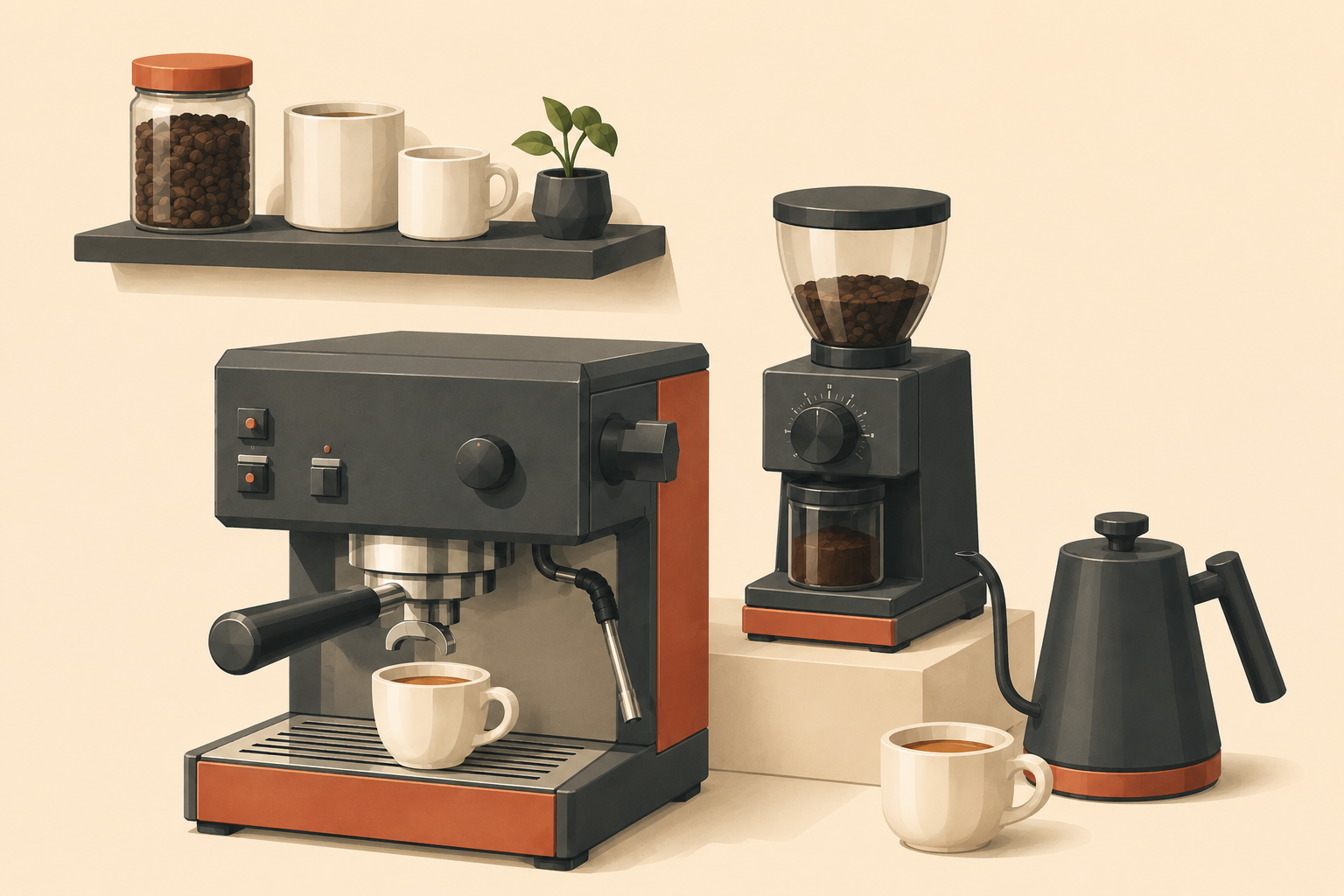
A beginner setup needs three pieces of equipment doing three distinct jobs: a machine that builds pressure and heats water, a burr grinder that controls how fine or coarse the coffee is ground, and a scale that turns dose and shot time into a number instead of a guess. Skip any one of the three and the other two can't make up the difference.
A machine and grinder with no scale means every dose and pull time is set by eye, which is the hardest thing for a first-timer to repeat. Buying second-wave accessories, such as a tamper, a milk pitcher, or a knock box, before the first three roles are covered is a common way a beginner overspends on the wrong layer of the setup.
Why the grinder gets the budget, not the machine
The instinct for a first setup is to spend on the machine and treat the grinder as an accessory. That reasoning runs backward. A machine sets pressure and temperature within a fixed, engineered range, but the grind is the input a home barista changes most often between shots, and in our framing, it's the input that moves a shot from balanced to sour or bitter fastest. A blade or fixed-setting grinder gives no way to change particle size, which is why we treat an adjustable burr grinder as mandatory.
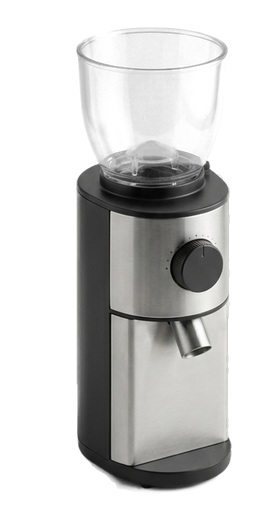
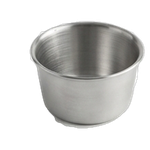
The Encore Coffee Grinder, in the $100-250 band, is the standard first grinder for a beginner brewing drip, pour-over, or French press alongside an entry espresso machine. It has 40 mm conical burrs across 40 grind settings spanning roughly 250 to 1200 microns, from an 8 oz hopper. For a beginner who already knows espresso is the goal rather than general home coffee, the Encore ESP Grinder, also in the $100-250 band, splits its 40 settings into 20 espresso and 20 filter settings, on 40 mm conical M2 steel burrs, and ships with a 54 mm dosing cup and 58 mm adapter. The ESP's settings are weighted toward espresso, so a household that mostly brews filter may prefer the standard Encore's full 40-step range.
Across the mandatory layer, that logic sets the spend. With a Stilosa-tier machine we hold no price evidence for, the machine sits below the other two. The grinder runs at $100-250 and the scale at $50-100, so the grinder alone can outspend the machine and scale combined. The extra budget belongs on the grind, not on the number printed on the machine's box. How that same grinder-first split orders a whole coffee bar is worked through in where the money goes first.
Entry point: the Stilosa band
The Stilosa Espresso Machine is the machine in this guide with no band assigned; we hold no price evidence for it, so check the merchant's price. Per De'Longhi's published specs, drawn from cached copies of the product page rather than a live read, it runs a 15-bar pump with a stainless steel boiler, a manual steam wand, and a removable water tank sized around a liter. Retailers commonly position it as De'Longhi's entry-level manual machine (we hold no price evidence for the Stilosa itself, so check the merchant's price rather than reading a band into that positioning): the lowest-friction way to find out whether pulling shots by hand is worth keeping up, without committing to a higher-tier machine's budget first.
The tradeoff is consistency: with a manual steam wand and no built-in automation, more of the outcome sits in the user's hands, a reasonable place to start learning, so shots should vary more than on a machine with more automation built in, an inference from the manual controls, not a measured comparison.
The upgrade path: from Stilosa toward Bambino
The Bambino Espresso Machine is the natural next step up from the Stilosa, in the $250+ band. It uses a ThermoJet heating system that reaches extraction temperature in about 3 seconds, and a 15-bar Italian pump with low-pressure pre-infusion ahead of 9-bar extraction, through a 54 mm portafilter. The ThermoJet's speed suggests steadier temperature shot to shot than the Stilosa's boiler, though that's inference from the heating spec, not a direct comparison of the two machines.
The upgrade case is strongest for someone who has already used a Stilosa-tier machine, has a grinder and scale dialed in, and has hit the specific ceiling of a manual boiler rather than a general itch to spend more. Someone who hasn't worked through that first stage has no evidence the extra budget buys them anything: on our reading, the machine isn't the bottleneck for a first-timer, the grind is. The allocation flips at this tier: the machine now costs more than the grinder, where the entry-level tier had the grinder outspending the machine. What holds steady is the floor: even at $250+, the machine still pairs with at least a $100-250 grinder, because the grind still swings a shot from balanced to sour or bitter. Breville publishes the Bambino at 11.9 x 6.1 inches, but its width and depth labels disagree with retailer listings, so measure the machine before treating it as the default second machine. For a direct three-way look at the machines at this tier, see Bambino vs Bambino Plus vs Stilosa.
Weighing shots, not just grounds
A scale in the $50-100 band is the low-cost way to bring dosing into the setup. This guide used to name Timemore's Black Mirror Basic Plus here; Timemore's own catalog, read on 6 September 2026, lists no such model (its scales are the Basic 3.0, Basic 2.0, Basic Mini and Black Mirror Nano), so we name none. What the role needs is unchanged: before you order, check that the listing for the exact model states its resolution in grams. Espresso dosing needs a scale that reads to a tenth of a gram, because a sub-gram reading shows dose differences eye judgment can't catch, the guesswork a scale removes.
The second wave: tamper, pitcher, knock box
Once the machine, grinder, and scale are in place and producing repeatable shots, three accessories address specific friction points rather than the core extraction: the pitcher sits under $50 while the tamper and knock box each fall in the $50-100 band. A calibrated tamper, one that clicks at a set force, removes tamp-force guesswork for someone who has never felt what correct tamp pressure is supposed to feel like. This guide used to name Espro's Calibrated Tamper here; when we read Espro's site on 6 September 2026 its product pages were gone and its catalog held no tamper, so we name none. Whichever calibrated tamper you consider, confirm the base against the exact machine's portafilter before ordering: sizes vary by machine, and the Bambino and Stilosa covered here take the 54 mm family.
The 20 oz Latte Art Pitcher, in the under-$50 band, is a stainless pitcher with etched volume graduations, the standard size and feature set for a first milk pitcher. Rattleware also sells a center-post version of the same pitcher aimed at improving milk aeration, worth considering for anyone planning to practice latte art rather than just steam milk for a daily cup. The Knock Box 20, in the $50-100 band, holds up to 20 spent pucks and keeps them off the counter and drip tray. Its footprint is about 6.4 x 6.3 inches, which matters where the machine is already competing for space. It's a genuine quality-of-life upgrade once a routine is running daily; it solves a cleanup problem, not an extraction problem, which is why it belongs after the core three roles rather than alongside them.
The Stilosa-Bambino and Encore-Encore ESP comparisons above rest on manufacturer and retailer specifications rather than a side-by-side trial of either pairing.