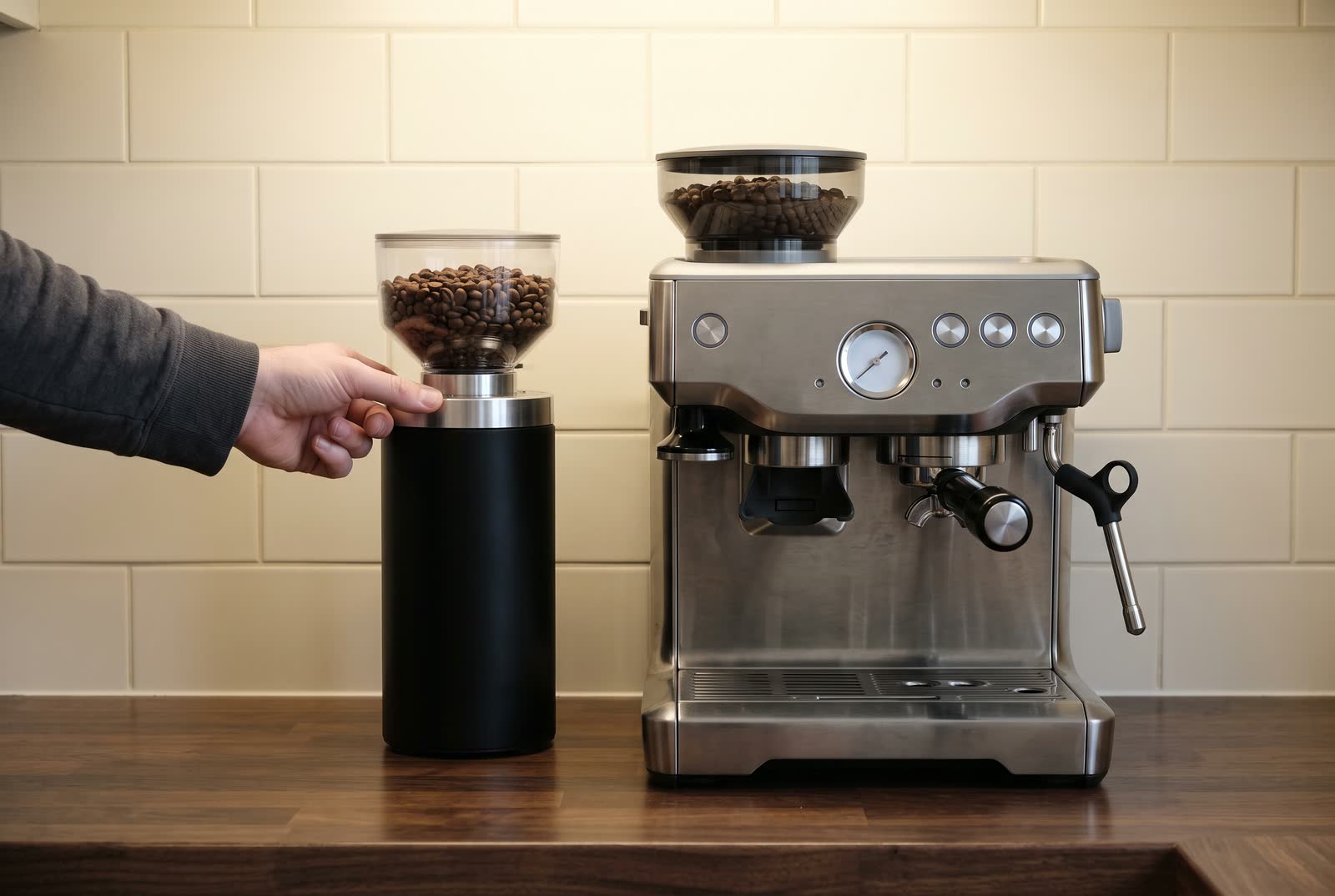
Four handles, and only four
A shot that comes out wrong has four things behind it: how fine the coffee is ground, how much of it went into the basket, how long the pump ran, and how much liquid came out. Grind, dose, time and yield. Everything else a beginner reads about is either downstream of those four or is a different problem wearing their clothes, and a bag of beans is usually lost to changing three of them at once.
Dialing in is the business of moving those four, and this piece is about the order. It states no target figures, because a target belongs to a particular coffee on a particular machine and a number copied from somewhere else is how the next bag gets lost as well.
Fix the dose first, and then leave it alone
The dose is how much dry coffee goes into the basket, and it is the handle to settle first because it is the only one that can simply be held constant. Pick an amount that fills the basket without the coffee touching the shower screen when the portafilter is locked in, weigh it, and then weigh the same amount every single time. A dose that wanders between shots moves everything downstream of it, and a reader chasing that will conclude their grinder is faulty.
The check is physical rather than numerical: lock the portafilter in, take it out, and look at the surface of the puck. A clean impression from the screen means the basket is over-full; nothing at all touching it means there is room.
Then set the yield, which is the drink you want
The yield is how much liquid ends up in the cup, and it is the second handle because it defines the drink rather than the extraction. Decide whether you want a short, intense shot or a longer, weaker one, and express that as a weight of liquid out relative to the dry coffee in. Put the cup on a scale, stop the pump when the number is reached, and you have now fixed two of the four.
This is why a scale earns its counter space in a way most accessories do not. Volume in a cup is not a reliable measure, because crema is mostly gas and two shots with the same visible level can differ substantially in liquid.
Time is a reading, not a handle
Shot time is the one of the four that a reader should not try to set directly. With the dose and the yield fixed, the time it takes to reach that yield is the instrument telling you what the grind is doing, and the only way to change it is to change the grind. Treating time as a target leads to people stopping a shot early to hit a number, which produces the right time and the wrong drink.
So start the timer when the pump starts, read the number when you stop, and write it down next to the grind setting. That pair of numbers is the whole record you need to keep.
The grind goes last, because it moves everything
The grind is the handle that actually corrects the shot, and it comes last because with the other three fixed it is the only variable left. Finer slows the flow and extracts more; coarser speeds it up and extracts less. Change it one step at a time and pull a whole shot after each change, because a grinder holds a retained dose of the previous setting in its chute and the first shot after an adjustment is a blend of the two settings.
Stepped grinders make this easier to record than stepless ones. The Encore ESP is a useful example of the shape: its 40 total stepped settings are split 20 for espresso and 20 for filter, so an espresso adjustment is a countable click rather than an unmarked rotation, and last week's setting can be returned to exactly.
Reading the shot you got
A shot that runs fast and tastes sour and thin is under-extracted: grind finer. A shot that crawls and tastes bitter and drying at the back of the mouth is over-extracted: grind coarser. Those two sentences resolve most of what a beginner runs into, and the reason they work is that dose and yield were pinned first, so taste is now attributable to one handle.
Change one thing per shot and keep the record. Four notes on a piece of paper by the machine will get a reader to a drinkable shot without losing another bag to guesswork, and a basket with an odd shape or a pressurised insert in it is a separate problem that the beginner setup guide covers.
Why a shot tastes watery or weak
Watery and weak are two complaints rather than one, and they separate on the yield. Watery is too much liquid for the coffee that made it: the pump ran on past the point where anything worth having was still coming out of the puck, so the end of what is in the cup is mostly water. Weak is the same drink at any yield, and it is the dose or the grind, either not enough coffee in the basket or a grind coarse enough that the water found a path through instead of a bed to push against. The order on this page is what tells the two apart: pin the dose, pin the yield, and the only thing left that can be making the cup thin is the grind. If the shot also ran fast, that is the sour case above and the correction is the same one, finer.
Why a shot tastes burnt
Burnt is the hardest of these to hang on the four handles, because two different things arrive under the same word. One is the coffee itself: a dark roast tastes of roast before it tastes of anything else, and no grind setting takes that back out of it. The other is the shot, where a burnt taste is the bitter, drying end of over-extraction gone far enough to read as ash, and that is the coarser correction. There is a third that is neither, and it is worth ruling out first: a group head and a basket that have not been cleaned hold old coffee, which goes into the next shot and tastes of exactly this. Change the bag before the grinder if every shot from it has tasted this way since the first one.
What this does not settle
Water, temperature and pump pressure all affect the cup and none of them is on this list. That is deliberate: on most machines a beginner owns, those three are fixed by the machine and are not handles a reader can turn, so putting them in the loop adds variables without adding control. They matter, and they are worth understanding later.
Get the four above repeatable first. A machine that produces the same shot twice is the thing that makes every other question answerable.



