A vintage coffee corner works when the pieces that need to function reliably are new, and the pieces that only need to look old actually are. Split the budget on that line and the room reads as vintage in photos without asking a decades-old percolator to survive daily use.
Put function-critical purchases on retro-look-new, not true vintage
The coffee maker is the one object in this corner that has to work every morning without fail. That argues for a retro-look-new machine over an actual vintage one: current manufacturing standards, support, and parts availability that a decades-old machine can't offer. The decor layer runs the opposite way. A grinder, a sign, or a mug is judged by how genuinely old or handmade it looks, not by daily performance, so the source that reads as most vintage, an actual antique or a handmade piece, wins over anything mass-produced to look retro.
Two retro-look coffee makers, two budgets, neither an equipment pick
The two machines in this section, SMEG's 50's Style Drip Filter Coffee Machine and the Nostalgia below, are named for the look, not as equipment: Setistry holds no fit data for either, serves no product page for them, and does not recommend either as a brewer; what follows about each is the maker's own listing. The SMEG is the clearest retail anchor for the look: industrial curves and a color line that runs from glossy Black, Navy Blue, Cream, Slate Gray, Pastel Blue, Pastel Green, Red, White and Pink to matte Black, matte Moonlight, and brushed stainless steel. SMEG also runs a limited-edition Sicily Is My Love colorway made with Dolce & Gabbana. Editorially, that reads as a line sold on styling as much as on its feature list.
On SMEG's EU product page, the equivalent model brews up to 10 cups into a glass carafe and adds an aroma-intensity selector, a digital LED display with clock and timer, auto-start, and a keep-warm function that holds temperature for 40 minutes. Those specs are confirmed on the EU listing; treat them as likely, not confirmed, for the equivalent US model until you check the US product page directly.
At the other budget end, the Nostalgia Classic Retro 10-Cup Coffee Maker runs on one-button brewing, a 2-hour auto shut-off, a 30-second anti-drip pause, dry-boil protection, and a dishwasher-safe carafe and filter. It ships in Black, Cream, Aqua, Pink, Red, and Orange, at roughly 7 by 7 by 13 inches.
The specs for both machines come from each manufacturer's own product listings, not from running the two side by side, so treat the comparison as a guide rather than a settled verdict. On that basis, SMEG's EU-listed clock, timer, and keep-warm function look built for a corner that runs on a schedule, and that's worth confirming on the US product page before buying for the feature. Nostalgia's listing describes one-button brewing and does not list a clock or timer, which suits a corner that brews on demand.
The grinder is the signature decor object
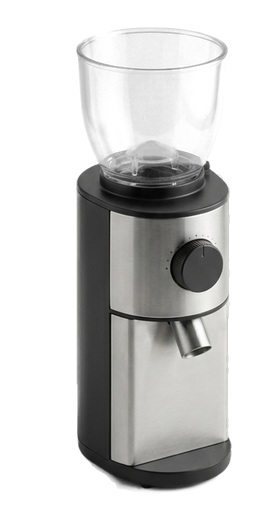
Etsy's vintage coffee grinder category is the strongest anchor for the decor side, spanning manual mills, cast iron, wooden, porcelain, and wall-mounted grinders from independent sellers. Because this is an aggregated marketplace category rather than one manufacturer, shop it as sourcing guidance, not a single tested product: look for a mechanism that still turns freely if you want it functional, solid joinery on wood-bodied mills, and hardware that shows uneven rather than uniform wear, which is a common rule of thumb for separating an actual antique from a reproduction.
Signage and mugs finish the vintage read
Etsy's coffee sign category splits across two overlapping markets: a general vintage coffee sign market built on embossed steel and aluminum retro and mid-century designs, and a related vintage coffee bar sign market that runs from rustic to modern and includes personalized options. Pick one finish for the signage itself. Steel, aluminum, and distressed wood all read as vintage, but mixing them within the sign layer looks mismatched: a hammered-steel sign next to a glossy printed sign undercuts the effect, even when both pieces are individually well made.
Mugs are where handmade matters most, because a matched retail set is the fastest way to make a vintage corner look staged. Etsy's handmade ceramic mug categories describe wheel-thrown and handbuilt stoneware and porcelain pieces from independent potters, with listed capacities commonly running from about 4 to 8 ounces for espresso up to 18 to 22 ounces for latte or tea. Buying two or three mugs from two or three different potters, rather than a set from one shop, is what makes a shelf look collected instead of purchased.
Staging furniture: a wood cart, not metal and glass
Wayfair's wood bar cart category sits apart from its metal-and-glass bar cart listings, spanning multiple wood tones and styles, and that separation matters here: solid or engineered wood reads as vintage in a way a chrome-and-glass cart doesn't, regardless of what sits on top of it. The $100-250 budget band for this piece assumes mid-range solid-wood construction. If you're chasing an actual antique-grade hardwood piece rather than a new mid-range one, budget above that band and treat it as a separate, open-ended purchase.
Listings in the wood tray with brass handles category describe mango-wood trays with brass hardware for grouping mugs, canisters, and syrup bottles on the cart. The same decorative-tray category also carries hammered antique-finish all-brass trays if you want the tray itself to carry more of the vintage weight.
Splitting the budget across the corner
The corner tends to work best when the appliance purchase and the decor purchases aren't drawing from the same money at the same time. Put the bulk of one purchase into a single working machine, either the entry-level Nostalgia or the higher-end SMEG, and treat the rest of the budget as several separate, individually sourced decor purchases: the grinder, the sign, the mugs, and the tray. A corner built from one appliance and five or six inexpensive, individually sourced decor pieces reads as more collected than one built from two or three expensive pieces, because variety in source and material is what an actual vintage collection looks like.
What to buy first if the whole corner can't be bought at once
Buy the two anchor pieces before any of the finishing decor. A working retro-look coffee maker and one sourced grinder on an otherwise bare counter already read as a deliberate coffee corner, because those are the two objects the space is organized around. A cart or a tray with nothing distinctive sitting on it does not.
Signage and the tray are the safest purchases to defer: a corner missing a sign or a serving tray still functions and still photographs, just with fewer finishing touches. The mugs are worth spacing out on purpose rather than reluctantly, since sourcing from more than one potter over separate purchases only helps the shelf. Buy the cart last of all. It holds the other pieces, so sizing it to what actually ended up on the counter beats guessing its capacity before the rest of the corner exists.