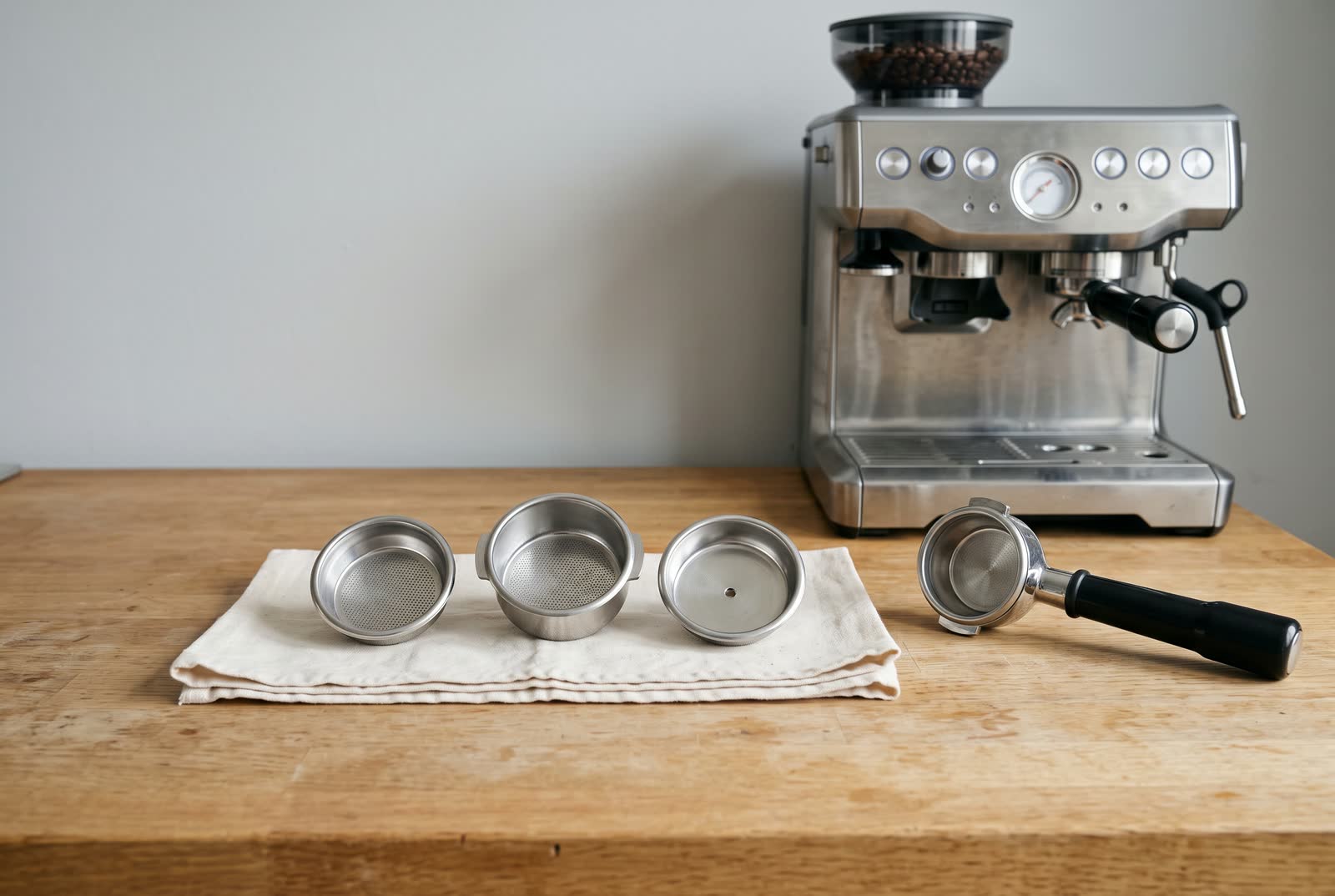
A basket is a cup with holes, and there are three kinds
The basket is the steel cup that sits in the portafilter and holds the coffee. It is the cheapest part of an espresso machine and the one most likely to be the reason the shots are wrong, which is a combination worth knowing about before anything else is bought.
Three kinds turn up in home machines. A single, sized for a smaller dose. A double, sized for a larger one. And a pressurised basket, which looks like either of the first two from above and works on a completely different principle.
The single and the double: the same holes, a different depth
A single and a double basket have the same floor: a wide field of fine holes across the bottom. The difference is depth and the dose that goes with it. A single holds roughly half what a double holds, which is the common shape of the pair rather than a figure any maker page here states, and makes one small shot; a double holds more and makes the shot most people actually drink.
The double is the one to use. Singles are difficult in a way that has nothing to do with skill: a shallow bed of coffee is harder to keep even, so a single channels more readily than a double does, and the correction for it is finer than most home grinders can make.
If a machine came with both, the double is the one to leave in the portafilter and the single is the one to put in a drawer.
The pressurised basket: one hole doing the work
A pressurised basket, sometimes called a dual-wall basket, has a second floor under the first with a single small hole in it. The coffee sits on the upper floor, the water passes through it without much resistance, and the pressure that makes the drink is created by forcing the liquid through that one hole at the bottom.
The point of it is that it produces something resembling crema from almost any grind, including pre-ground supermarket coffee. That is a real convenience and it is also the trap: the basket is doing the work the grind is supposed to do, so nothing you change about the grind changes the shot very much, and a reader who upgrades their grinder while still using a pressurised basket sees almost no difference for the money.
It is the right basket for someone who does not own a grinder and does not intend to buy one. It is the wrong basket for anyone learning to dial a shot in, because it removes the feedback that dialling in depends on.
How to tell which one you have
Take the basket out of the portafilter and turn it upside down.
If you see a wide field of tiny holes covering the base, it is a single or a double: an ordinary, non-pressurised basket. Look at its depth against the portafilter to tell which.
If you see a smooth metal base with one hole in it, or a small raised nipple with a hole in the middle, it is pressurised. Some have a rubber or plastic disc under the steel that lifts out; if a part comes away in your hand, that is a pressurised basket.
That is the whole test. It takes longer to read than to do.
What the makers here state came in the box
This is where a piece like this usually starts inventing, so here is the state of it.
- The Bambino: the maker states a 54 mm portafilter. The size is stated; what basket ships in it is not stated on the page we have read.
- The Bambino Plus: the maker states a 54 mm stainless steel portafilter dosed for 18 g, which tells you the basket the machine was built around is a double. The same maker publishes a list of what is in the box, and that list names a 54 mm tamper, a Razor dosing tool and a 16 oz steel milk jug. It does not name a second basket.
- The Stilosa: the maker states a dual-filter portafilter for single or double shots, so this machine is published as shipping with two filters rather than one.
- The Gaggia Classic Pro: the maker publishes operating instructions for this model as a PDF manual. The page we have read states nothing about which baskets ship with it.
And the thing every reader wants, which not one of these makers states on the page we have read: whether the basket in the box is pressurised. The nearest thing we have is a summary of the Bambino's page kept on this site, which names 1-cup and 2-cup baskets in dual-wall and single-wall form, and dual-wall is the pressurised one. That is a summary rather than a maker statement read and dated the way every other figure here is, so it is not carried as one; for the other three there is nothing at all.
What would close it is each machine's own manual read for its parts list and its accessories page, which is where a basket type is usually printed if it is printed anywhere. All four of these manuals have already been read here for other findings, so this is a reading job. Until it is done, use the test above on the machine in front of you, because your own basket answers the question faster than any page will.
Changing it, and what has to match
Two things have to match and only two: the diameter and the depth.
The diameter is the portafilter's, and two of the four machines above state theirs as 54 mm; the other two pages state no size at all. The common sizes are 51 mm, 54 mm and 58 mm, which are trade designations rather than measurements of anything, and of the three only the 54 mm is stated on a maker page we have read. A basket that is the wrong size either will not seat or will fall through. Measure across the inside of the portafilter, or take the size off the maker's page.
The depth has to leave the right headroom under the shower screen. A basket deeper than the original with the same dose in it changes how far the bed sits from the screen, which changes the shot. Buying a replacement of the same stated capacity as the original avoids the whole question.
A non-pressurised basket is the cheapest change with a real effect that this site can point at.
What a new basket fixes, and what it does not
It fixes shots that gush. A pressurised basket swapped for an ordinary one turns a fast, thin, foamy shot into one that takes its time, and the difference is immediate.
It does not fix stale coffee, a grinder that cannot go fine enough, or an uneven tamp. In fact the first thing an ordinary basket does is expose all three, which is the point of it: the basket stops covering for the grind and the grind starts mattering. A reader who swaps the basket and has no grinder will find the shots got worse before they got better.
That order is the right one anyway. The basket is cheap and the grinder is not, and the basket tells you whether the grinder is the next thing to spend on.



