How we decide
We would rather be short than wrong.
Every other site in this category answers every question. That is not confidence, it is a business model. Here is what has to be true before a sentence appears on this site.
A price is worth quoting for two days
An exact price carries the shop, the page and the hour we recorded it. 48 hours later it stops being a fact about today, so we withdraw the number and send you to the shop instead. A price range survives 7 days, because a range was never a promise about a particular listing.
Prices shown today: 0. A price older than two days is not shown.
Two sources that disagree do not average out
When one reading says the machine is 12.6 in (32 cm) deep and another says 13.4 in (34 cm), the honest answer is not the middle. We keep both readings and answer only where both agree. Where a counter clears under both we say it fits; where the two part company we say we cannot tell.
Figures where published numbers differ: 12, each shown with both readings
A figure the maker does not state is named where the answer needs it
A missing figure is not a small figure. Where the maker does not state an operating clearance, it adds nothing to the footprint and we say so beside the answer; we never leave it out of the arithmetic in silence. The fit you see is the envelope against your counter, and the clearance is named beside it as the one thing still to check. Without the envelope there is no fit at all: no figure, no fit. And no answer here is called verified until the clearance itself has been measured.
Clearances the maker does not state: 216, each one namedName all 216
- Stilosa Espresso Machine (EC260BK): space behind it, space beside it, space above it, room to lift the water tank out, front working reach, room for the steam wand to swing, room under the spout for a cup
- Bambino Espresso Machine (BES450): space behind it, space beside it, space above it, room to lift the water tank out, front working reach, room for the steam wand to swing
- Bambino Plus Espresso Machine (BES500): space behind it, space beside it, space above it, room to lift the water tank out, front working reach, room for the steam wand to swing
- Classic E24 Espresso Machine (RI9380): space behind it, space beside it, space above it, room to lift the water tank out, front working reach, room for the steam wand to swing, room under the spout for a cup
- Encore Coffee Grinder: space behind it, space beside it, space above it, room above the grinder to load beans, front working reach
- Encore ESP Grinder: space behind it, space beside it, space above it, room above the grinder to load beans, front working reach
- DF64 Gen 2 Single Dose Coffee Grinder: space behind it, space beside it, space above it, front working reach
- The Knock Box 20: space behind it, space beside it, space above it
- The Milk Cafe Milk Frother (BMF600): space behind it, space beside it, space above it
- Stagg EKG Pro Electric Kettle: space behind it, space beside it, space above it
- Hario V60 Ceramic Pour Over Coffee Set (02, White): space behind it, space beside it, space above it
- OXO Good Grips 3-Piece POP Round Canister Set: space behind it, space beside it, space above it
- Silvia Espresso Machine (2024 revision): space behind it, space beside it, space above it, room to lift the water tank out, front working reach, room for the steam wand to swing, room under the spout for a cup
- GO Espresso Machine (CM500014): space behind it, space beside it, space above it, room to lift the water tank out, front working reach, room for the steam wand to swing, room under the spout for a cup
- Barista Express Espresso Machine (BES870XL): space behind it, space beside it, space above it, room to lift the water tank out, room above the grinder to load beans, front working reach, room for the steam wand to swing
- Barista Pro Espresso Machine (BES878): space behind it, space beside it, space above it, room to lift the water tank out, room above the grinder to load beans, front working reach, room for the steam wand to swing, room under the spout for a cup
- Barista Express Impress Espresso Machine (BES876): space behind it, space beside it, space above it, room to lift the water tank out, room above the grinder to load beans, front working reach, room for the steam wand to swing
- Virtuoso+ Coffee Grinder (ZCG587): space behind it, space beside it, space above it, room above the grinder to load beans, front working reach
- Ode Brew Grinder Gen 2: space behind it, space beside it, space above it, front working reach
- Smart Grinder Pro (BCG820): space behind it, space beside it, space above it, room above the grinder to load beans, front working reach
- Lunar Espresso Scale (2021): space behind it, space beside it, space above it
- Basic 3.0 Electronic Espresso Scale with Timer: space behind it, space beside it, space above it
- Barista Touch Espresso Machine (BES880): space behind it, space beside it, space above it, room to lift the water tank out, room above the grinder to load beans, front working reach, room for the steam wand to swing
- Oracle Touch Espresso Machine (BES990): space behind it, space beside it, space above it, room above to refill the tank, room above the grinder to load beans, front working reach, room for the steam wand to swing
- Dream PID Espresso Machine: space behind it, space beside it, space above it, room to lift the water tank out, front working reach, room for the steam wand to swing, room under the spout for a cup
- Sette 270 Espresso Grinder (ZCG1270): space behind it, space beside it, space above it, room above the grinder to load beans, front working reach
- Vario+ Coffee Grinder (ZCG887): space behind it, space beside it, space above it, room above the grinder to load beans, front working reach
- Forte AP Coffee Grinder (ZCG1085): space behind it, space beside it, space above it, room above the grinder to load beans, front working reach
- Barista Touch Impress Espresso Machine (BES881): space behind it, space beside it, space above it, room to lift the water tank out, room above the grinder to load beans, front working reach, room for the steam wand to swing, room under the spout for a cup
- Oracle Jet Espresso Machine (BES985): space behind it, space beside it, space above it, room to lift the water tank out, room above the grinder to load beans, front working reach, room for the steam wand to swing, room under the spout for a cup
- Oracle Dual Boiler Espresso Machine (BES995): space behind it, space beside it, space above it, room to lift the water tank out, room above the grinder to load beans, front working reach, room for the steam wand to swing, room under the spout for a cup
- Mara X Espresso Machine (PL62X): space behind it, space beside it, space above it, room to lift the water tank out, front working reach, room for the steam wand to swing, room under the spout for a cup
- Pro 300 Dual Boiler Espresso Machine, Matt Black (CM500002-01): space behind it, space beside it, space above it, room to lift the water tank out, front working reach, room for the steam wand to swing, room under the spout for a cup
- JUMP Heat Exchanger Espresso Machine: space behind it, space beside it, space above it, room to lift the water tank out, front working reach, room for the steam wand to swing, room under the spout for a cup
- Silvia Pro X Dual Boiler Espresso Machine: space behind it, space beside it, space above it, room to lift the water tank out, front working reach, room for the steam wand to swing, room under the spout for a cup
- Encore ESP Pro Coffee Grinder (ZCG595): space behind it, space beside it, space above it, room above the grinder to load beans, front working reach
- Heavy-Duty Espresso Knock Box (S): space behind it, space beside it, space above it
- The Knock Box 10 (BEA501): space behind it, space beside it, space above it
- Pocket Coffee Scale V3: space behind it, space beside it, space above it
- Black Mirror Nano Coffee Scale with Timer, White: space behind it, space beside it, space above it
Every line here rests on a published figure
The figures come from the maker and the shop, each with its date, and the fit comes from the counter you gave us. Nobody here has pulled a shot on one, opened one after two years or held one, so a shot-quality verdict, a reliability score and a build-quality verdict of our own wait until we have run them. Where an owner has written about the weeks after the box, the page carries it in their words, with its source and its date.
Rows we answer: 4 of 8
A worked example.
Every figure we hold carries a single reading today, so there is no disagreement to trace.
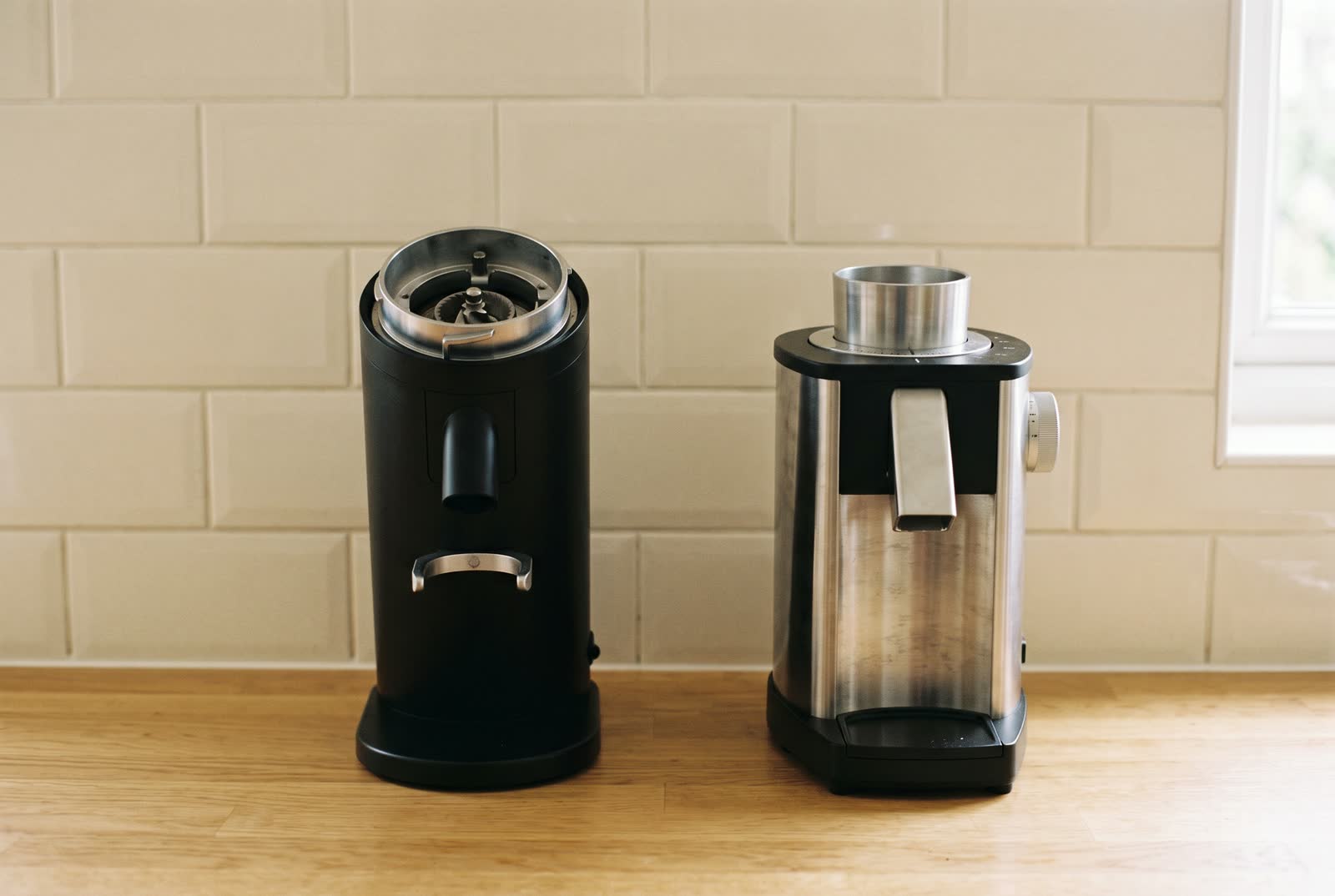
The trace above is one real pair, taken from its two sources. The rule holds the same way for any two units that differ: a width, a depth, a grinder's footprint. None of them gets rounded toward the other.
Who pays us
Some links, marked where they appear.
Amazon, eBay, MHW-3BOMBER and 1st in Coffee links are affiliate links (we earn a commission at no cost to you). Other shop links are plain links. The disclosure page says the same, and it does not say it from a paragraph somebody typed: it asks the link router at the moment the page is served, and where there is any doubt it declares a relationship rather than denying one.
Position in a list, a warmer sentence, a figure that leans the right way, or the removal of a refusal. Rankings come out of your measurements and the rules above.
Payment to appear, payment to rank, and product sent to us for free. The last one sounds harmless. It is how a review site stops being able to say nothing.
The pictures
Why the machines are drawn and not photographed
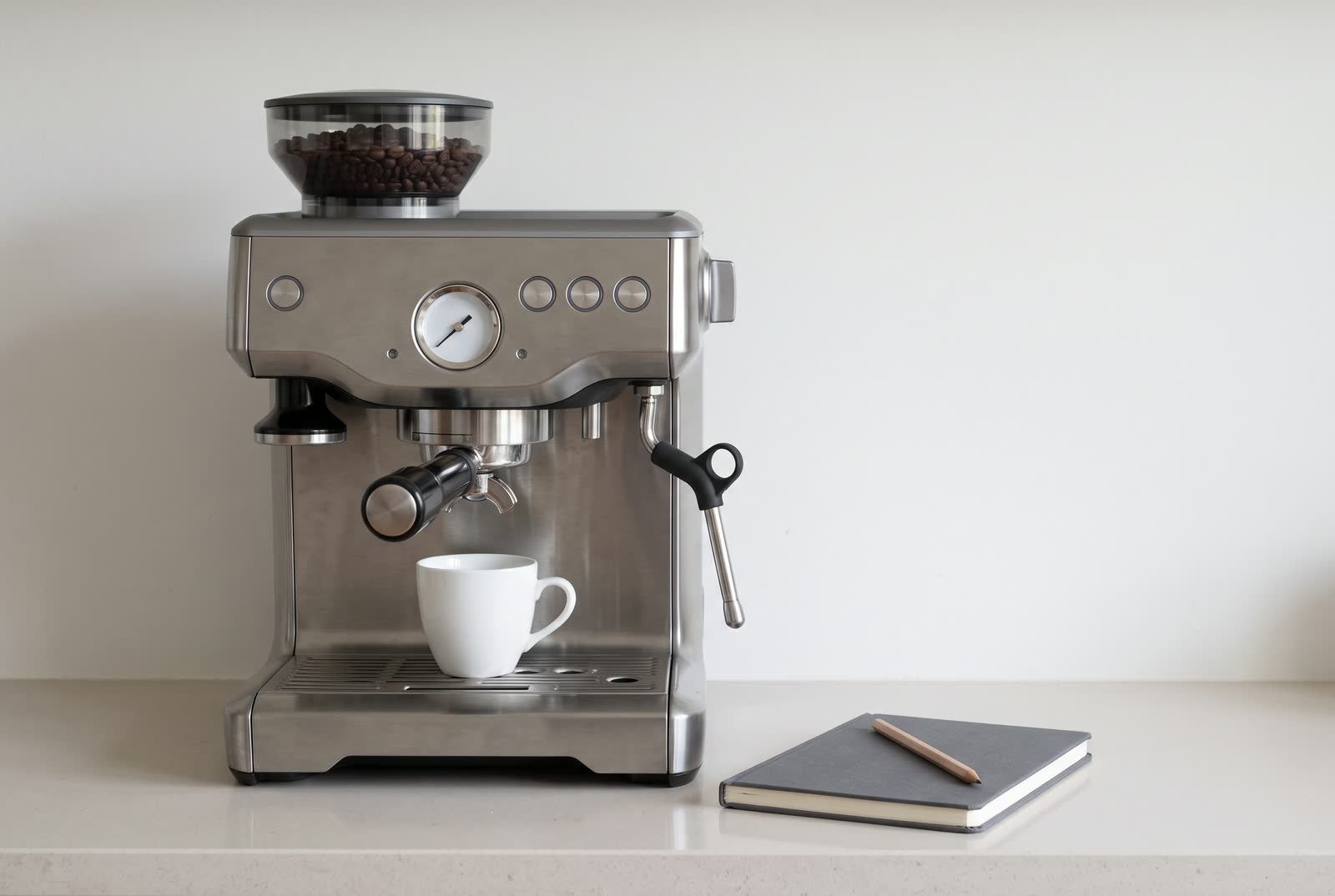
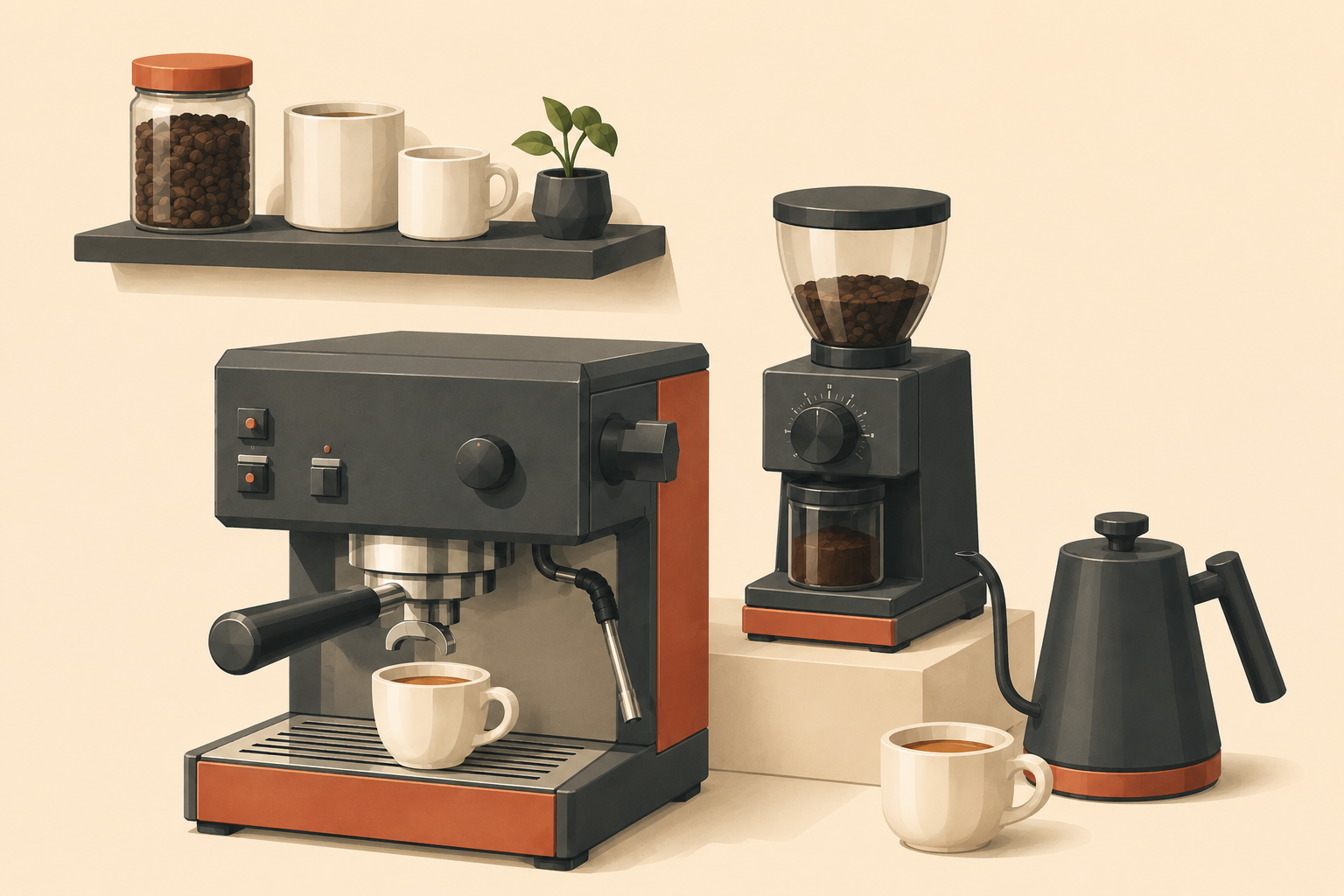
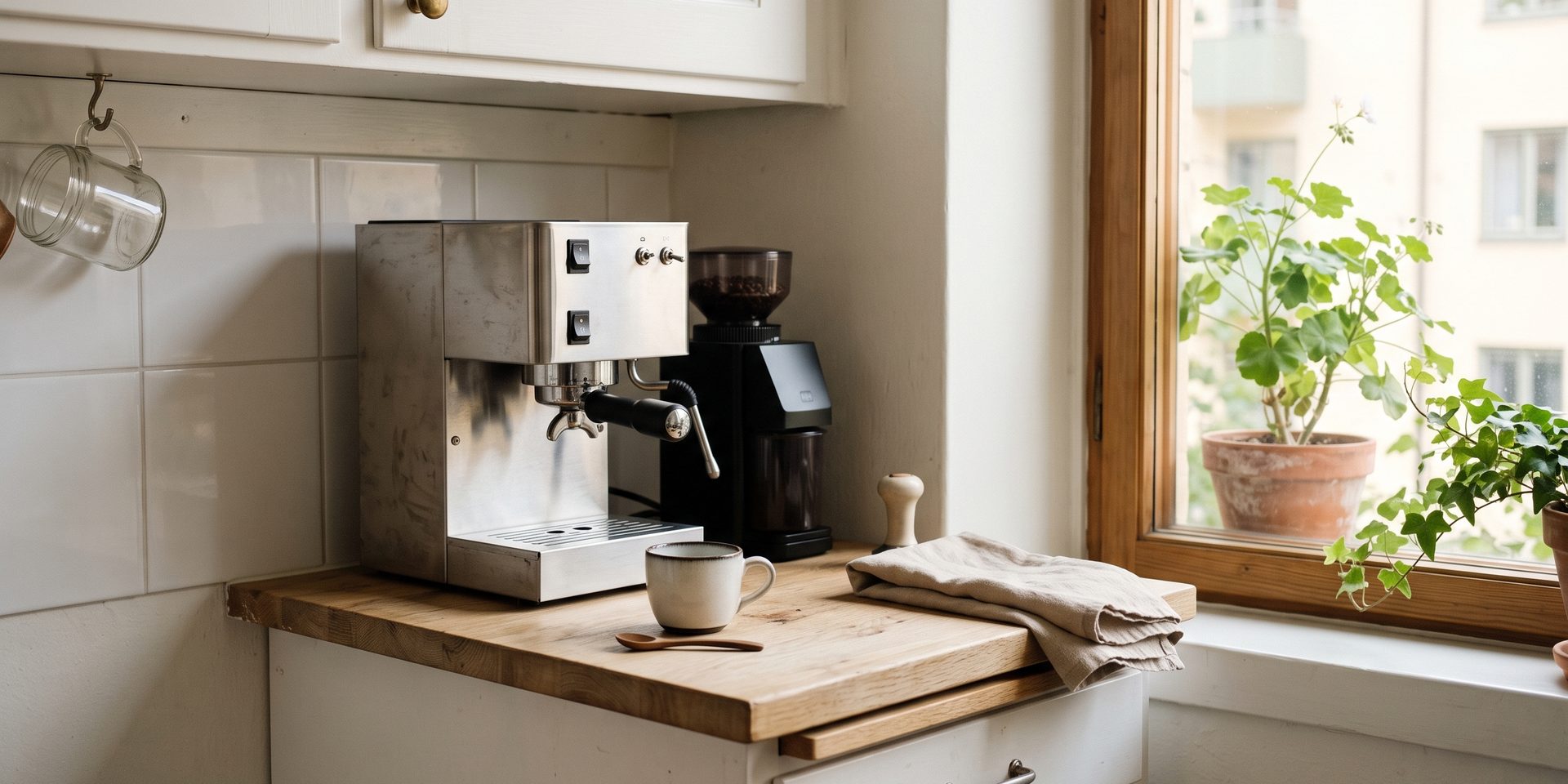
A picture sitting on a public product page is not a licence to reuse it, and for almost every machine here no basis for using one has been found. So each is drawn instead, from the maker's own image and compared back against it, and the drawing carries no lettering, because a model name belongs in type where it can be spelled correctly. What we hold for one particular machine is on that machine's page, under every fact, each with its source.
The point of all of it
You only buy one of these.
Most people in this category are shopping once, for something that will sit on the counter for years. A site that guesses well enough on average is still wrong in your kitchen. This is the last thing you read before you buy, so it had better be the careful one.
How we say what we know: the five states
Every answer on a setup or product page is in one of five states. The word beside a figure is the state, and the state decides whether the figure is used; two readings that disagree are never averaged. Where nothing answers a question yet, the page shows the step that would answer it, or leaves the slot out.
- Confirmed (Confirmed)
- Measured or confirmed from a source we can name. Usable for the decision.
- Likely (Likely)
- Computed from figures the manufacturer or a retailer published. Usable, but not measured by us.
- Needs a check (Needs a check)
- Evidence exists, and one action still stands between it and a decision.
- Published figures differ (Published figures differ)
- Published figures differ. Neither is used for fit.
- Doesn't fit (Doesn't fit)
- The evidence says this combination does not work.
What we hold today
We compare 80 products across 11 setups.
263 of 594 figures carry a value. 251 of those are usable for fit; 12 differ between published figures. A figure where published figures differ is never used as a number; where a counter clears under every published reading we say so, and where the readings part company we say we cannot tell. 0 of the usable figures were measured by a person rather than transcribed from a document.
No operating clearance - the space a machine needs to lift its tank out, swing its portafilter or open its hopper - has been measured yet, so no setup on this site can currently show Verified fit; the ceiling is Likely fit, and only where a published figure exists.
0 of 49 compatibility pairings have been signed by a reviewer; about the rest we say nothing either way.
The count of differing published figures above covers every product, blocked ones included; the figures listed under rule 02 are counted over the products we show. Both are counted on this request.
We quote 288 owner reports on 27 products, each with its source and its date.
As of 18 October 2026. Specifications change: if a claim no longer matches its source, tell us and we correct the page and update its date.



