Espresso Corner

The corner where the shot and the milk are made.

Espresso at home: the drinks, the handling, and the figures behind the machines.

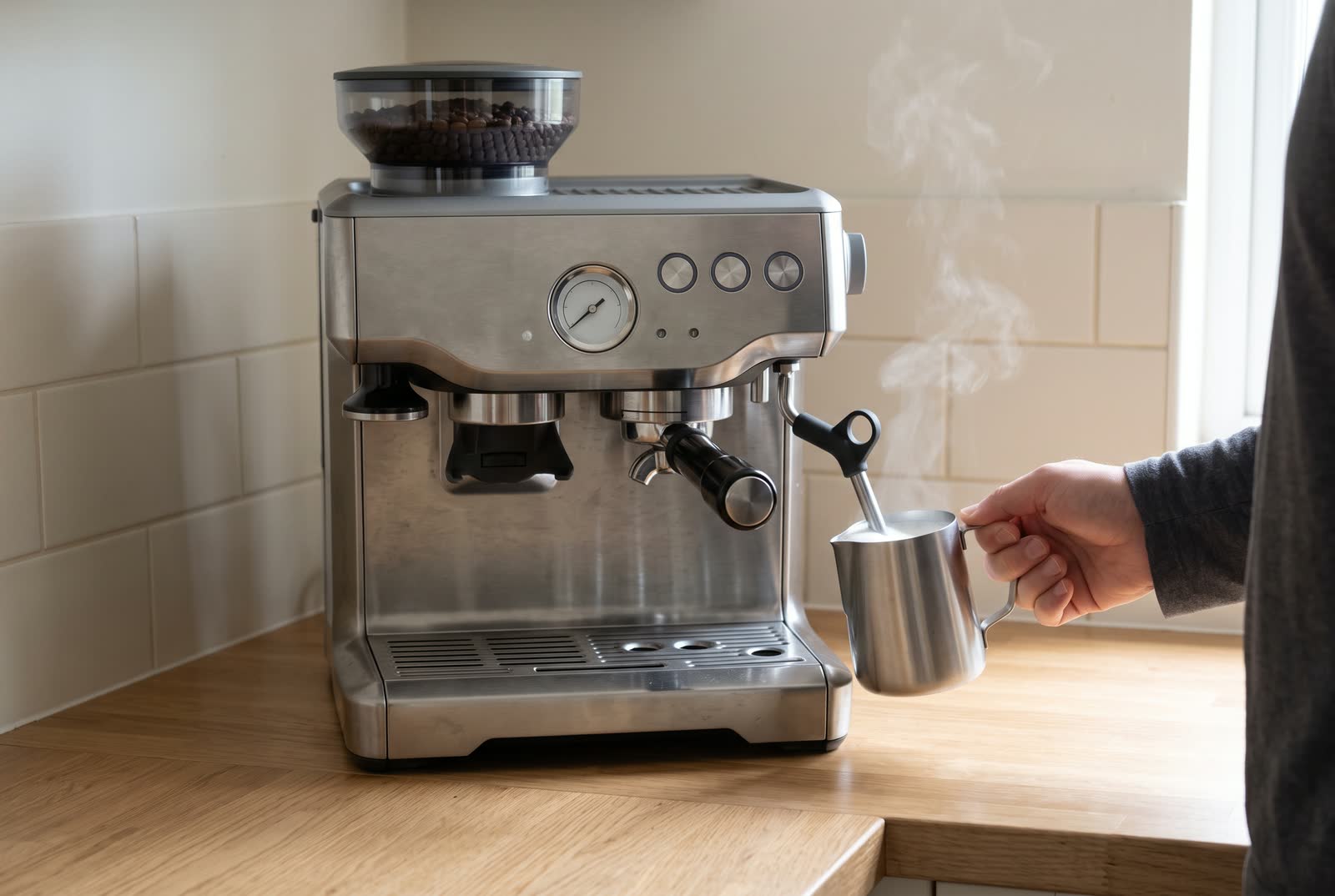
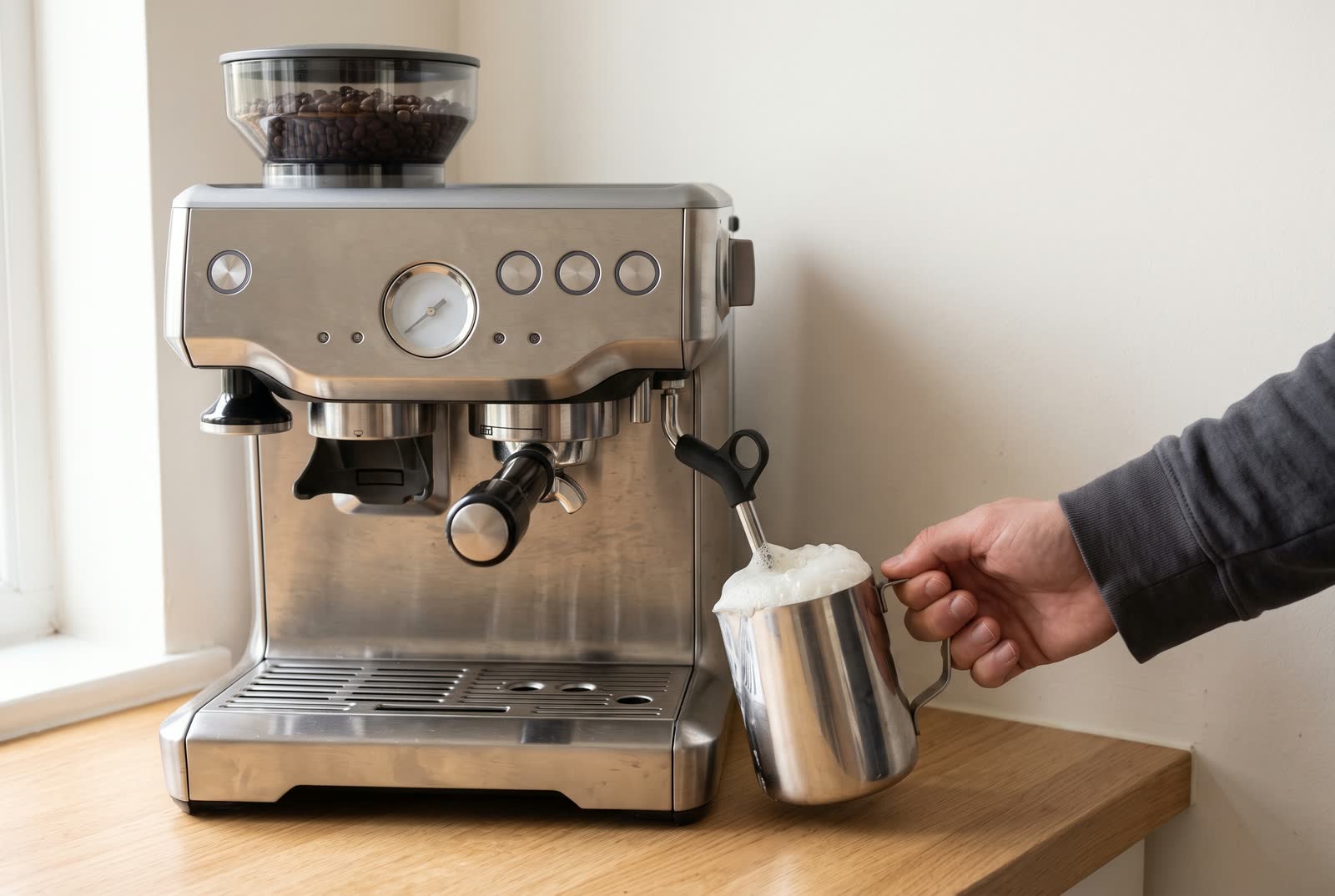
A hand holds a steel milk jug under the steam wand of an espresso machine, the milk foaming and steam rising.
Comparison

The Milk Cafe and a Steam Wand: Two Ways to Heat and Texture Milk

A steam wand heats and textures milk by hand; a standalone frother does it on its own. What each one states, what each one settles for the person holding the jug, and which problem a second appliance actually fixes.

The Milk Cafe and a Steam Wand: Two Ways to Heat and Texture Milk
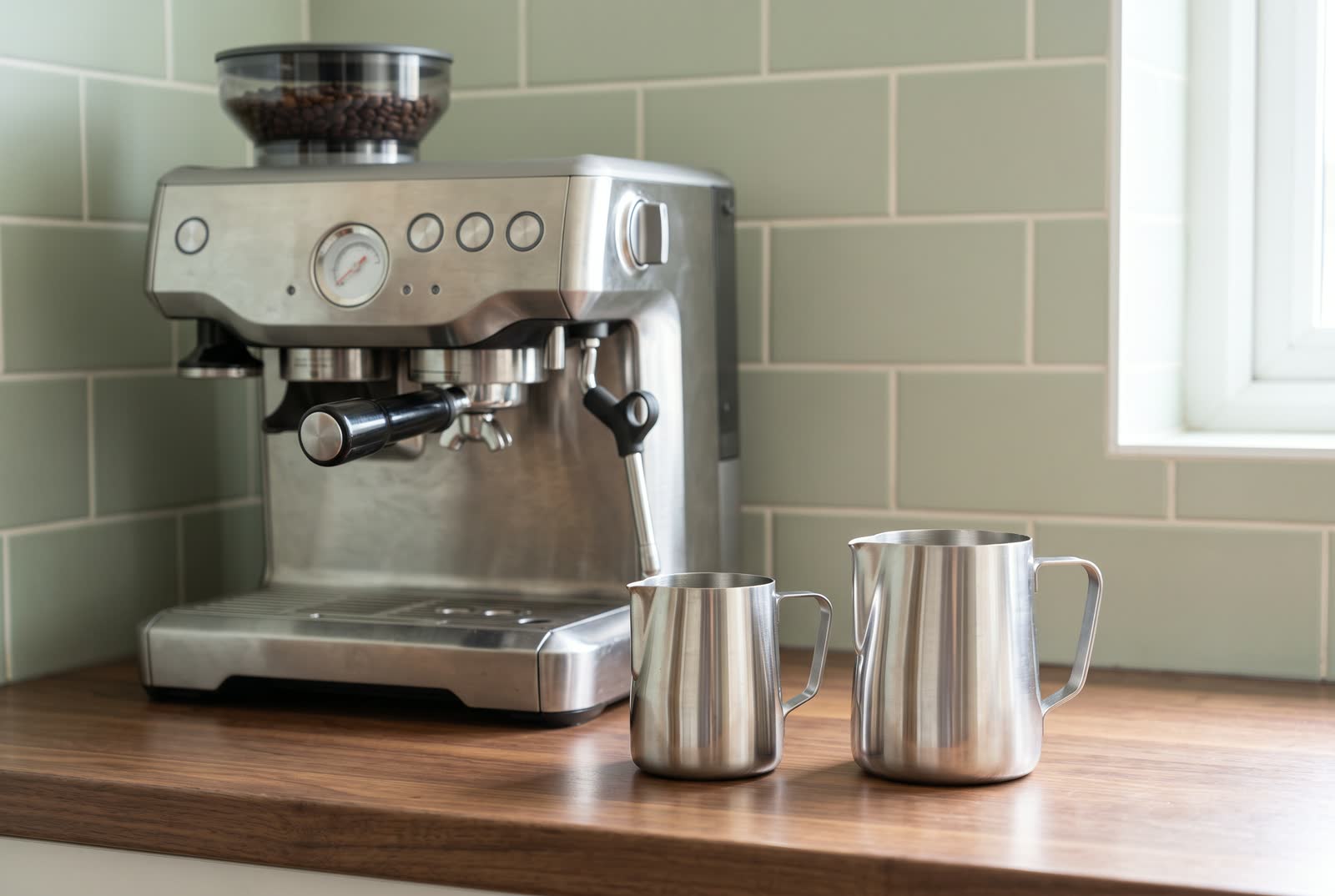
Two plain stainless steel milk jugs stand side by side on a walnut counter, the left one small with a tight pointed spout and the right one larger with a wider rounded spout, a brushed steel espresso machine out of focus behind them and pale sage tile on the wall.
Buying Guide

Milk Jugs: What the Spout Decides and What the Size Decides

Pick a milk jug with a glass of water: half-fill sizes from 12 to 20 oz for five jugs with maker-stated capacities, the three mistakes the test catches, and what a spout changes.

Milk Jugs: What the Spout Decides and What the Size Decides
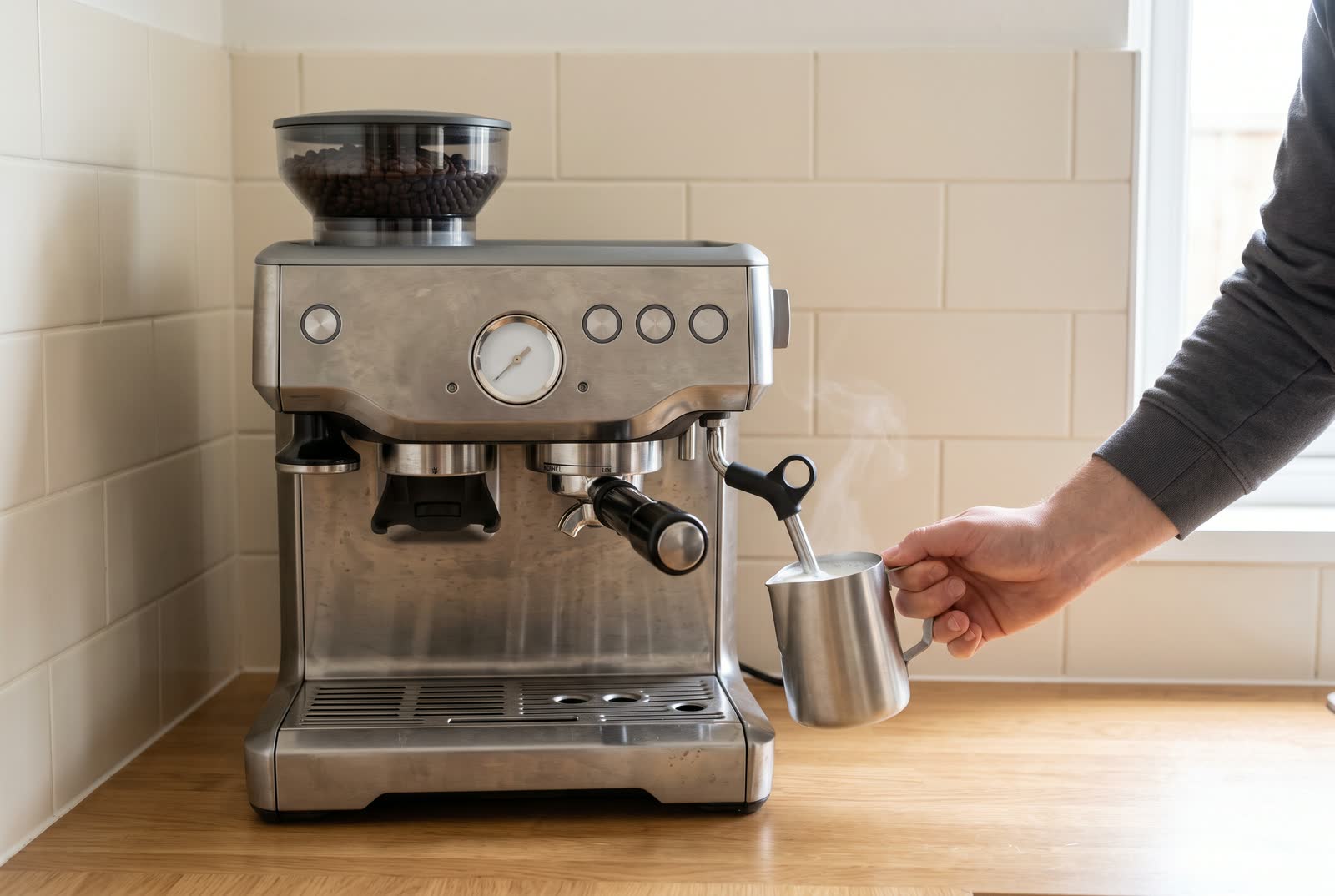
A hand in a dark grey sleeve holds a plain steel milk jug under the steam wand of a bare steel espresso machine on a light oak counter, foam rising in the jug, cream subway tile behind and a window at the right.
Technique

Steaming Milk: The Jug, the Wand and the Sound

Stretching and spinning, what each stage sounds like, where to put the wand, how full the jug should be, and how to read the milk before it reaches the cup.

Steaming Milk: The Jug, the Wand and the Sound
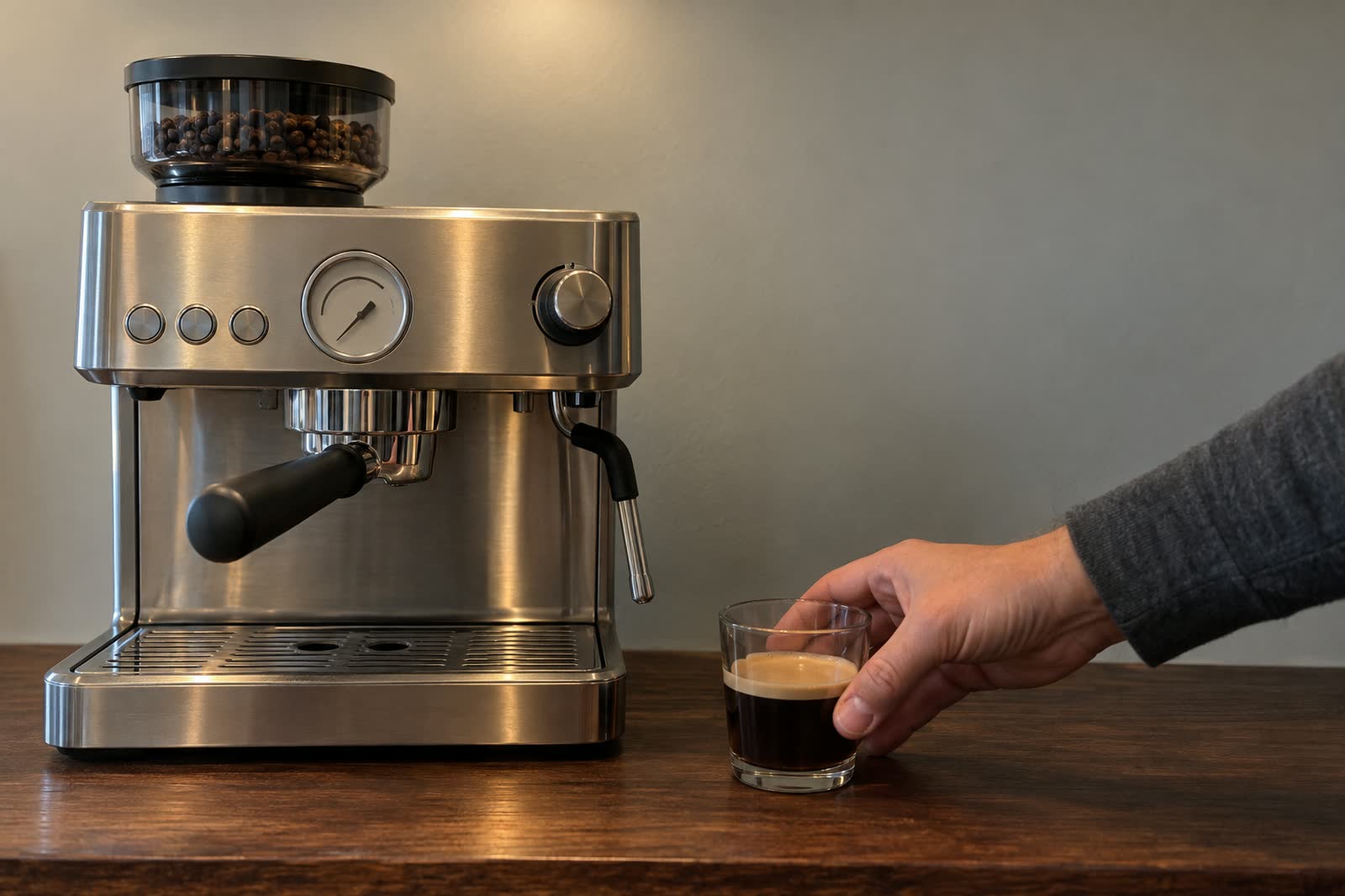
A hand in a dark grey sleeve sets a small glass of espresso topped with a thin pale layer down on a dark walnut counter, with a bare steel espresso machine standing to the left.
Drink Recipe

The Cortado: One Shot, One Glass, and the Milk That Fits It

A cortado is one espresso cut with about the same volume of warm milk in a small glass. What the glass decides, how thin the milk should be, and the order to build it.

The Cortado: One Shot, One Glass, and the Milk That Fits It
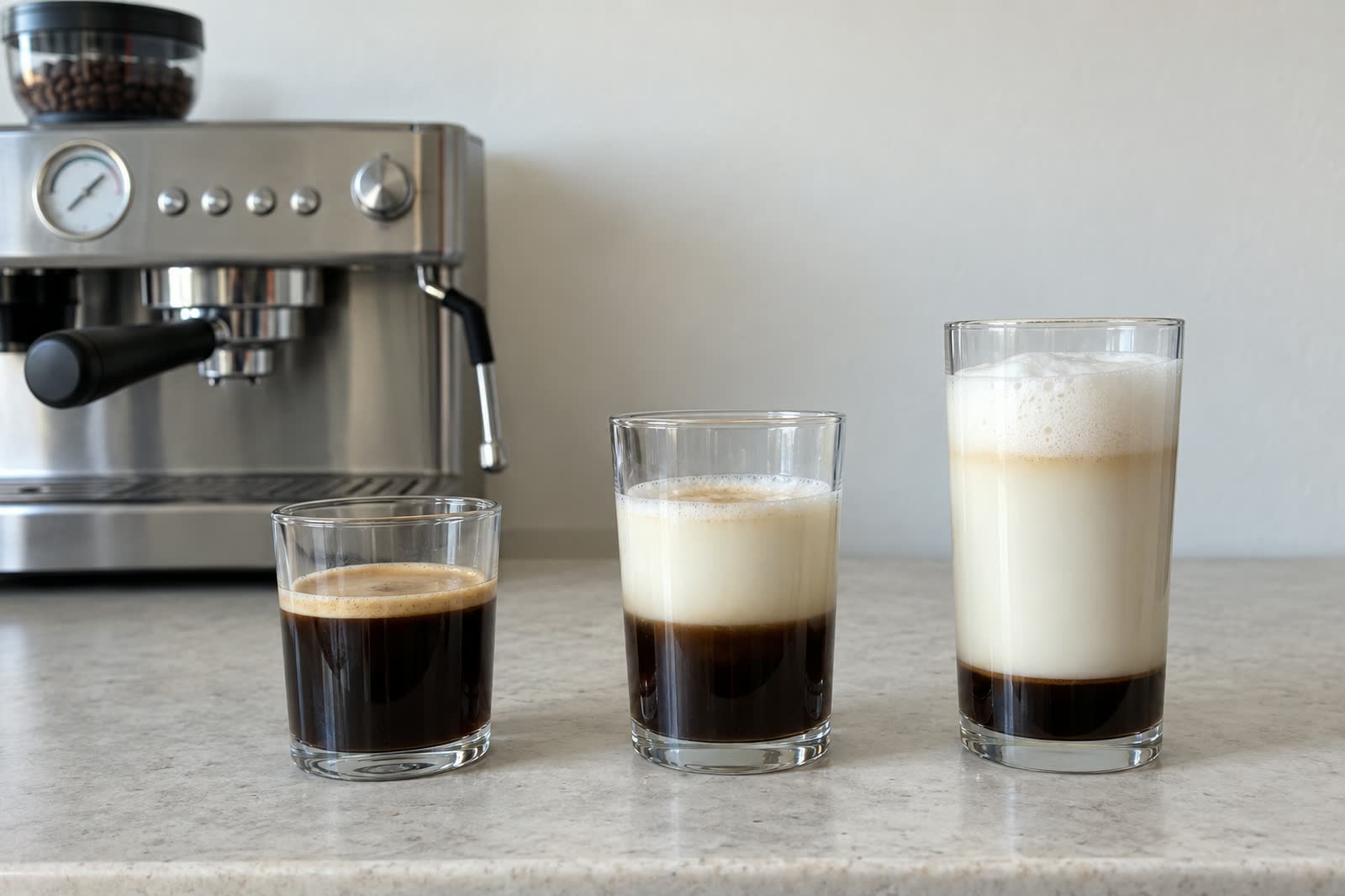
Three plain glasses of different heights in a row on a pale stone counter, the coffee and the milk in each one showing as bands, with the bare steel side of an espresso machine behind them on the left.
Drink Recipe

Latte, Cappuccino and Flat White: What the Ratio Changes

The three milk drinks a cafe sells are one shot and one jug of milk in three proportions. Which ratio makes which, how much foam each needs, and how to measure it.

Latte, Cappuccino and Flat White: What the Ratio Changes
Buying Guide

Hot Water From a Home Espresso Machine: What Each Manual Says

Where hot water comes out on six home espresso machines, how each manual starts and stops it, and which manuals name an Americano or tea: Bambino, Bambino Plus, Stilosa, Barista Express Impress, Barista Touch and Touch Impress.

Hot Water From a Home Espresso Machine: What Each Manual Says
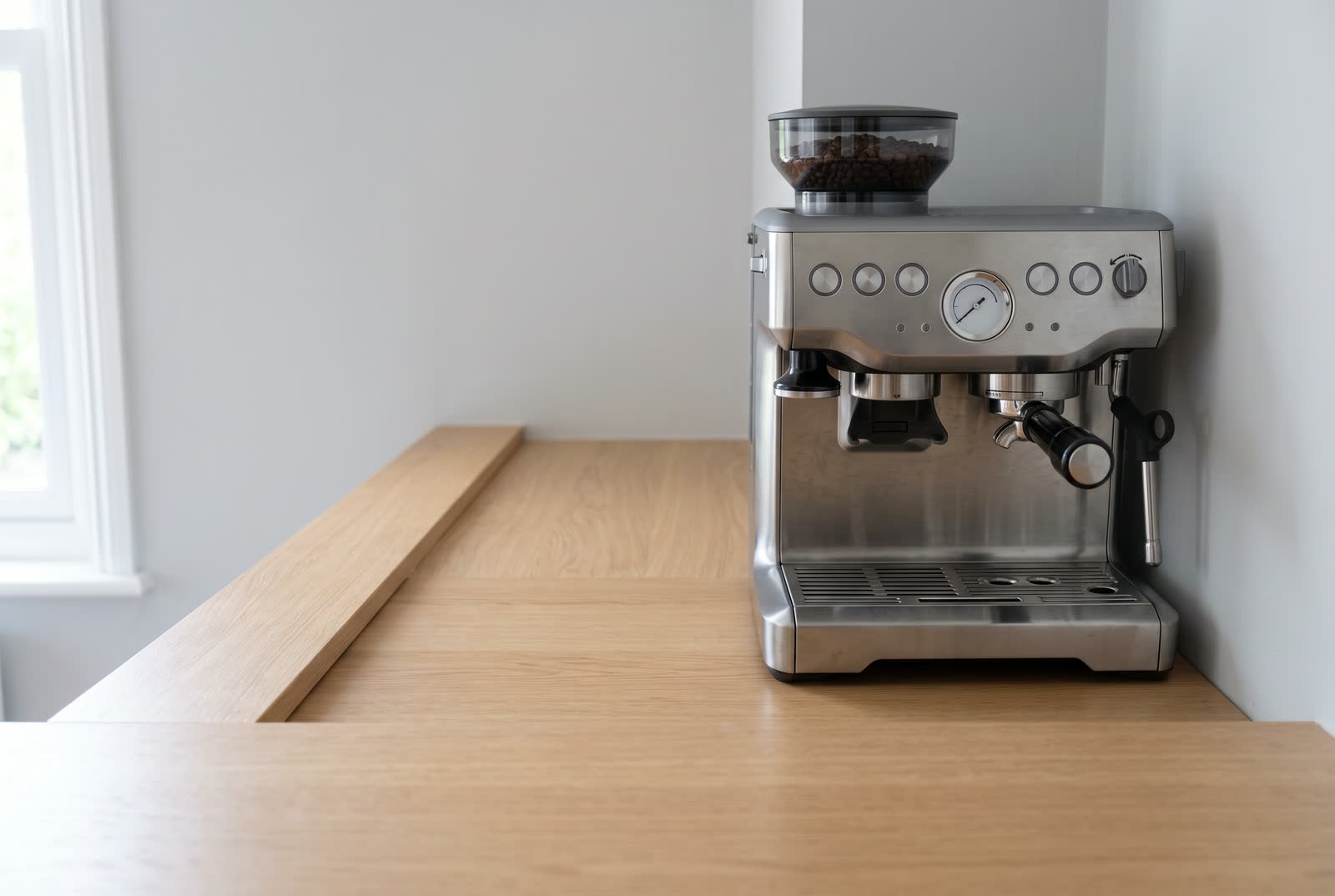
A narrow light oak counter run seen end on in perspective, only a little deeper than the machine itself, a brushed steel espresso machine backed up against the side wall that closes the run off with a hand's width of bare counter in front of it and the whole near half empty.
Small Spaces

An Espresso Corner Where the Counter Run Is the Constraint

How much length an espresso corner needs, worked from published widths: the machine, the grinder and the knock box sum to 493 mm at the narrowest, and every gap between them is a figure no maker here publishes.

An Espresso Corner Where the Counter Run Is the Constraint
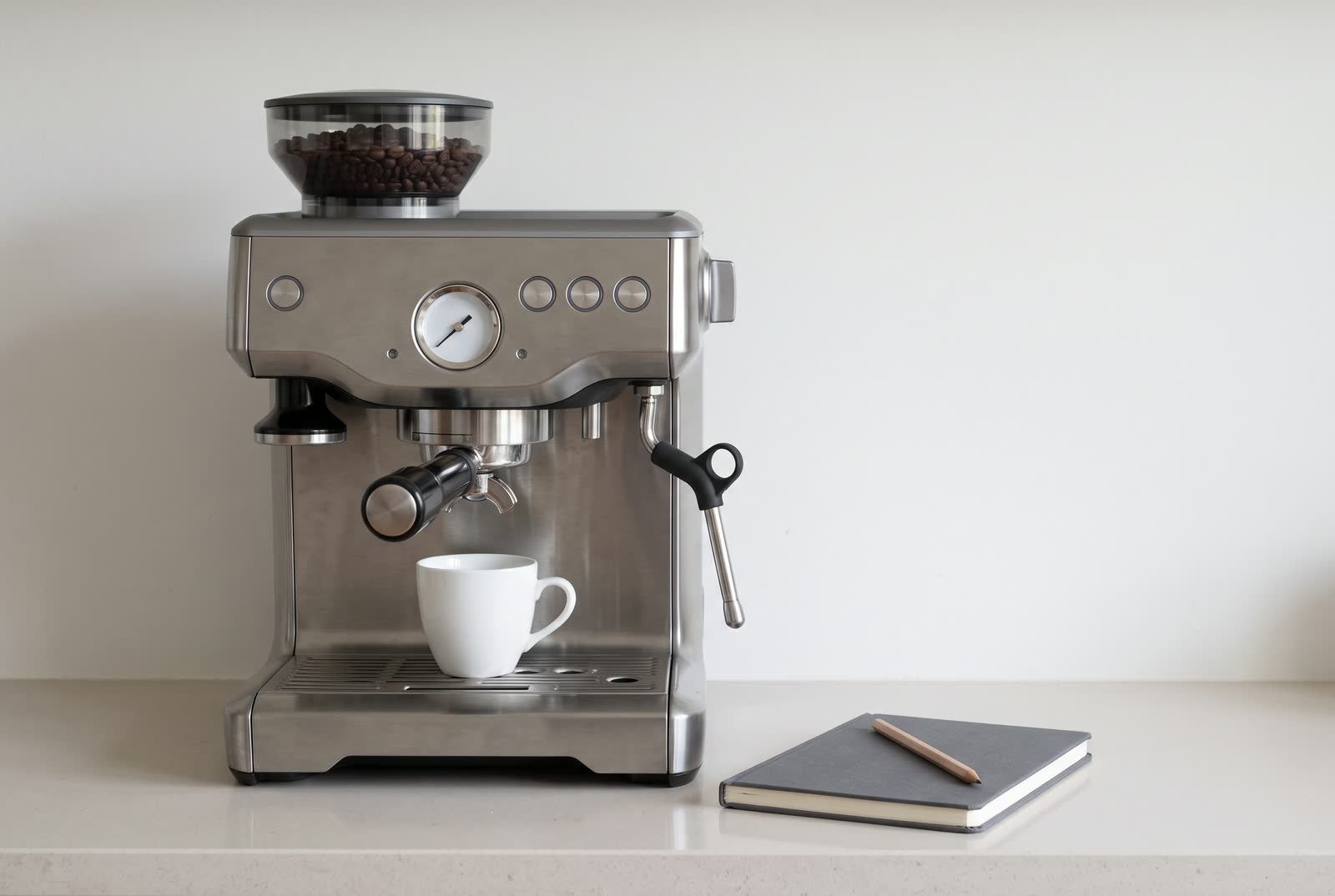
A brushed steel espresso machine stands on a pale stone counter with a white cup on its drip tray, a small closed notebook with a blank dark grey cloth cover lying flat beside it with a pencil across it, nothing written anywhere in the picture.
Explainer

Five Things Said About Home Espresso, and What We Can and Cannot Check

Five claims a reader arrives holding, answered one at a time: what would settle each, whether we have read it, and what it says. Two are settled from published figures, two are refused outright, and one turns out to be a claim about a heater.

Five Things Said About Home Espresso, and What We Can and Cannot Check
A close crop of an espresso machine's front panel: a blank gauge, plain buttons, a steam knob.
Explainer

Temperature Control: What a PID Does, and Which Machines Carry One

A PID holds the water at a set point instead of letting a thermostat swing across a band. What the three letters mean, what they leave untouched, and which eleven of the fifteen machines here name one.

Temperature Control: What a PID Does, and Which Machines Carry One
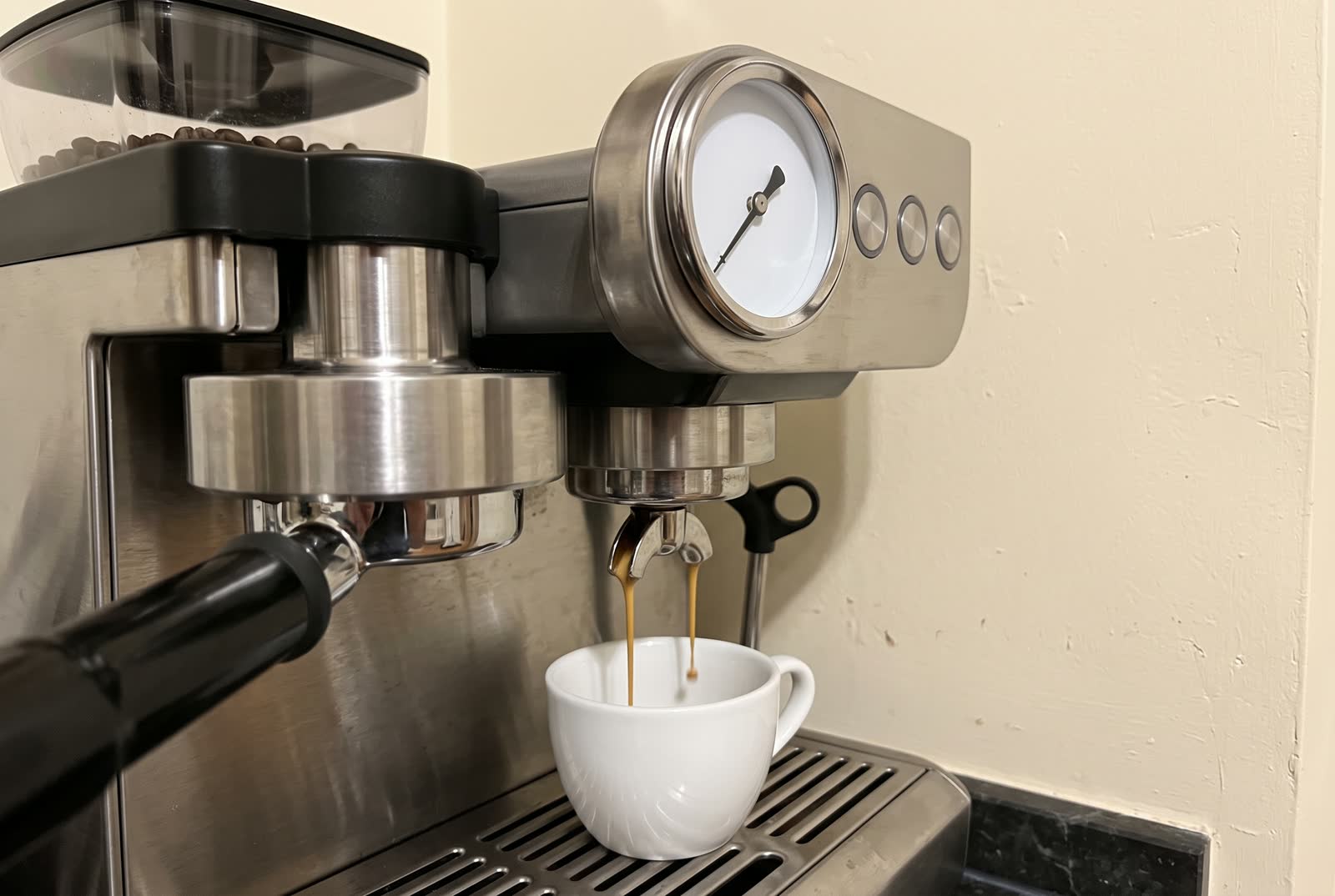
A close view of the working front of an espresso machine, the chrome group head with a loaded portafilter filling the lower left and the round pressure gauge the upper right, a thick dark stream running into a white cup below, the gauge face carrying one needle and one arc and no numerals.
Explainer

How an Espresso Machine Makes Pressure: The Three Pump Kinds

Three kinds of pump raise water to espresso pressure: a vibratory pump pulses a small piston with the mains supply, a rotary vane pump turns a disc for a continuous flow, and a lever machine pushes with a spring. The Rancilio Silvia's page names a vibration pump and the Profitec Go's a rotary vane, both read on 6 September 2026.

How an Espresso Machine Makes Pressure: The Three Pump Kinds
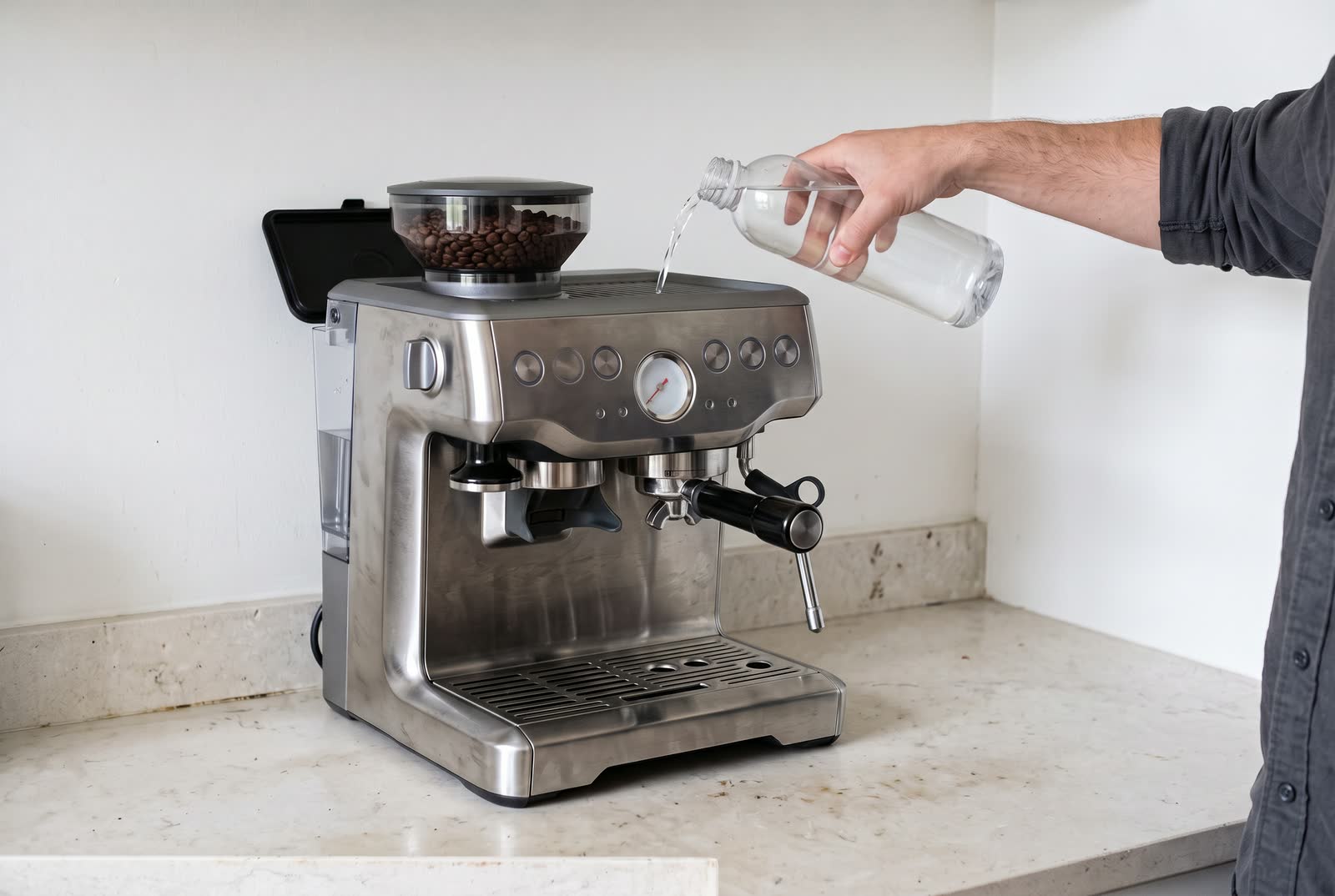
A hand in a dark grey sleeve tips a plain clear bottle over the open water tank of a brushed steel espresso machine on a pale stone counter, a thin stream of clear solution pouring in, the tank lid propped open.
Technique

How to Descale an Espresso Machine: What Each Maker Says, Machine by Machine

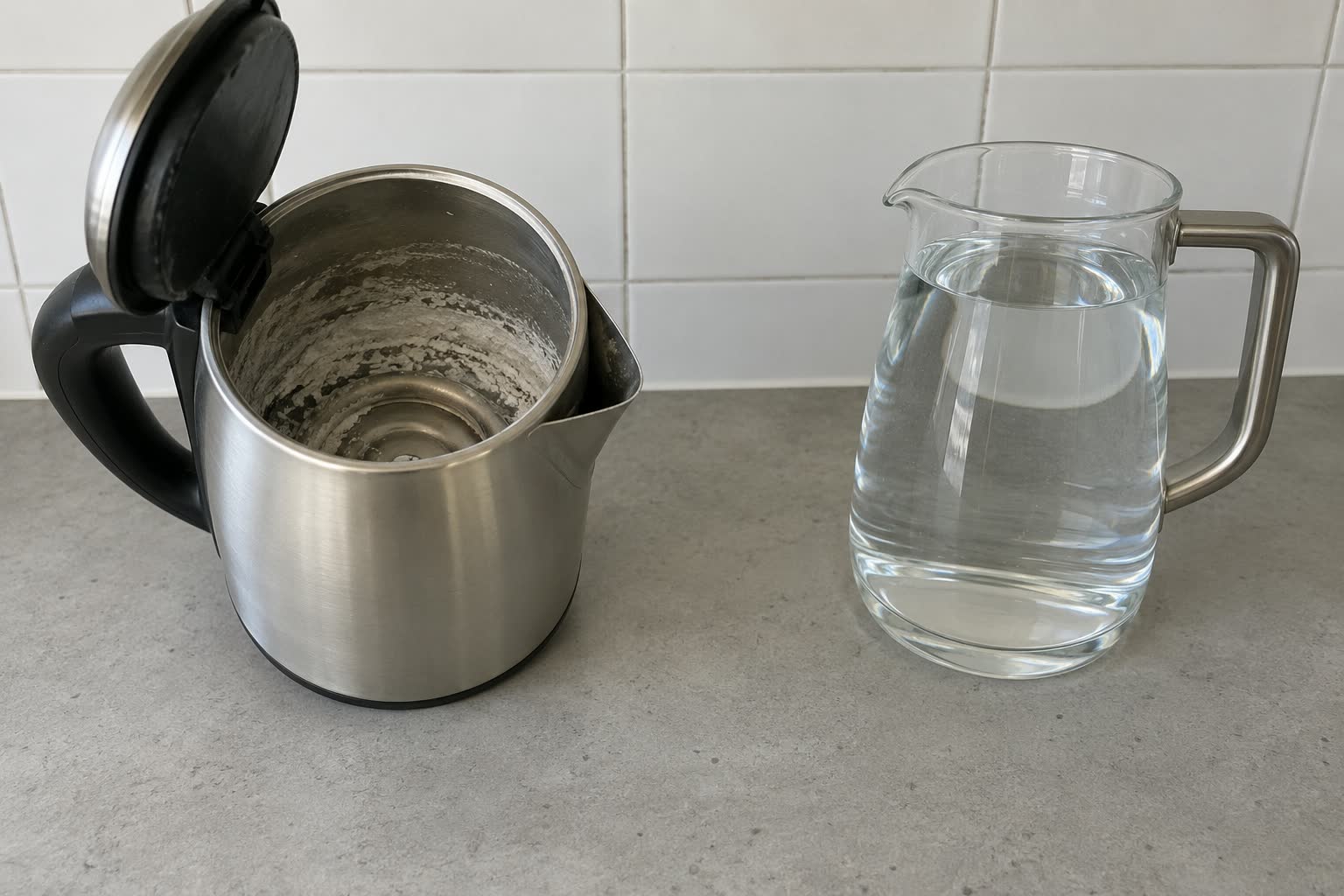
Descale when flow slows, heat-up lengthens or steam weakens, since the rate depends on your water. The Bambino ships with Breville's descaling powder, and the Stilosa and the Classic Pro take the solution with the tank in place.

How to Descale an Espresso Machine: What Each Maker Says, Machine by Machine
A compact single-boiler espresso machine stands alone on a light oak counter seen from the front and slightly right, its chrome group head with a loaded portafilter and its steam wand swung out to the side both in the same picture, a wisp of steam at the wand tip and a white cup on the drip tray.
Technique

Brew Temperature: What a Single Boiler Holds and What It Does Not

One heater, two jobs, and only one maker on this record prints the range its control moves over. What the fifteen machines here state about temperature, what four of them are silent about, and what a measurement at the group would need.

Brew Temperature: What a Single Boiler Holds and What It Does Not
A close macro view of the round analogue pressure gauge on the front of a brushed steel espresso machine, its plain dial carrying one needle and one unbroken arc and no numerals, marks or lettering of any kind, the group head and portafilter handle soft behind it.
Technique

Nine Bars: What the Number Means and Where It Is Measured

Fifteen bar is the pump and nine bar is the valve, and neither is a reading taken at the coffee. What the fifteen machines listed here state about pressure, what six of them do not, and what a measurement at the group would need.

Nine Bars: What the Number Means and Where It Is Measured
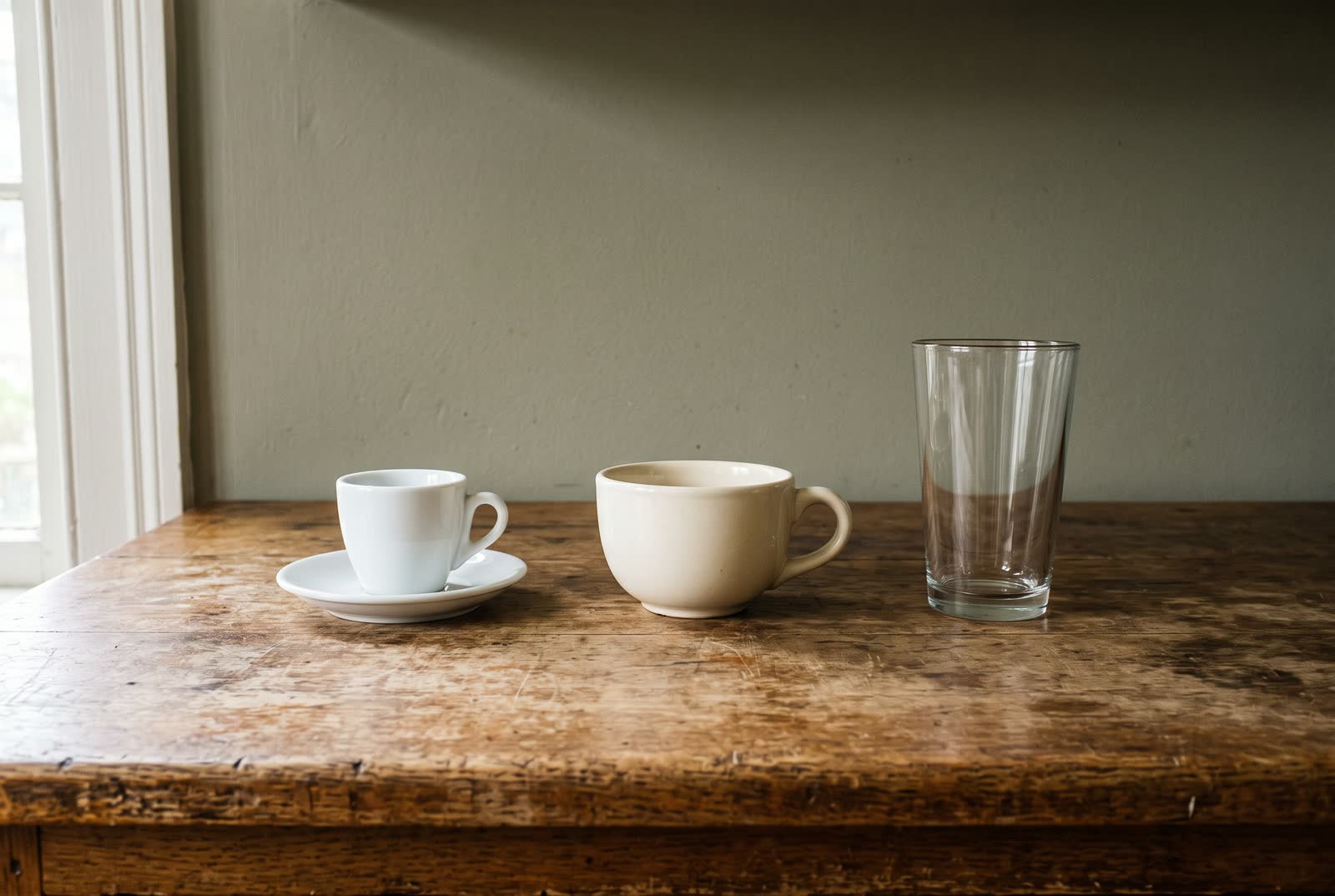
A small espresso cup, a mid stoneware mug and a tall glass, empty, in a row on a worn oak table.
Buying Guide

Cups and Glasses: What the Drink Decides About the Vessel

A cortado in a mug stops being a cortado. Which vessel each drink's ratio asks for, the one capacity range this page uses and what each end of it holds, with every size named as a convention where no figure is published.

Cups and Glasses: What the Drink Decides About the Vessel
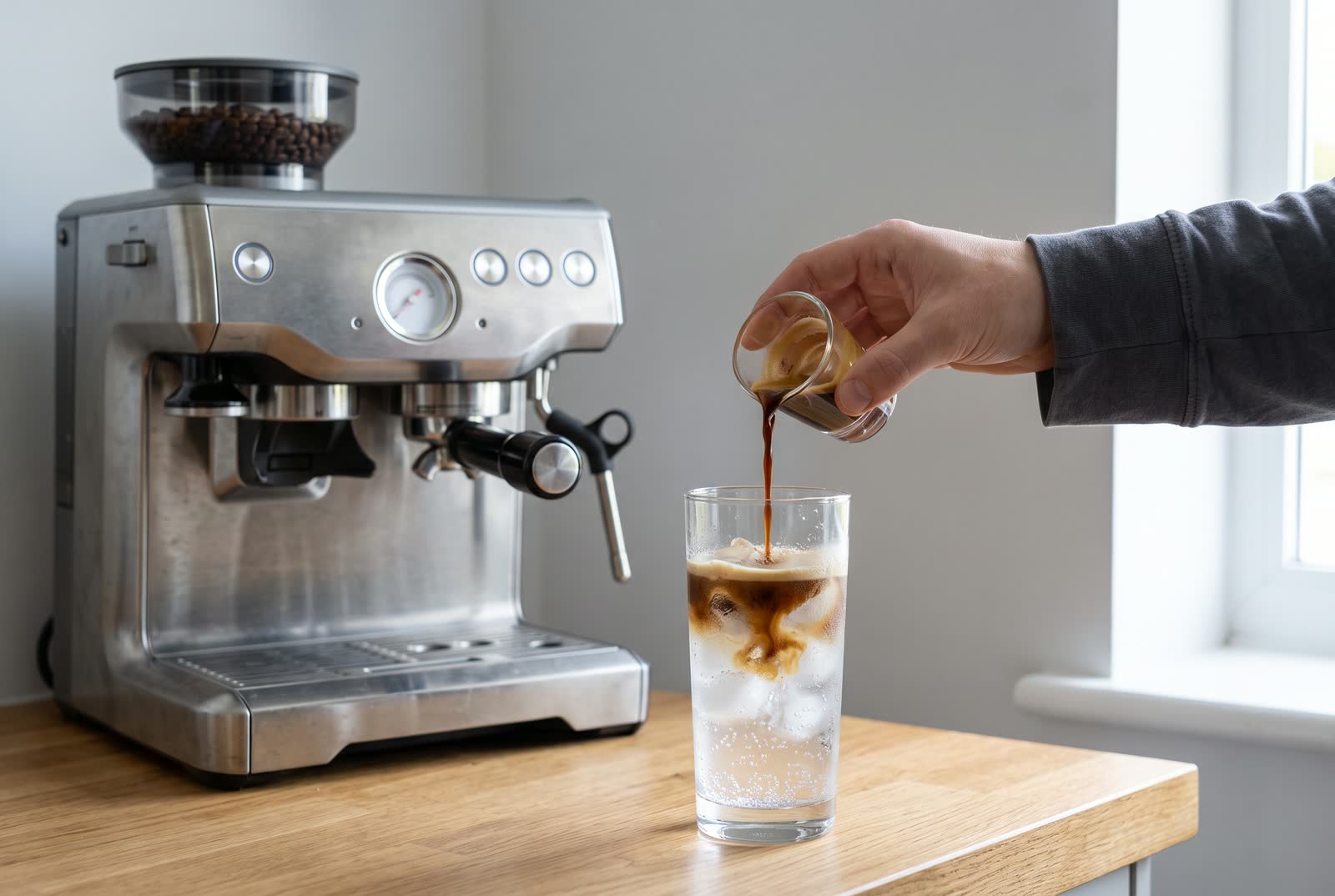
A hand in a dark grey sleeve tips a small glass of espresso over a tall glass of ice and fizzing tonic on a light oak counter, the dark coffee falling through the clear tonic in ribbons and not yet mixed.
Drink Recipe

Espresso Tonic, and the Order the Glass Goes Together In

Espresso tonic is three things and one order: ice, tonic, then coffee, poured over a spoon. Why the order is physical rather than a matter of taste, and what to change when it tastes flat.

Espresso Tonic, and the Order the Glass Goes Together In
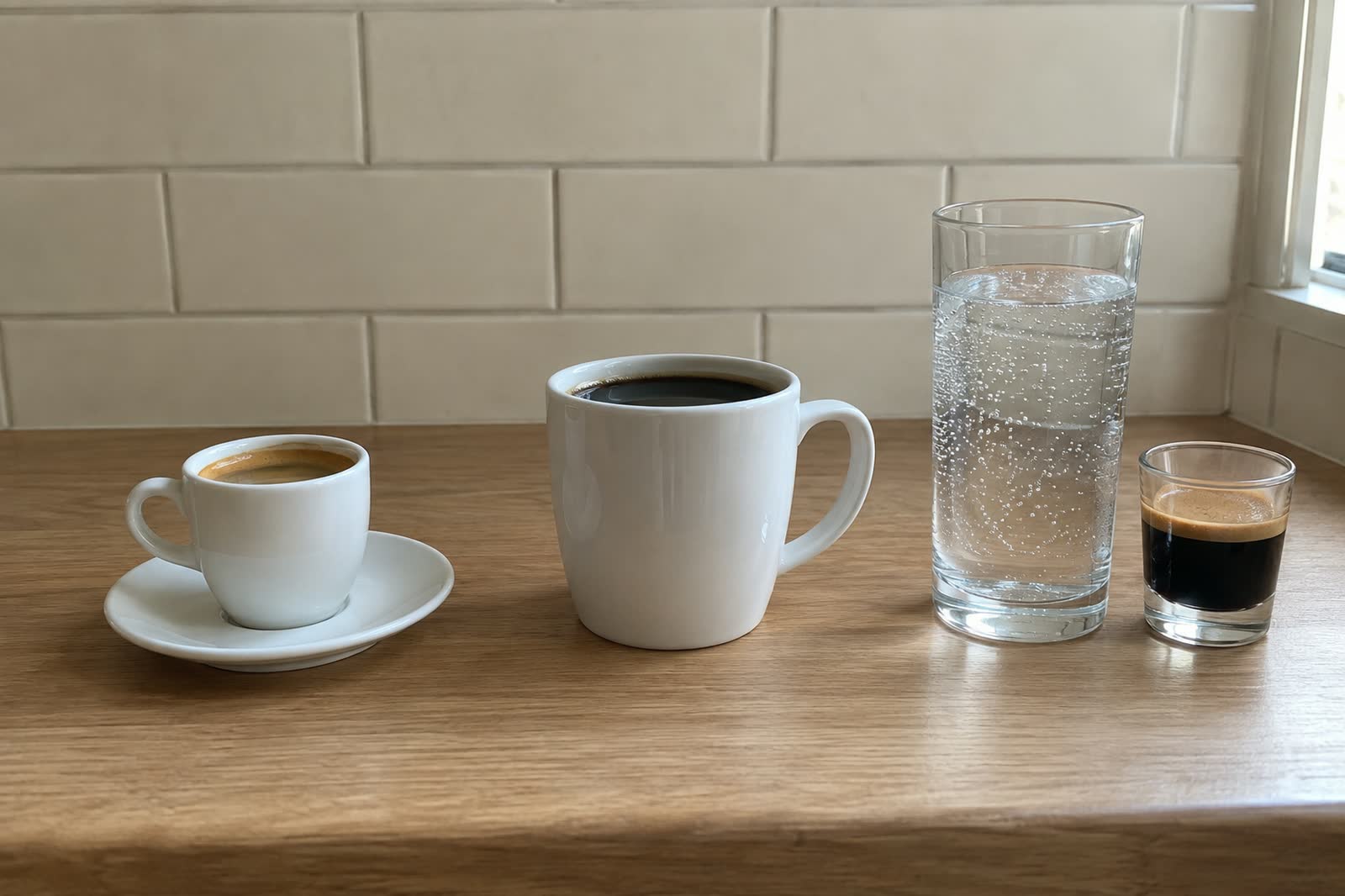
On a light oak counter in front of cream subway tile: a small white espresso cup on a saucer, a larger white cup of black coffee, and a tall glass of sparkling water with a small glass of espresso beside it.
Drink Recipe

Four Espresso Drinks That Need No Milk at All

Espresso, americano, espresso over ice and affogato: four drinks a new machine owner can make correctly on the first attempt, with no steaming and no jug involved.

Four Espresso Drinks That Need No Milk at All

Starting out