The eleven months nobody plans for
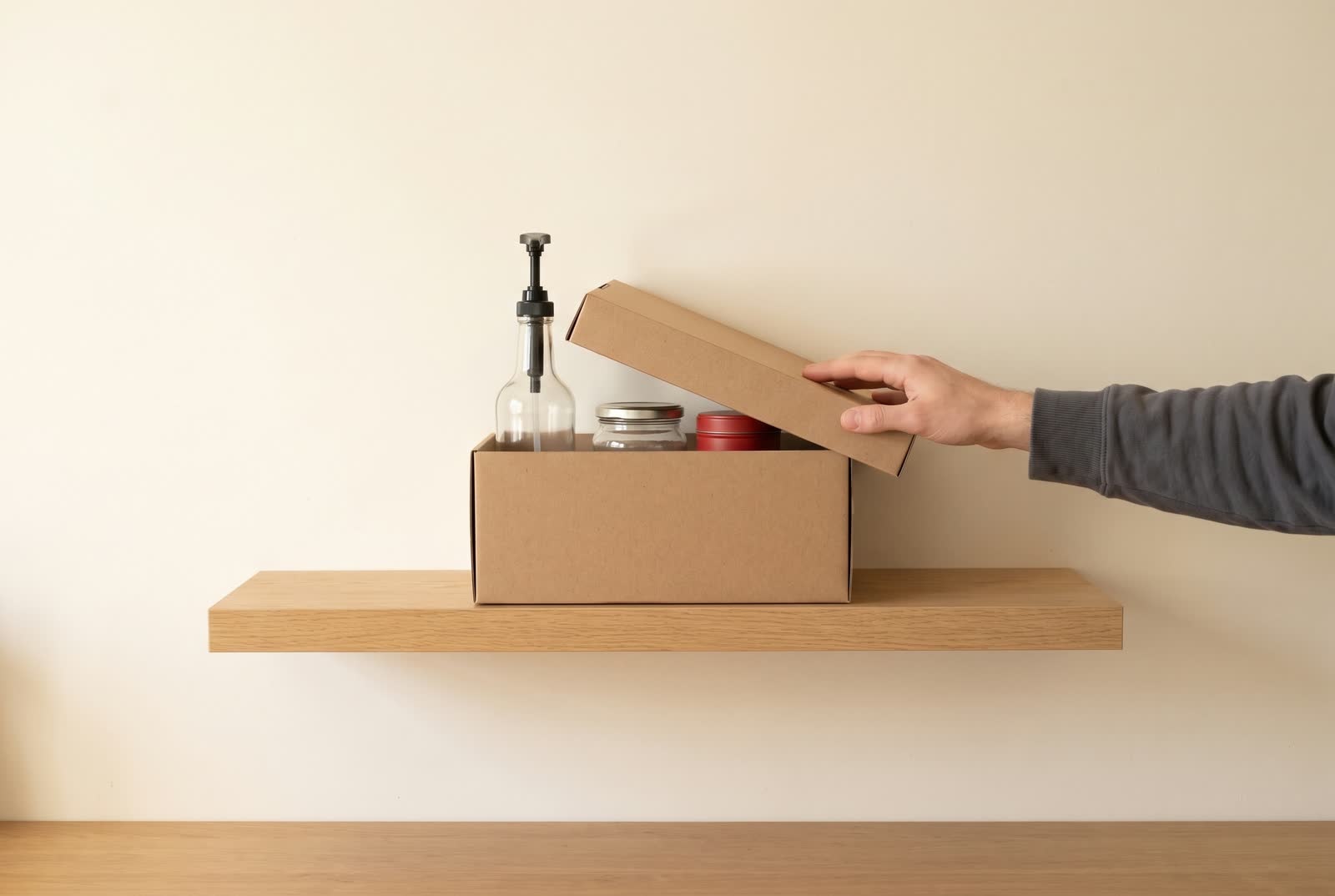
A seasonal corner is bought and photographed in one week of the year. It is then in a cupboard for the other eleven, and that is the part of the decision nobody makes deliberately. A piece that is cheap to buy and awkward to store is an expensive piece, because the cost is paid every time you move it to reach something else, and paid again next autumn when you cannot find it and buy another one.
Building the corner is the other page. This one is about what happens to it afterwards, and it is written to be read before you buy rather than after.
Three pieces, three completely different storage problems
The three items below are the ones a seasonal layer leaves behind: a set of canisters, a countertop organizer and a cabinet. They are here because they are what has to go somewhere in November, and the machine, the grinder and the kettle are not, since none of them is ever put away.
Read them as three different questions rather than as a list. One of them should not be stored at all, one stores badly and nobody publishes a figure for it, and one does not move, which turns out to be the best answer of the three.
The canisters, which should never go in the cupboard
The OXO POP set is the piece most likely to be bought for a season and then put away with the season, and that is the mistake. Its maker states three containers, at 5.2 quarts or 4.9 litres, 3.3 quarts or 3.1 litres and 1.5 quarts or 1.4 litres, with push-button lids that seal. Those are the sizes of a working pantry, not of a decoration, and the set earns its cupboard space in February exactly as well as in October.
They also nest, which is the storage answer if you do decide to box them: the small one goes in the large one and three containers become the footprint of one. Nothing else on this page nests.
An organizer shape, and the figure this page cannot give you
A countertop organizer with a drawer and a three-tier shelf is the hardest shape of the three to store, because a rigid frame with open shelves holds air rather than collapsing flat. No dimension for a piece like this is something we have checked: the shape itself, not a specific listing, is what decides the storage question below.
That is not a small gap, because the whole storage question for this shape is the volume of the box it needs. What closes it is one measurement with a tape before you commit shelf space to it, and until somebody publishes a figure that measurement is the reader's rather than this site's.
The cabinet, which does not go anywhere
A closed cabinet on casters, with a mesh door for ventilation, is the piece that solves storage by not being stored. It stays where it is all year and the seasonal things go inside it, which is the only arrangement on this page where the eleven months cost nothing.
The November hour, in order
Empty and wash anything that held syrup or sugar before it goes anywhere, because a sealed container with residue in it is a problem you meet next October. Nest the canisters. Put the small seasonal things inside the largest container you own rather than in four bags, which is the step that decides whether you can find them next year.
Label the box with what is in it rather than with the season, because "autumn" tells you nothing when you are looking for a specific jar in June. And leave the mugs in the cupboard rotation if they were chosen as mugs, which is the test the build page applied to them.
What this changes about buying
Judge a seasonal piece on the eleven months as well as the one. A thing that nests, folds, or has a job outside its season is cheap to own. A rigid frame with an unpublished footprint is expensive to own even when it is the least expensive thing in the corner, and a piece that never leaves the counter is the cheapest of all.
No price on this page is checked at a seller. The canister set sits in the band this site draws, which is a range of its own framing rather than a figure read at a shop; the organizer and the cabinet are described here by shape rather than as a priced item.



