Two machines that answer different questions
A pod machine and a pump machine both make a small, strong, crema-topped drink, and they are not the same purchase. The difference is not the pressure and it is not the price. It is who decides.
A capsule arrives with the coffee already ground, already dosed and already sealed. The machine pierces it, pushes hot water through it and stops. Three decisions that shape every espresso, which coffee, how fine, how much, were taken in a factory months before the cup, and the owner cannot change any of them without changing the capsule. A pump machine with a portafilter hands all three back. The owner buys the beans, grinds them, doses the basket and tamps it, and every one of those steps can go right or wrong on any given morning.
That is the trade, stated plainly: a pod machine settles the coffee for you, and a pump machine settles nothing you did not settle yourself.
What we have read, and what we have not
No pod machine appears on this site. None has been measured, none has had its maker page read, and no figure about one, not a pressure, not a capsule size, not a price, appears anywhere on these pages. This piece therefore states nothing about any capsule machine as a fact. What it would take to say something is a maker page read on a date, a manual read the same way and a listing on this site with its dimensions and its warranty, which is what every pump machine below has.
The pump side is listed here, and the rest of this page is written from it.
What a pump machine states
The figure a maker publishes for the pump is its pressure in bar. The Bambino page states a 15 bar Italian pump with low-pressure pre-infusion followed by 9-bar extraction, and a 54 mm portafilter. The Stilosa page states 15 bar pump pressure with a stainless steel boiler, a manual steam wand and a dual-filter portafilter for single or double shots. The Classic Pro's figures were read on 6 September 2026 from its distributor's storefront rather than from Gaggia's own page, which this site could not confirm live for this SKU, and they are a 15 bar Italian-made pump with a 9 bar valve, a brass boiler and a removable tank in the two-litre range. Two parts often named with this machine, a three-way solenoid valve and a brass group head, come here only from a third party's specification page and a third party's review, and neither of them is among the maker figures this site keeps.
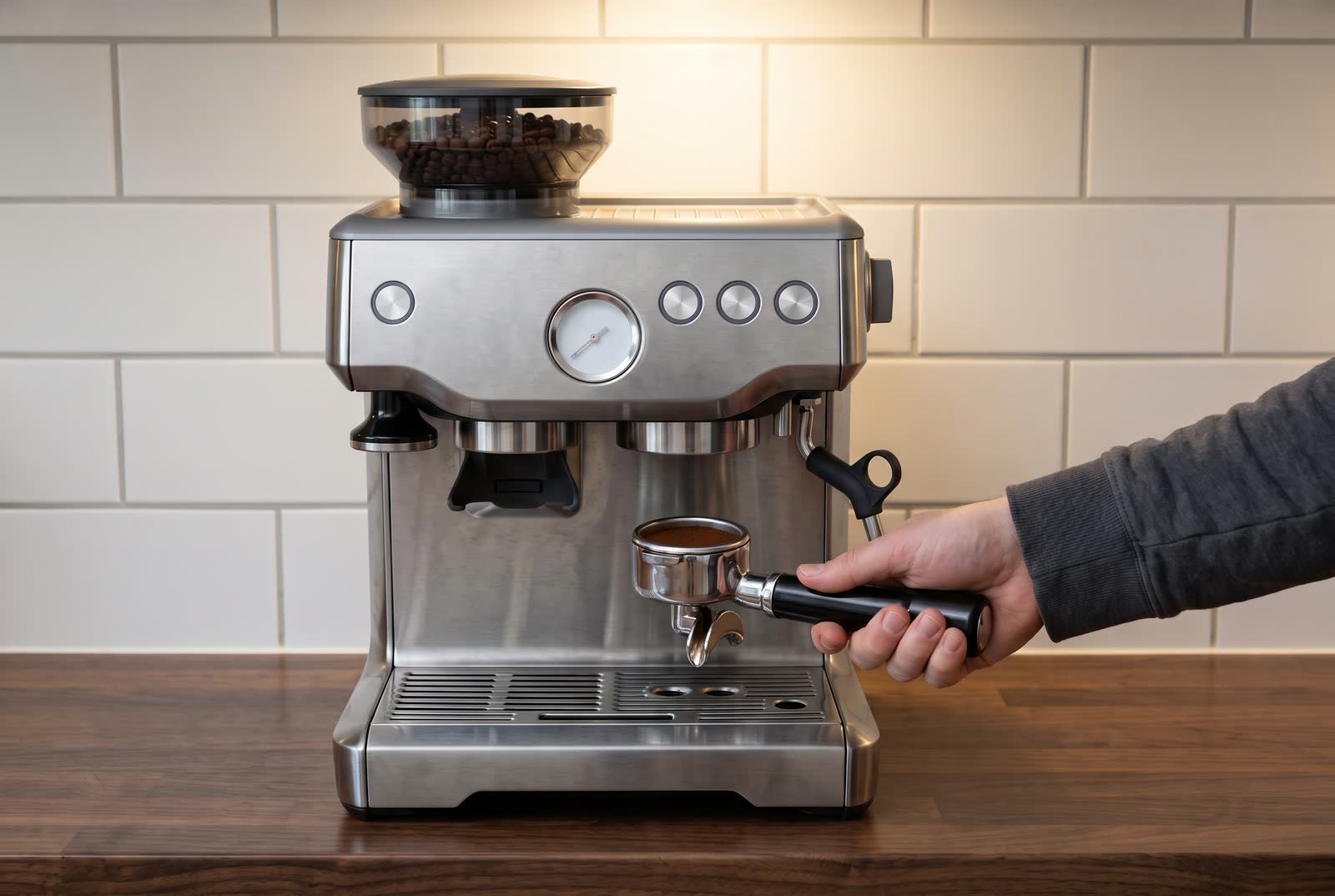
The portafilter is the part that makes a pump machine what it is. Among the maker figures this site keeps, thirteen of the fifteen machines state its diameter as a number: 54 mm on every Breville but the Oracle Touch, which states 58 mm, 58 mm on the Classic Pro and on the machines above it, 57 mm on one. The Stilosa's page describes its portafilter without printing a diameter, and one machine's page states none. The diameter decides which baskets, which tamper and which accessories fit, and a capsule machine has no such number because it has no such part.
What a pump machine leaves to you
Everything a capsule sealed. The beans: a pump machine makes espresso from any coffee, at any age, from any roaster, and a capsule machine makes it from whatever fits the slot. The grind: a pump machine needs a grinder that goes fine and even, which is a second purchase, and the reason the grind matters is on the page about pressure and grind. The dose and the tamp: the owner's hands, every time.
Those are also the things that go wrong. A sour shot, a bitter one, a shot that gushes and one that crawls, all of them are the owner's grind, dose or tamp, and none of them can happen with a capsule. The pump machine's owner gets a better drink on a good day and a worse one on a bad day, and gets to decide which days are which. The capsule machine's owner gets the same drink every day, and it is the drink the capsule maker chose.
Milk, and a wand
The Bambino's page states a manual wand with its heating system and the Stilosa's states a manual wand for frothing. The Classic Pro has no steam-wand statement at all: what we have is a line read from its manual's contents page, naming machines with an automatic milk frother. A wand is another thing the owner does by hand, and another thing that takes practice; see the page on the sound a jug makes under one. Some capsule machines froth milk in a separate jug and some do not; since this site lists none, this page says nothing about which.
What each one settles
A capsule machine settles the coffee, the grind and the dose, and leaves the owner the water and the button. It is the right machine for somebody who wants the drink and not the craft, and there is no figure here that argues otherwise.
A pump machine settles the pressure and the temperature, and leaves the owner the coffee, the grind, the dose, the tamp and the milk. It is the right machine for somebody who wants to decide those things, and it is a purchase of two machines, because the grinder is not optional.
The reader who is not sure which of those two people they are should notice which sentence in this page they read twice.



