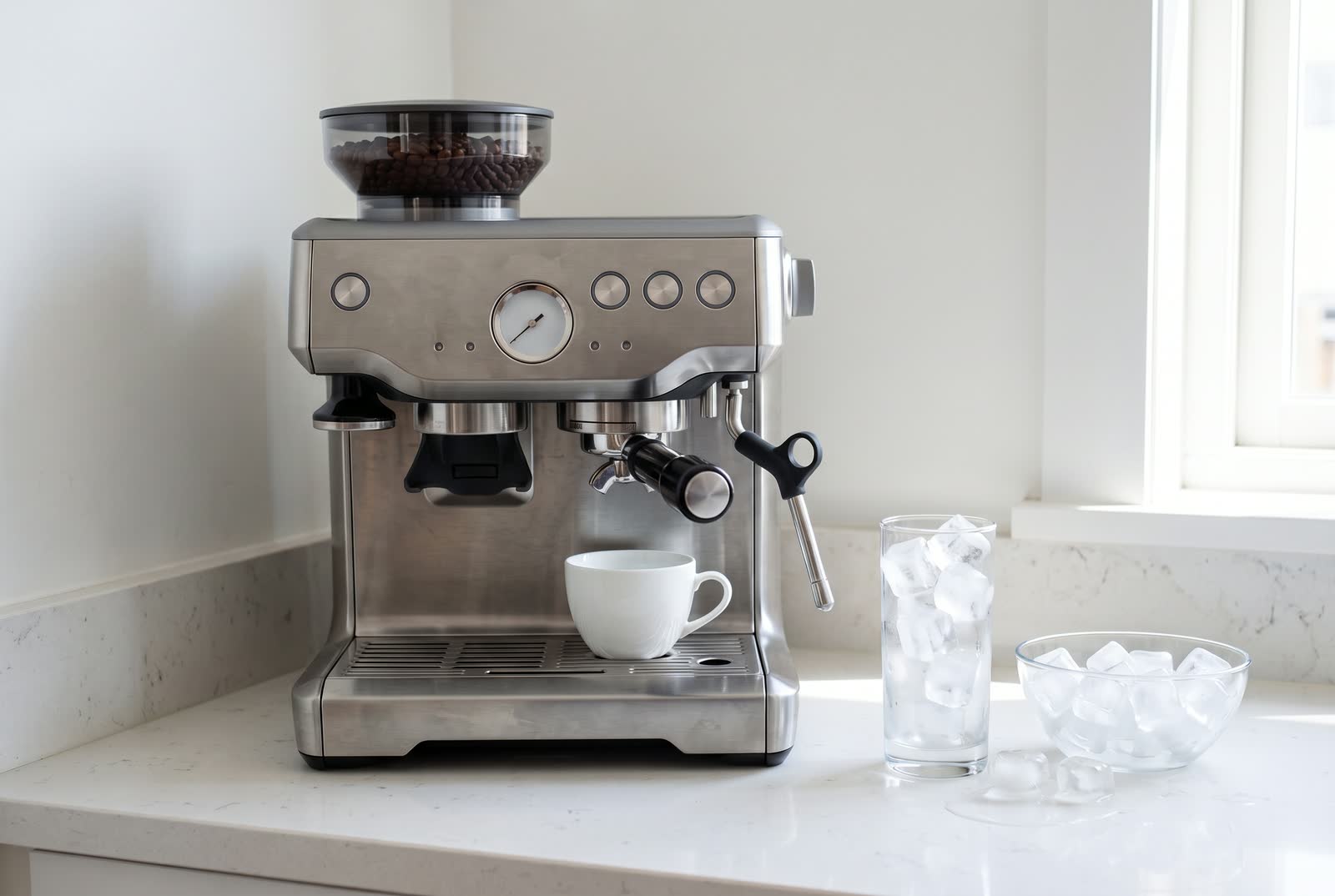
The counter does not change, the routine does
A summer coffee corner is the same corner it was in February with three things added to it and nothing taken away. The machine stays, the grinder stays, the mugs stay where they are; what a cold routine needs on top of that is somewhere to keep a batch, somewhere to keep ice, and a glass that is not a mug. None of the three is a machine, which is the whole point of doing this as a layer rather than as a purchase. What comes off again in September is named at the end, because a seasonal setup that never comes apart is just clutter with a date on it.
What a cold drink asks that a hot one does not
Hot coffee is made and drunk. Cold coffee is made, chilled, and then drunk later, and that gap is the only real difference between the two routines. It means the counter needs a vessel that goes in the fridge and comes back out, and it means the hot side of the corner is suddenly being used to fill something rather than to fill a cup.
The second thing it asks for is ice, in quantities that surprise people the first summer. A glass with a scatter of ice in it is a glass of warm, weak coffee by the time it is finished, and a glass filled to the rim melts slowly enough that the drink is still cold at the bottom.
The vessel, which is the one piece worth choosing carefully
A batch vessel needs a lid, a pouring lip, and a size that matches how much coffee the house drinks before the next batch is made. The Hario V60 ceramic set is the one piece of glassware we have checked with a stated capacity: the maker publishes the kit as a ceramic dripper, a glass server and a hundred paper filters, with the server stated at 600 ml. That 600 ml is the ceiling on a batch, and if the batch is brewed straight onto ice then the ice comes out of the 600 ml rather than being added on top of it.
A jug from the cupboard does the same job for a cold steep, and that is worth saying plainly before anything is bought. What the server adds is that it is also the thing the brewer sits on, so one object serves the hot routine and the cold one.
The machine stays exactly where it is
Nothing about an iced drink asks more of a machine than a hot one does. The Bambino is a fair example of why: its maker states a heater that reaches extraction temperature in three seconds and a manual steam wand, and both of those are about the hot side of the drink, which is the only side a machine touches. The ice does the rest, and ice is not a specification.
What does change is when the machine is used. An iced drink in the afternoon means a machine that is ready from cold in the middle of the day rather than one warmed up once at breakfast, and that is a routine question rather than a purchase.
Where the beans and the ice actually live
Beans go stale faster in a warm kitchen, and a summer corner is a warm kitchen. The OXO POP three-piece set is published with three graduated containers, stated at 5.2 quarts, 3.3 quarts and 1.5 quarts, so the smallest holds the beans in use and the larger two hold everything else the cold routine accumulates. The maker's page prints no dimension, no material and no warranty term at all, and leaves its weight field empty, so how much counter the set takes is a thing to read off the listing rather than off this page.
Ice is the piece nobody plans for. It lives in the freezer rather than on the counter, but the scoop, the tongs and the tall glasses need somewhere to sit, and a countertop organizer with a drawer and a shelf tier is a reasonable answer to that: a drawer contains what would otherwise sit loose, and a shelf tier keeps the glasses within reach, though no dimension is stated for a piece like this here.
The three-minute version, and what comes off in September
Put the batch vessel on the left of the machine, the glasses where the mugs are not, and the ice tools in a drawer rather than on the counter. Brew the batch at night so the morning is a pour rather than a project. That is the whole station.
In September the batch vessel goes back to being a server, the tall glasses go back in the cupboard, and the ice tools go with them. Nothing was rebuilt, so nothing has to be unbuilt, which is the argument for doing a season as a layer in the first place.



