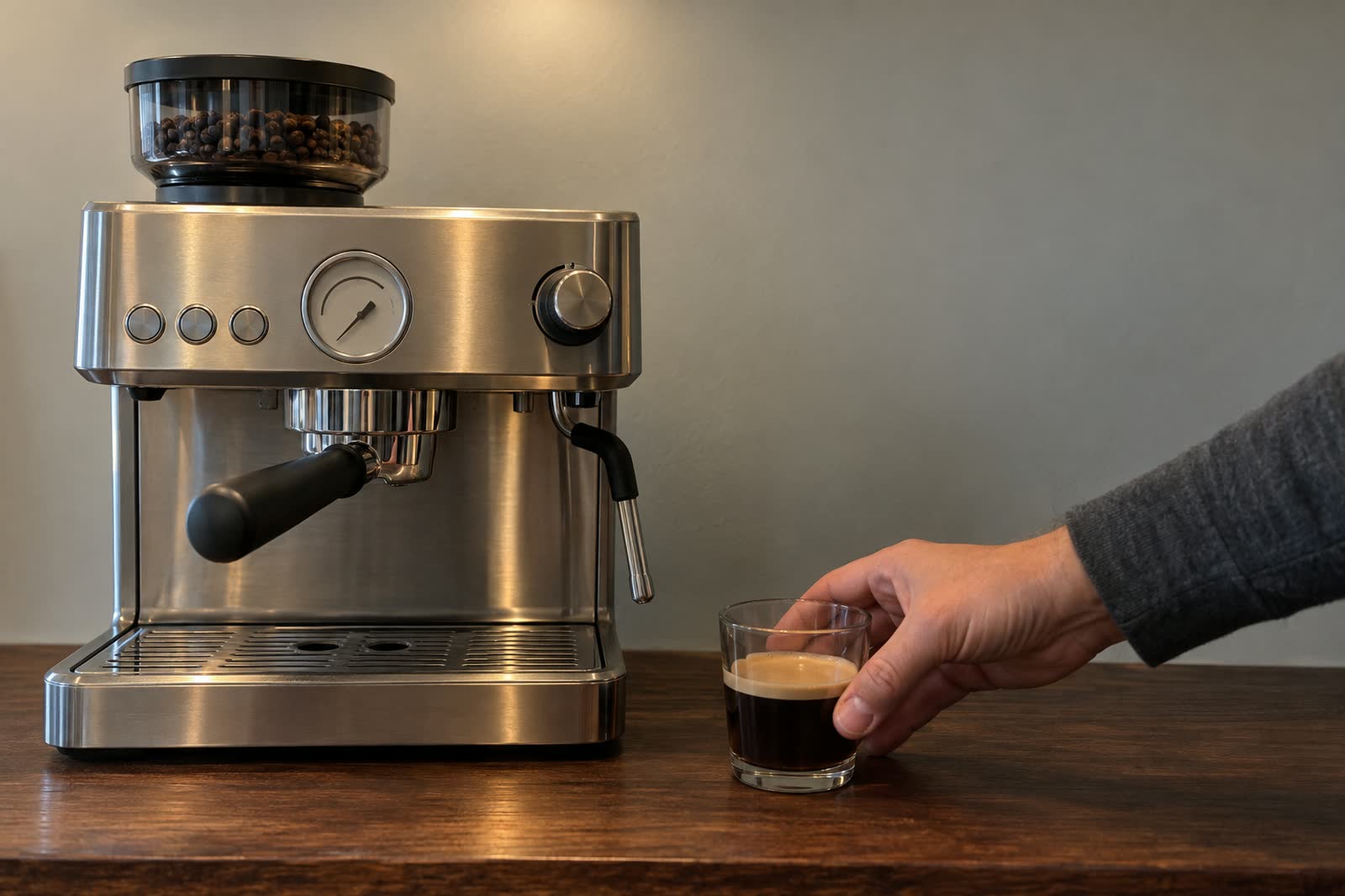
A cortado is a shot cut with warm milk
A cortado is one espresso with about an equal volume of warm milk poured into it, served in a small glass. Equal volume is the convention the drink is named for rather than a measured recipe, and the name is the rest of it: the milk cuts the shot, taking the edge off it without turning it into a milky drink. There is no thick foam on top, no pattern poured into it, and no large cup to fill, which is why it is the first cafe drink a new machine owner can actually finish. A reader three days into owning a machine can make this one tonight.
The whole drink is about two things: a shot that is not bitter, and milk that is warm and thin. Everything below is one of those two.
The glass decides the drink
A cortado is served small, in a glass of around four or five ounces, and that range describes a class of glassware rather than a measurement of any one glass. The glass matters more than it sounds: pour the same shot and the same milk into a mug and the drink reads as a weak coffee, because the ratio disappears into the volume. In a small glass the two layers are visible, the coffee stays in front, and the drink is finished while it is still warm.
The glass sold as a Gibraltar is the usual one, and a small tumbler or a stemless wine glass from the cupboard does the same job. What it needs is straight sides, a heavy base and a volume that the shot and its milk fill nearly to the rim.
The milk: warm, thin, and stopped early
Milk for a cortado is stretched barely at all. A second or two of air at the start of steaming, which is a starting point rather than a timed figure, then straight into spinning, so the milk warms and thickens slightly without building a foam layer. It should pour flat and glossy and leave no visible cap on the surface of the glass.
This is why a cortado is forgiving. A flat white punishes thin milk and a cappuccino punishes thin foam, and a cortado asks for the texture that milk falls into naturally when you stop early. A reader who cannot yet make a rosetta can make this drink correctly on the first try.
Why it is called a cortado, and what a double one is
The name is Spanish and it is also the recipe: cortar is to cut, and the milk cuts the shot. That is the whole claim in the word, which is why the drink carries no foam cap, no poured pattern and no spare volume, and why a larger cup turns it into a different drink. A double cortado is the same convention with two shots under it, so the milk grows with them and the glass has to grow with the milk. Order one in a glass that did not grow and what arrives is a small flat white with a cortado's name on it.
An iced cortado, and what changes
An iced cortado is the same cut made cold: the shot goes over ice and the milk goes in cold and unsteamed, because there is nothing for steaming to do in a cold glass. The proportion is the part that does not survive on its own. Ice takes up room and then melts into the drink, so a glass filled to the same line as the hot one arrives with less of both and finishes weaker than it started. Use a taller glass, fill it with ice properly rather than sparingly, and pour the milk in last so you can see where the two meet. It is a different drink from the hot one and worth treating as one rather than as a cortado that went cold.
Measuring it without a recipe card
Because the drink is a one to one proportion, a jug with fill lines is the only measure needed. The 20 oz pitcher with etched graduations carries its marks inside the jug, so the milk is read off where it is poured from and the same amount reaches the glass every time. Work out once how far up the marks your own glass wants, then pour to that line.
One warning about jug size, and it applies to every milk drink: the same 20 oz jug the manufacturer sells is also sold as a centre-post variant aimed at improving aeration, and a cortado is the drink that wants the least aeration of any. A plain jug is the simpler tool for this drink. To find the smallest jug your glass needs, run the water test in the milk jug guide.
Building the glass, in order
- Warm the glass with water from the tap while the machine comes up to temperature, then tip it out.
- Pull the shot straight into the glass, so nothing is transferred and nothing cools on the way.
- Steam the milk with a short burst of air and a long spin, and knock the jug once on the counter to clear any large bubbles.
- Pour from low and steady into the middle of the glass, and stop when the liquid reaches the rim.
The pour is low on purpose. Pouring from height drives the milk under the crema and pushes what foam there is to the edge, which is the one way to make this drink look wrong.
What to change when it tastes wrong
If the drink is sharp and thin, the shot came out too fast and the milk is covering for it. If it is harsh and drying, the shot came out too slowly. Neither is a milk problem, and neither is fixed by adding more milk: that only makes a larger drink with the same fault in it. The four handles that do fix it are in dialing in.
If the milk is the part going wrong, steaming milk covers the wand itself. Between them they hold every variable this drink has.



