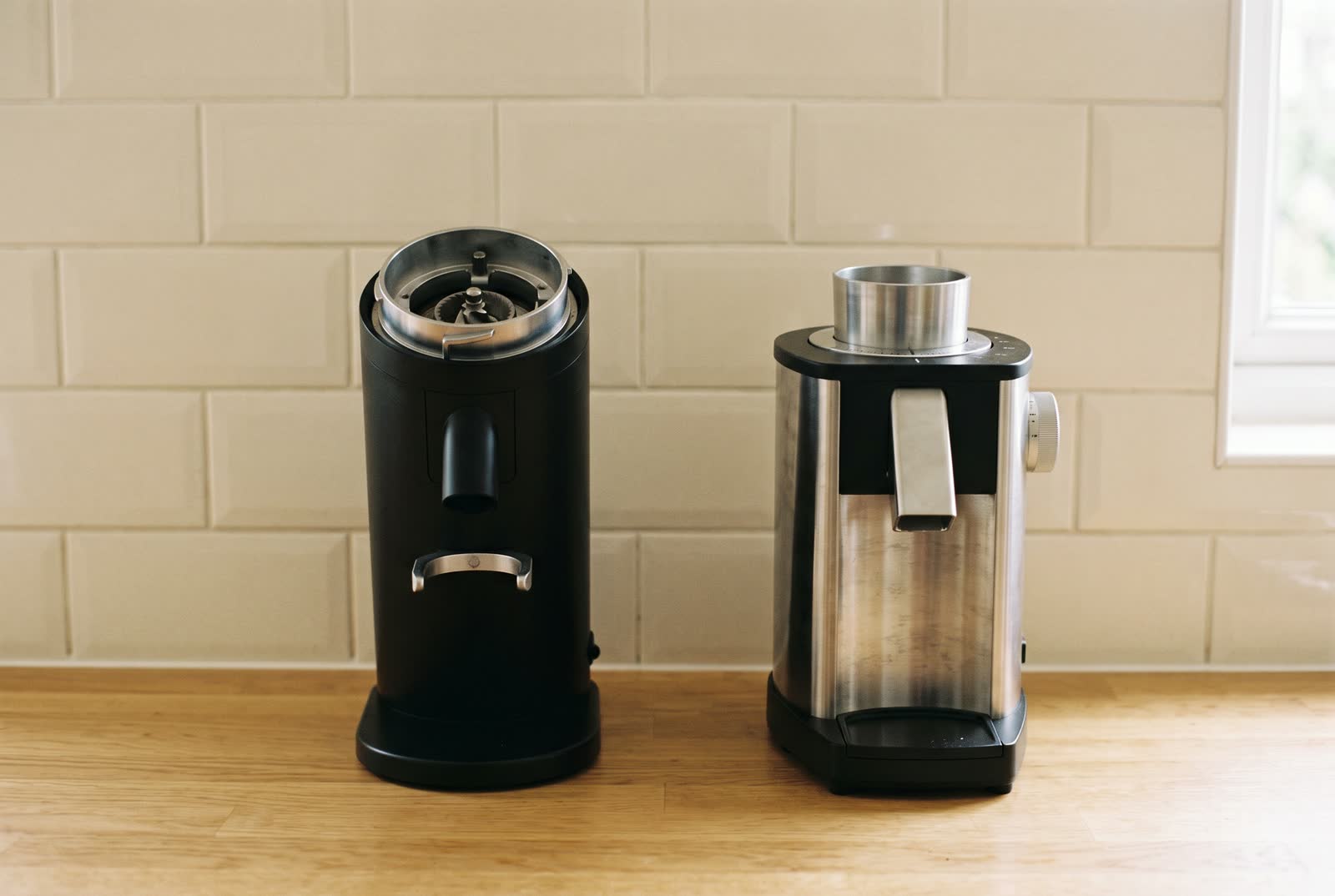
This comparison is based on the sourced specification pages both makers publish, read on the dates given below, and not on hands-on testing. Where we have read two different figures for the same thing and neither has been chosen, the figure is not compared at all and the page says so.
Two grinders, one bag of beans
The Encore and the DF64 Gen 2 sit in different bands and answer a different question each. One is the grinder most beginners are pointed at; the other is what a reader buys when they have decided espresso is the thing and the machine is no longer the weak part. What separates them is not quality in the abstract, it is burr size, the way the adjustment works, and what happens to beans between drinks.
What the two burr geometries are in general is the page on conical and flat burrs. This page is about what these two grinders are.
Forty millimetres of conical against sixty-four of flat
The Encore states 40 mm conical steel burrs, printed by its maker as M3, with a 550 RPM direct-drive motor. The DF64 states 64 mm stainless steel flat burrs. Sixty-four millimetres is a much larger cutting surface than forty, and a flat pair grinds between two parallel discs while a cone grinds in a narrowing gap, which are genuinely different ways of breaking a bean.
What the makers do not publish is what either geometry does to particle distribution, and this page does not infer it. The size difference is a fact; the cup difference is the thing readers want and neither page states it.
Stepped against stepless
The Encore states 40 grind settings across a range of roughly 250 to 1200 microns, which is a stepped adjustment: you move between numbered positions and you cannot stop between them. The DF64 states stepless micrometric adjustment, which means the collar turns continuously and any setting between two others is available.
This is the difference a reader feels every day rather than on paper. Forty steps across a range that reaches out to French press leaves relatively few of them inside the espresso window, so dialling in a shot on the Encore is often a choice between two settings where the one you want is between them. A stepless collar removes that ceiling entirely, at the cost of having no numbers to write down. The page on dialling in is where that plays out on a machine.
The hopper, which is what the two are really for
The DF64 states a 50 g bellows hopper, which is a single-dose design: you put in the beans for one drink, grind them, and the bellows pushes out what is left in the burr chamber. The Encore is built the other way, as a grinder that holds a quantity of beans on top and dispenses from them, and that difference is bigger than any figure on this page. Single dosing means every drink is weighed in, no beans sit in daylight, and switching between two bags takes no cleaning; a hopper means you fill it on Sunday and press a button all week.
Neither is better and the choice is about habits. A reader who buys one bag at a time and drinks the same thing every morning is better served by a hopper; a reader who has two bags open is better served by 50 grams at a time.
The figures this page refuses to compare
The Encore's wattage, width, depth and height have each been read here twice, from readings that disagree, with neither chosen. So no figure is stated for any of them and none is set against the DF64's. Its hopper capacity is in the same state: one manufacturer statement gives 8 ounces and another, read on 6 September 2026, gives 300 grams, both from the same maker, and both are kept rather than one overwriting the other. That is why the section above describes what the Encore's hopper is for and gives no number for it.
The DF64's weight has been read twice in the same way and is not stated either. Its envelope is: 130 millimetres wide and 300 high, read from its maker's page on 1 September 2026, at a depth of 225 millimetres. That last figure is worth one sentence of its own, because the same maker page carries a second depth of 254 millimetres in its prose, and a ruling of 13 September 2026 in the owner's name took the spec line's 225 and overruled the prose. The overruled reading stays in view, and this page names it rather than pretending the page was ever tidy.
Which one to buy
Buy the Encore if this is a first grinder, if filter coffee is part of the week, or if the machine it feeds is the thing still holding the cup back. Forty settings over a wide range is the right shape for somebody grinding for a cone on Saturday and a portafilter on Sunday, and 550 RPM with 40 mm conical burrs is a known quantity that a great many people have learned on.
Buy the DF64 if espresso is the only thing being made, if you have more than one bag open, or if you have already met the ceiling where the setting you want is between two numbers. Sixty-four millimetres of flat burr with a stepless collar and a 50 g single-dose hopper is a different daily routine and not merely a better version of the same one. If the question is which grinder against which other grinder in the same family, the Encore against the Encore ESP is the narrower comparison.
No price on this page is checked at a seller. The two grinders sit in different bands this site draws, which are ranges of its own framing rather than figures read at a shop.



