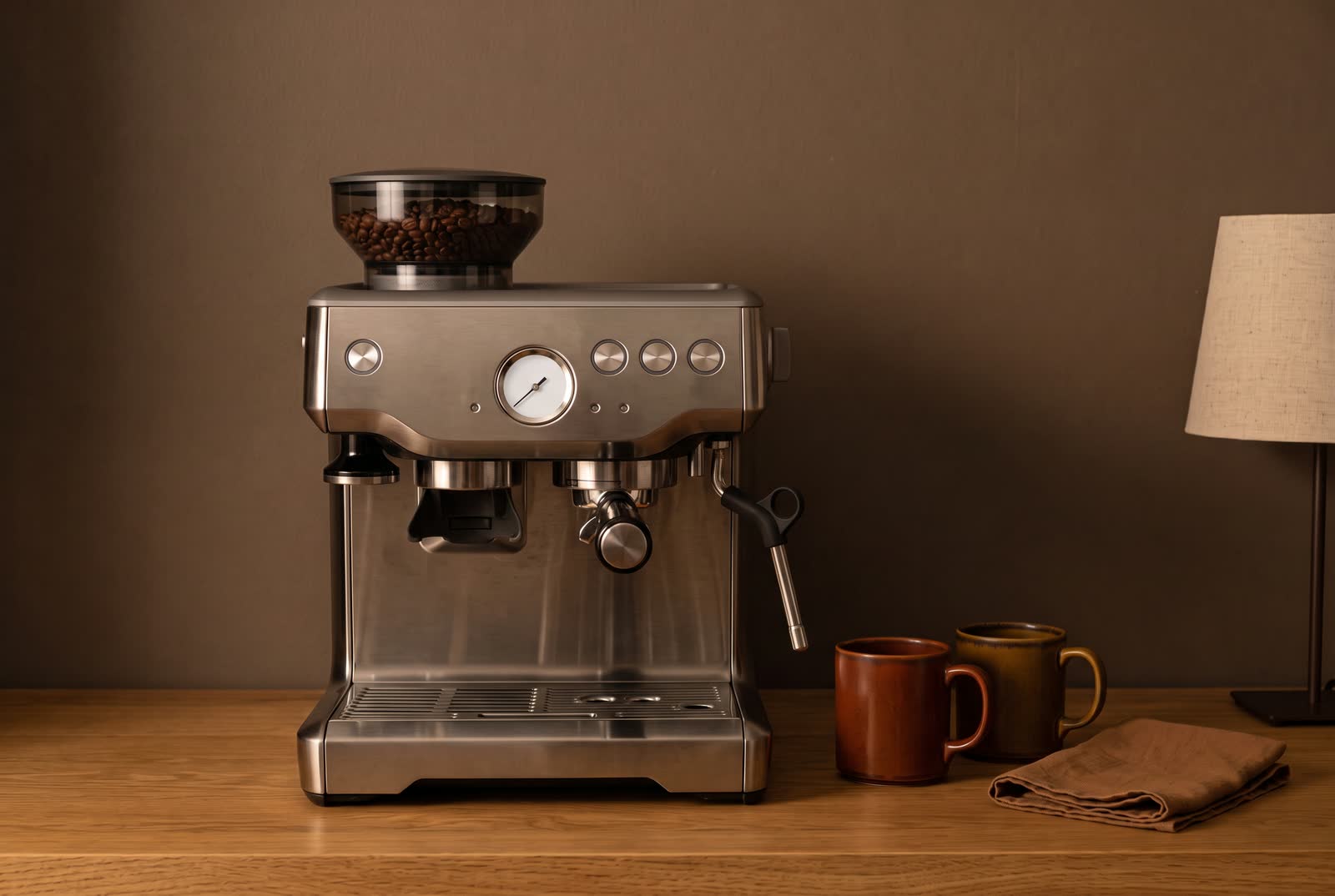
A season is a layer, not a rebuild
The counter that makes your coffee in June makes it in October too, and nothing about autumn changes what the machine or the grinder has to do. What changes is what the corner looks like and what goes into the cup, and both of those are layers laid on top of a working station rather than replacements for any part of it. Three layers do the whole job: something seasonal to put in the drink, mugs that read as autumn rather than as a mixed cupboard, and one surface that groups the seasonal pieces so the corner looks deliberate instead of cluttered. Four pieces cover those three layers below, and three of the four are marketplace categories rather than single listings, so what follows is a sourcing direction rather than a verdict on any one of them, and nobody here has handled any of them.
The syrup is the only layer that changes the drink
Autumn flavour at home is a jar of syrup made once, and the counter's part of that is somewhere to keep it and a way to get a measured amount of it into a cup. A pump bottle does both: it holds the syrup where the coffee is made rather than in a fridge two metres away, and one push is a repeatable dose without a spoon. The glass pump dispenser sets in this category are sold as two-bottle and four-bottle sets with removable labels, which matters more than it sounds: two syrups is a seasonal corner and four is a project, and the labels are what stop the third bottle becoming a mystery by December.
If the bottles start multiplying, the category also carries a two-tier rack for them, and one listing in it states its size as about 16.5 inches long, 7 inches wide and 7.95 inches high, holding up to ten bottles. That is a real figure from a real listing, and it is also a warning: a rack that size is most of a counter run, and a corner that needs ten syrups has stopped being a seasonal layer.
Mugs are the piece a guest actually picks up
Of the three layers this is where the money goes first, because the mug is the only one of them anybody touches. The category worth browsing is handmade ceramic mugs from independent potters: wheel-thrown and handbuilt stoneware and porcelain, which is a different look from a printed seasonal mug and does not stop reading as itself in January. Listings in this category commonly state capacities from about 4 to 8 oz at the espresso end up to about 18 to 22 oz at the latte end, so the size has to be chosen against the drink rather than against the picture.
Two practical notes before buying handmade. These are one-off pieces rather than a stocked line, so a set of four matching mugs is not a given and a set of four that nearly match is usually the honest outcome. And a glazed handmade mug holds heat differently from a thin factory one, which is a thing to like or not rather than a fault.
One surface, so it reads as a station
The layer that finishes a seasonal corner is not a decoration, it is a boundary: a tray that says these things belong together and the rest of the counter is kitchen. Wood trays with brass handles are the shape that suits this, commonly described in listings as mango wood with brass fittings, and the same category also carries hammered antique-finish all-brass trays if the corner is already warm in tone. Put the syrup bottles and the spoons on the tray, leave the machine off it, and the corner has a seasonal half and a working half.
The other way to buy back counter space is vertical. The rotating mug tree is stated by its maker as iron, 15 inches high and 8 inches in diameter, holding 8 mugs, so the autumn mugs come out of the cupboard and onto a footprint the size of a dinner plate.
What this does not change, and should not
None of the four pieces above changes what the coffee tastes like, and that is the argument for keeping the budget on them small. Autumn is the season when a reader is most likely to be talked into a machine upgrade on the strength of a photograph, and a photograph of a corner is made by mugs, a tray and the light, not by the machine behind them. If the station underneath genuinely needs rethinking, that is a separate decision on a separate timeline.
The one thing worth spending properly on is the mugs, for the reason in their own section: they are handled, they are used every day, and unlike a printed seasonal set they do not have to be put away in November.
What comes down in November
Take the syrup bottles off the tray, wash them, and store them with the labels in them so next autumn starts from a known state. The mugs stay in the rotation if they were chosen as mugs rather than as decoration, which is the test that section applied. The tray either stays as the place the spoons live or goes back in a cupboard, and the mug tree stays because it was never seasonal.
That is the whole take-down, and it takes about as long as reading this section. A seasonal layer that comes apart in five minutes is one you will actually put up again next year.



