The last third of the glass
Pour a good iced coffee over ordinary ice and the first mouthful is what you made. The last one is not. The ice has been melting the whole time you were drinking, so what reaches the bottom of the glass is your coffee diluted by however much water came off the cubes, which depends on the room, the glass and how slowly you drink: the drink gets weaker the longer you enjoy it, which is a strange thing to design into a drink.
Coffee ice fixes it by removing the variable rather than managing it. Freeze coffee, drop it in coffee, and the melt adds coffee. The drink at the bottom of the glass is the drink at the top.
What goes in the tray
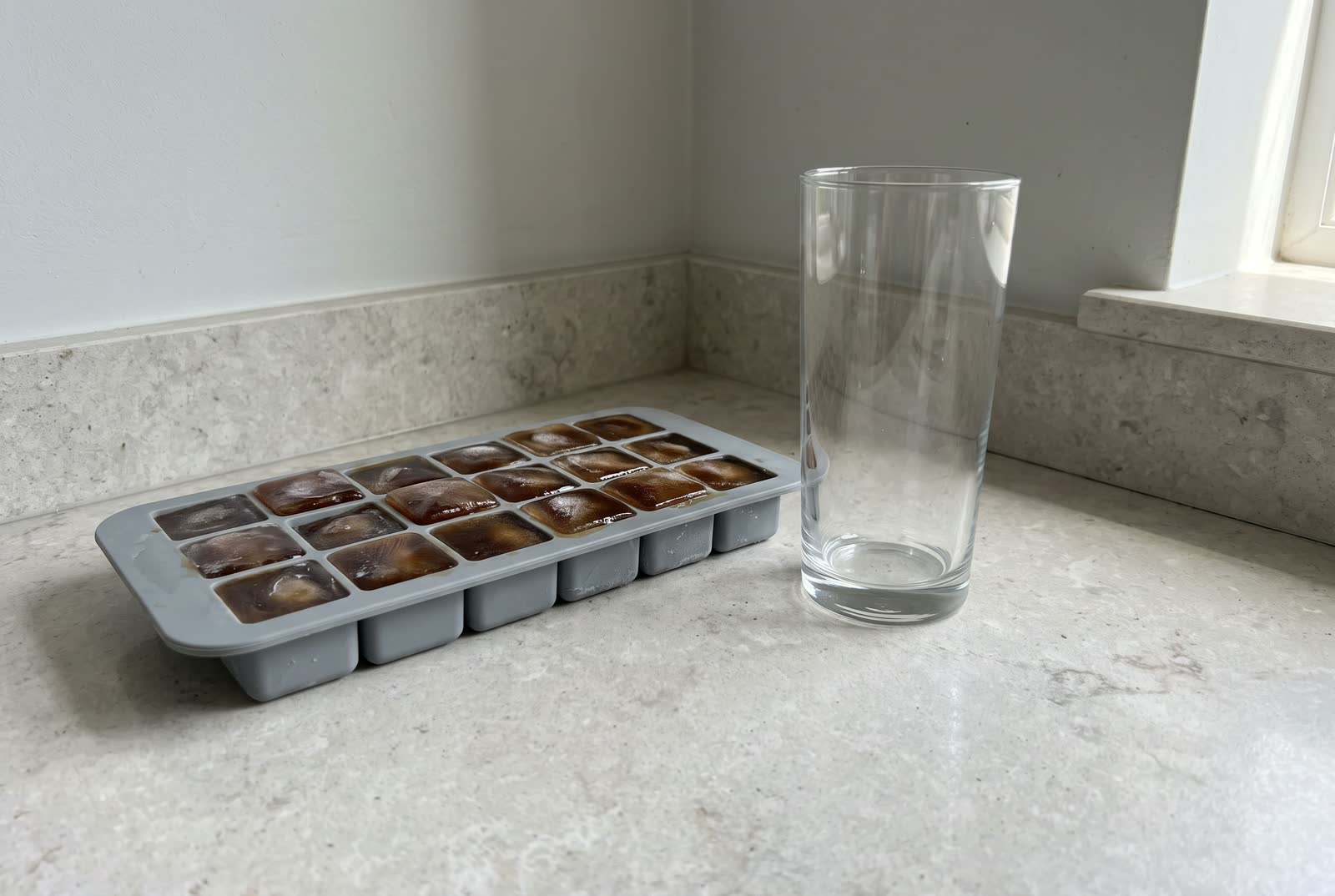
Any ice tray you already own is the right tray, and this is the whole equipment list. Fill it with coffee instead of water, freeze it, and keep the cubes in a sealed bag or box once they are solid, because an open tray in a freezer picks up the smell of whatever else is in there.
Two practical notes. Coffee freezes darker and harder-looking than water and comes out of a flexible tray the same way. And big cubes are better than small ones for this, because a large cube has less surface for its volume and gives the drink up more slowly, which is the same reason bars use them.
The two ways to make the coffee for it
If the coffee is going to be frozen, it may as well be made the way you already make it. A machine gives you espresso, which freezes into small, very strong cubes that suit a short glass and milk. A pour-over set gives you a batch in one go: its maker states a 600 ml server with the dripper and filters in the kit, which is more than one tray of cubes from a single brew and no special session. That comparison is this page's own arithmetic against an ordinary ice tray rather than anything a maker states.
Cold brew works too, and it is the easiest of the three to make in the quantity a freezer wants. That is its own page here and this one does not repeat it.
Make it stronger than you would drink it
The one rule that matters: the coffee you freeze should be stronger than the coffee you want to end up with. A cube that melts into the glass is not adding strength, it is adding the strength it already had, so a cube made from a drink you found perfectly balanced will dilute a second drink towards the same place rather than holding it.
This page gives you no ratio for that, on purpose. The ratios on this site belong to the pages that own them, the four ways to build an iced coffee and the cold brew page above, and a number invented here to sound helpful would be a number from nowhere. Make the base a notch stronger than you like it and taste the second glass.
No freezing time is given here
You will find pages that tell you how long coffee takes to freeze. This one does not, because nothing on record here holds a figure for it and a time copied from somewhere else is a time for somebody else's freezer, tray and volume. Those three things decide it and this page knows none of them.
What to do instead is the obvious thing: fill the tray in the evening and use it the following day. If you want a number for your own kitchen, freeze one tray and check it on the hour, which is a measurement you can make and this site cannot.
What it costs, and what it does not fix
It costs a tray of coffee and a day of waiting, and after the first batch it costs nothing at all, because the tray refills from whatever you brewed too much of. That is the honest case for it: coffee ice is a use for the last of the jug rather than a project.
It will not rescue a bad iced coffee. A weak base frozen is a weak base, and the cubes will hold the drink exactly where it started rather than improving it. Coffee ice stops a drink getting worse; getting it right is still the brewing.



