The half of the machine that works in week one
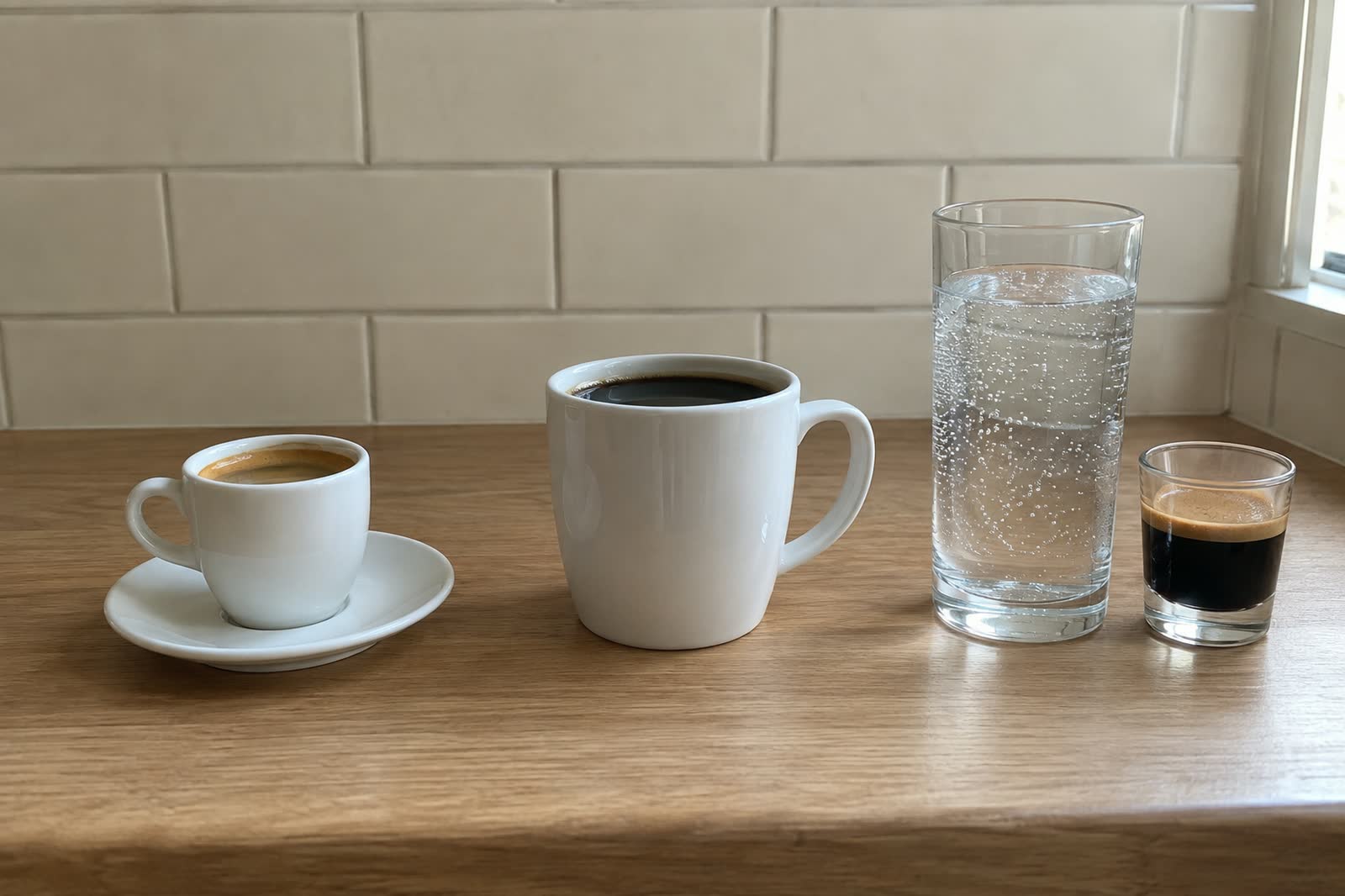
A new espresso machine usually arrives with a steam wand attached and an expectation attached to the wand. Milk is the slowest thing to learn on it, and a first week spent failing at a flat white is a week of disappointing cups from a machine that was already making good coffee. The four drinks below are espresso, water, ice and ice cream in four arrangements. Every one of them is simple enough to get right on the first attempt, and not one of them needs a jug.
Learn these first. They keep the machine worth owning while the milk takes as long as it takes.
Espresso, served as it comes
The first drink is the shot itself, in a small warmed cup, with nothing added. It is worth making deliberately rather than treating it as an ingredient, because it is the only drink where nothing covers a fault: a shot that is sharp or drying tells you so immediately. Warm the cup with water from the tap first, because a cold ceramic cup takes a surprising amount of heat out of a small volume of liquid.
Drink it as soon as it is pulled. The texture of a fresh shot changes faster than the flavour does, and a shot left standing is a different drink.
Americano, and the order the cup goes together in
An americano is a shot and water, and the order matters more than the ratio does. Water first, then the shot poured on top, keeps the crema intact and floating; shot first, water poured on, breaks it up and gives a flatter drink. Both are legitimate and the second is often sold as a long black, so the distinction is worth knowing rather than worrying about.
The water wants to be under boiling. Water straight off a rolling boil scalds the coffee and brings out the harshness the dilution was supposed to soften. A kettle with a temperature setting removes the guesswork: the Stagg EKG kettle holds a chosen temperature with presets, keeps it there for an hour, and pours through a gooseneck spout, which is the same control a pour-over asks for and a useful thing to already own.
Espresso over ice, and why it is not iced coffee
Pull a shot straight over a glass of ice and the drink is made as fast as the shot runs. It is sharper and more aromatic than cold brew because nothing about it was brewed cold: the extraction is the same one as a hot shot, chilled fast enough that the aromatics survive. That speed is the point, and it is also the limit, because the ice dilutes it continuously and the drink is sharpest the moment it is poured.
Fill the glass with ice properly rather than sparingly. A half-filled glass melts faster and gives a watery drink sooner than a full one does, which is the opposite of what most people expect.
For a version that keeps for days rather than minutes, cold brew in a jug is the other end of the same idea.
Affogato, which is a dessert the machine already makes
A scoop of vanilla ice cream in a small bowl or glass, one shot poured over it, eaten with a spoon before it melts. It is the one drink on this list that reliably impresses somebody who does not drink coffee, and it costs nothing beyond the ice cream. Use a firm ice cream rather than a soft one, and a small scoop, so the shot has something to melt into rather than a pool to disappear in.
Serve it immediately. There is no version of this that survives being carried from the kitchen to another room.
Which espresso drinks carry the least milk
The four above are the bottom of that list: a shot has no milk in it, an americano takes water instead, espresso over ice takes ice, and an affogato takes ice cream rather than milk poured in. Above them the order runs by how much milk goes into the cup: a macchiato takes a spoonful of foam, a cortado a small pour of warm milk, a flat white more than that, a cappuccino more again, and a latte the most of any of them. So the answer to which espresso drink holds less milk than a latte is almost all of them, and the answer to which holds the least is the shot on its own. If a little milk is what you want rather than none, the cortado is the drink to start on, and milk drinks by the ratio sets the last three against each other properly.
What the kettle does and does not tell us
The kettle above is in this piece for its temperature control and its spout, and for nothing else. The manufacturer's page also prints a wattage and a set of dimensions, and a source check on 2026-09-04 found that the page does not state whether that block describes the plain kettle or the Pro, so those figures are left out of this piece rather than attached to the wrong model. What the reader needs here is that the water is under boiling, and any kettle with a temperature dial answers that.
A kettle without one is not a blocker either. Boil, take it off the heat, and give it half a minute before pouring, which is a rule of thumb rather than a measured drop in temperature.



